
Not every game needs the same localization approach. Here’s how Allcorrect helps studios choose between human craftsmanship and run.loc’s speed and scale—and when a hybrid of both works best.
In the world of game dev, we often talk about “quality” as if it were a single, fixed target. But if you’ve ever shipped a project, you know the truth: quality is relative to your goals, your timeline, and your budget.
At Allcorrect, we offer two distinct paths for game localization: traditional human translation and our specialized service, run.loc. The question isn’t which one is “better” in a vacuum—it’s about which tool fits the job you’re doing right now.
When Does a Game Need Human Localization?
Humans are still the champions of nuance. If your game is a narrative-heavy RPG filled with deep lore, complex wordplay, or character-specific dialects, you want a human at the helm.
Human localization is the “artisan” approach. It’s ideal for:
- Deep Lore and Puns: Adapting memes, cultural references, or poetry that requires a creative leap, not just a translation.
- Character Voice: Ensuring every hero sounds distinct and consistent across thousands of lines.
- Lip-Sync and Voice-Over: When every syllable needs to match a character’s mouth movements on screen.
It’s a labor-intensive process, and yes, it’s the more expensive option because you’re paying for that creative “spark.”
When Is run.loc the Right Choice?
Then there’s run.loc. If human localization is a handcrafted blade, run.loc is a high-precision industrial engine. It’s designed for speed, scale, and clarity.
run.loc shines when you’re dealing with:
- Technical Precision: Massive volumes of item descriptions, skill mechanics, and UI strings where “clear and correct” is the priority.
- Consistency at Scale: Managing huge glossaries across millions of words without breaking a sweat.
- Efficiency: Getting the job done faster and more affordably when the text is more functional than literary.
In short, run.loc trades creative depth for speed, scale, and predictable quality—exactly what large, deadline-driven projects need.
What If You Have a Massive Volume of Text and a Tight Deadline?
Choosing between the two isn’t always about the type of text. Often, it’s about the hard reality of your production cycle.
When you have massive volumes of text and a very tight deadline, even the most creative human translator hits a physical limit. True “human” localization requires immersion—playing the game, studying screenshots, and cross-referencing lore. If the clock is ticking too fast, a person simply doesn’t have the time to do that research. Instead of that creative spark, you risk getting text that is rushed just to meet a deadline.
In these high-pressure scenarios, run.loc’s tech-driven process actually handles the complexity better. It doesn’t get overwhelmed by volume, and it maintains a unified memory of the project. It also avoids the common “patchwork quilt” effect you get when splitting a rush job between 10 or 20 different translators.
This is also where the challenge of maintaining a glossary comes in—if there’s no time to build one properly, the whole project’s consistency can fall apart. You can read more about how we tackle this in our article on The Glossary Paradox.
That’s why on high-volume rush projects, a tech-driven pipeline paired with expert human oversight often protects quality better than splitting the work across a large translator team.
Is run.loc Just AI Translation?
One thing we want to be clear about: run.loc isn’t just “raw” AI output where you press a button and hope for the best. We think of it as a Co-op Mode between human expertise and smart tools.
Our expert linguists stay in control at every stage—from analyzing your requirements and setting up the style guide to final quality checks and polishing. By using a solid Style Guide and providing the right context, we ensure the “tone of brand voice” stays intact while the system handles the heavy lifting.
How Does This Look in Real Projects?
To see how this decision plays out in the real world, let’s look at two vastly different projects.
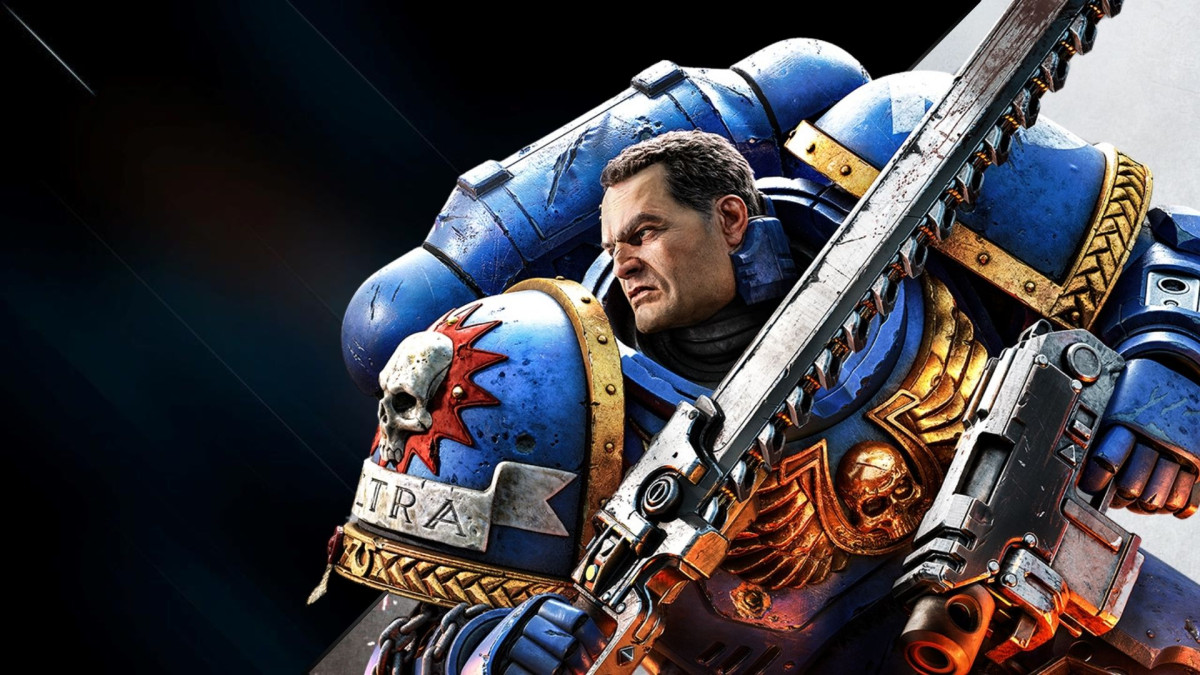
The Warhammer universe isn’t just large; it’s a colossal, decades-old lore machine with an enormous library of books. For Warhammer 40,000: Space Marine 2, standard translation simply wasn’t an option—the project demanded full-scale transcreation and the deep, artistic touch of top-tier human experts. Furthermore, a huge portion of the text was destined for voice-over. This meant translators had to work under hard time restrictions, keeping their translations as close to the source length as possible so the voice actors could comfortably perform the full lines within the original audio timing. Working within these strict limits placed heavy constraints on lexical choices and sentence structures, demanding extra time and human effort. Ultimately, the translation focused on how the dialogue would sound—which meant choosing the right formulations based on each character’s emotional tone and the scene’s context.
That’s the kind of project where only deep human craft could do the material justice.
Blue Protocol: Star Resonance presented an entirely different challenge: massive volumes of text, a strictly limited budget, and tight deadlines. However, from a pipeline perspective, the text structure itself was clear and straightforward, without any technical bottlenecks or process complications. This made it the perfect candidate for run.loc. By leveraging our automated pipeline, we processed the bulk of the text efficiently and focused our human linguists’ expertise exactly where it was needed most. The result? We delivered high-quality localization while staying comfortably within the resource constraints.

So, Human Localization or run.loc—Which Should You Choose?
Every project is a unique puzzle. Sometimes you need a poet; sometimes you need a powerhouse.
Whether you’re looking for the most native, creative adaptation possible or a scalable, tech-forward solution for a massive launch, we’re here to help you weigh the options. At the end of the day, our goal is the same as yours: making sure your players feel like the game was made just for them, no matter what language they speak.


