In this article, we break down which platforms, genres, and gaming habits define different age groups, how they spend money in games, and why these distinctions matter when it comes to game development and localization. Read on to understand how Boomers, Gen X, Millennials, Gen Z, and Gen Alpha are shaping the gaming market—and what that means for developers and publishers.
In this article
Games bring all generations together—but each plays in its own way. Understanding these differences doesn’t just reveal gaming preferences; it also helps predict how those preferences will evolve. How does each age segment shape the gaming market, and why can the same title land completely differently depending on the generation playing it?
Baby Boomer Gaming Habits
Baby Boomers (59+)—despite the common stereotype, a significant portion of what many consider the “grandparent generation” regularly play video games. According to various studies, roughly 50% of Boomers play video games at least once a week.
In short, for this generation, games shouldn’t be exhausting. They rarely dive into complex mechanics and almost never engage with competitive modes. What matters most is clarity and predictability.
Boomers most often play:
- Puzzle games
- Card games
- Light strategy games
- Classic casual titles
Interestingly, mobile devices have become their “entry point” into gaming. In recent years, most players in this group have been found to play primarily on smartphones and tablets.
A great example of this is TAFFY: Feed The Kitty, a casual puzzle game for iOS and Android localized by the Allcorrect Games team. In projects like this, clear instructions, well-defined objectives, and a low cognitive barrier are especially important: players should immediately understand what’s happening on screen and the action expected of them.
This generation also demonstrates a low tolerance for uncertainty: mechanics involving RNG, loot boxes, and complex in-game currency systems tend to generate distrust. They prefer a simple model: “I paid—I got a result.” That’s why Boomers are an audience where direct monetization (premium, one-time purchase) outperforms complex free-to-play models.
Gen X Gaming Behavior: Strategy, Depth, and Control
Gen X (ages 43–58) are something of a bridge between old-school gaming culture and the new digital era. They grew up on arcade machines, 8-bit consoles, and early PCs, so they value deep mechanics, complex strategies, and long-term progression while also being perfectly comfortable in the world of Steam, the Epic Games Store, and mobile gaming.
Looking at their behavior today, an interesting transformation becomes evident. In the 2000s, they were avid PC gamers. Later they shifted to consoles, and today they often combine everything—from mobile titles to story-driven games on big screens.
Gen X players choose games deliberately and tend to return to familiar formats. For example:
- Single-player story-driven games
- Strategy games
- Titles with clear logic and progression systems
They have less time for games than Millennials or Gen Z, so they prioritize quality. This is an audience more likely to buy a game once than to navigate a complex in-game purchase system. What matters to them is story, lore, and long-term progression—not a quick-shot action title, but a world worth returning to for months.
A particularly relevant example from our portfolio is Dispatch, a recently released narrative adventure for PC and PlayStation 5. Allcorrect worked on the localization and LQA for the project to ensure the game would feel natural for players across different markets. In a narrative adventure, text quality directly shapes the experience: character intonations, dialogue rhythm, authorial humor, and emotional beats all matter. For a Gen X audience that often chooses games for the story and a thoughtful playthrough, these details become part of the gaming experience itself.
Millennials’ Gaming Trends: Progression and Spending
Millennials (ages 29–42) were the first generation to grow up alongside the internet—and the generation that helped turn online gaming into a mainstream form of entertainment.
Research shows that Millennials are most engaged with MMOs, strategy games, RPGs, and team-based shooters. They are used to playing with friends, socializing in-game, and returning to the same titles for years. As a result, they share a defining trait: they are highly progression-driven.
They value:
- Character progression
- In-game achievements
- Accumulated experience and long-term investment
Because of this, Millennials are far more receptive to subscription models, microtransactions, and in-game purchases. According to industry analysts, this generation spends more money on games than almost any other, averaging over 10 hours of gameplay per week.
For developers, Millennials represent a “golden generation”—highly digitally savvy, not fully mobile-first, and willing to pay for high-quality content, convenience, and premium experiences.
Gen Z: Focus on Mobile Games
Statistics on Gen Z show that more than 80% of players regularly play on mobile devices, and many consider their smartphone their primary gaming platform. Gen Z (ages 14–28) is currently the primary driving force behind mobile gaming and esports. They can and do play on PC or console, but that tends to happen around specific titles rather than as a default habit.
Gen Z doesn’t necessarily want to “finish” a game. What matters more to them is quick onboarding, clear feedback, and the ability to share. That’s why these formats perform so well with this audience:
- Battle royale
- Games as a service
- Titles with seasons and live events
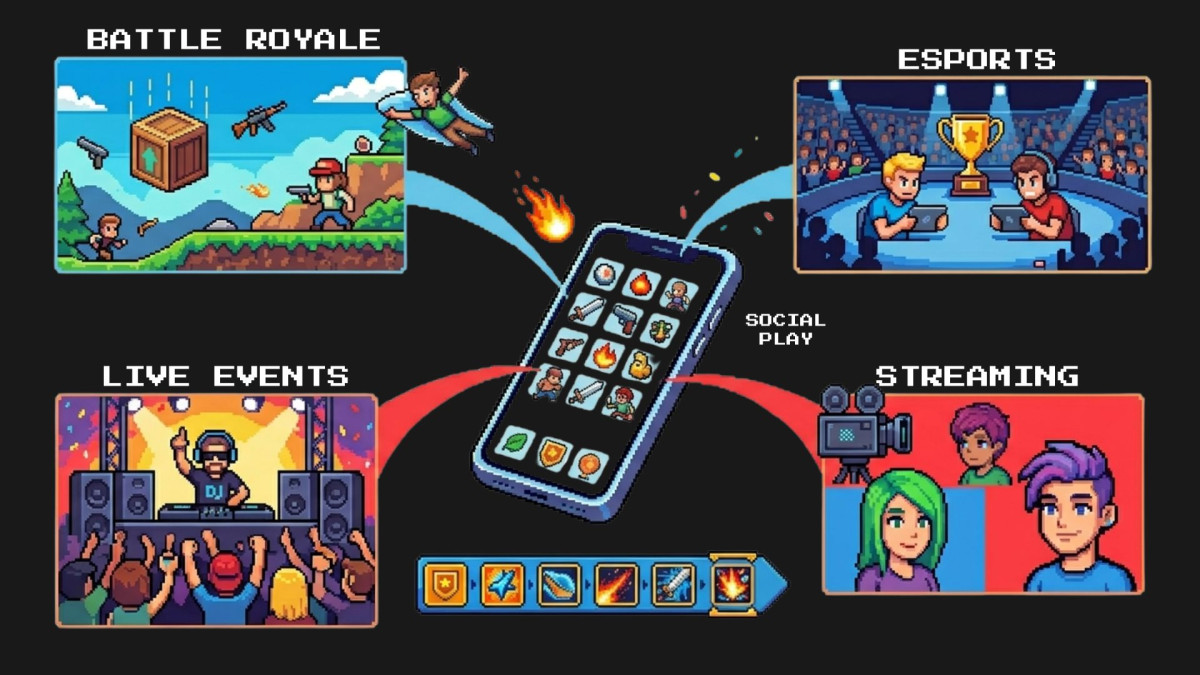
In our portfolio, this shift is clearly illustrated by two mobile-first projects: PUBG Mobile from Level Infinite and Arena Breakout from Morefun Studio. The first demonstrates the power of the battle royale format, built around quick matches, competition, and social interaction. The second shows just how far mobile gaming has come: a tactical FPS on a smartphone already demands the same precision in terminology and UI clarity as a PC or console release. For this audience, localization needs to be nearly invisible: mode names, item labels, combat messages, and system prompts must register instantly without breaking the player’s rhythm.
Beyond gameplay preferences, ethical gaming has become an increasingly important consideration for Gen Z. This generation pays growing attention to the values games promote and how they treat their users. They favor titles that avoid aggressive monetization or require no additional payments after the initial purchase. Games like Baldur’s Gate 3, Kingdom Come: Deliverance II, and Clair Obscur: Expedition 33 have built loyal audiences without any microtransactions. By contrast, projects that rely on predatory microtransaction models and loot box systems are regularly criticized for manipulation and mechanics that border on gambling.
Gen Z also increasingly scrutinizes how game content is created. The use of AI in development draws mixed reactions: players push back sharply when it appears to replace human labor or compromise quality. For instance, Epic Games faced criticism for using artificial intelligence in the creation of the Darth Vader character in Fortnite (source: The Guardian). This shows that for Gen Z, what matters isn’t just the technology itself—it’s the context in which it’s applied.
Then there’s the influence of streaming. For Gen Z, gaming isn’t only what you play—it’s also what you watch. YouTube, Twitch, and TikTok shape interest in games as powerfully as the developers themselves.
Despite differences in age and income, Gen Z’s spending on games has nearly caught up with that of Millennials. This points to a shift in consumption patterns: younger players tend to make smaller but more frequent in-game purchases, compensating for the income gap through higher transaction volume. The youngest generation of players—Gen Alpha—are gradually approaching similar spending levels.
Gaming Impotence: The Burnout Phenomenon
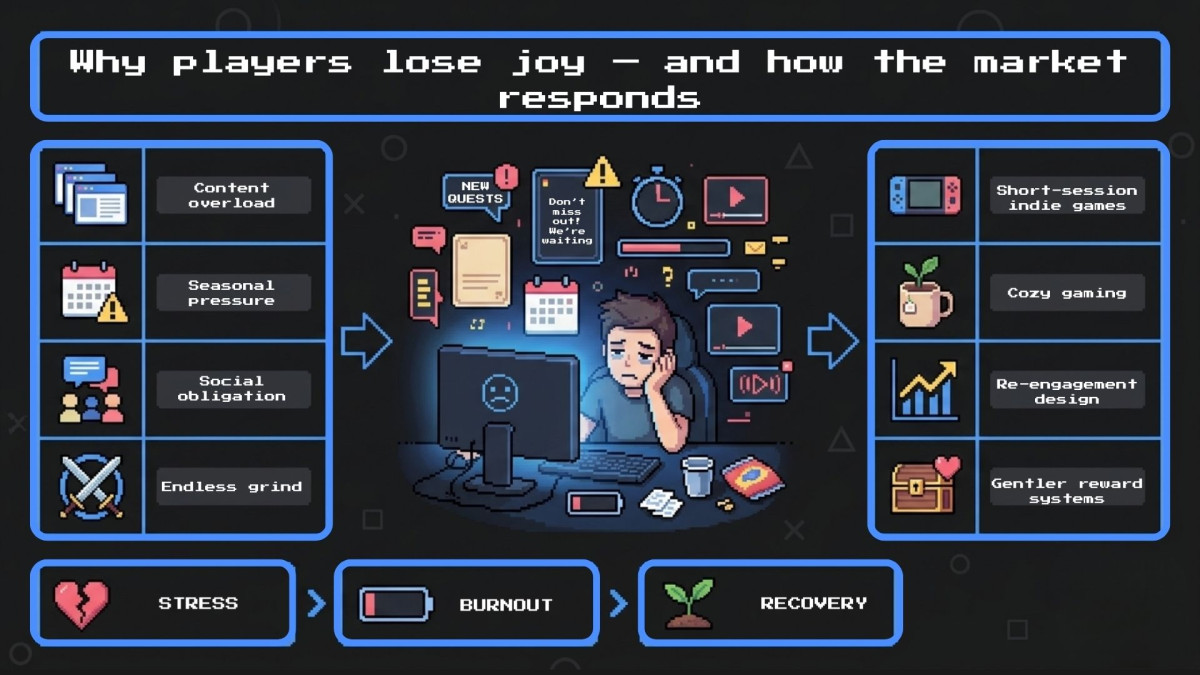
In 2026 a phenomenon known as “gaming impotence” is widely discussed among Millennials and Gen Z. It describes what happens when someone who was once passionate about games stops enjoying them altogether, feeling emptiness, frustration, or exhaustion even toward titles they once loved. According to various studies, gaming burnout mirrors occupational burnout: emotional exhaustion, a sense that the effort is pointless, and a loss of interest even in favorite games.
For Millennials, gaming often turns into something resembling a work obligation: years of MMOs, raids, Discord communities, and seasonal updates gradually replace leisure with a sense of duty. For Gen Z, the issue stems from content overload: they play, watch streams, follow events—and as a result, games stop being a refuge and become yet another source of pressure.
How does this affect the market?
- Renaissance of “short sessions”: This phenomenon is driving the popularity of indie hits completable in 3–5 hours.
- Demand for “therapeutic gaming”: The growth of the cozy games segment is a direct response to the stress of AAA blockbusters.
- A paradigm shift in development: Studios are beginning to invest in “re-engagement” mechanics, lowering the barrier to re-entry for players who haven’t logged in for months.
- Studios are also increasingly implementing “digital breathing” mechanics—gentle break reminders, more humane reward systems, and tools that help players maintain a healthy balance between gaming and real life.
Gen Alpha Gaming: From Playing to Creating
Gen Alpha (under 13) are a generation that have essentially grown up inside a “gaming matrix” from day one. Safety and parental control reports show that Roblox and Minecraft are the primary digital spaces for children in this group, where they build worlds, play together, and even learn the basics of programming.
Gen Alpha gravitate toward formats where they can:
- Build
- Modify and customize
- Interact with others
That’s why sandbox worlds and user-generated content (UGC) platforms are so popular. For this generation, a game is a digital environment where part of life actually takes place.
While Roblox and Minecraft remain the most obvious examples of Gen Alpha’s creator-first behavior, demand is also growing for calmer mobile formats—games built around customization, care, interaction, and a sense of safe space. In our portfolio, this side of young gaming is represented by Adorable Home by HyperBeard—a mobile simulation game for iOS and Android that Allcorrect localized into Malay, Vietnamese, Brazilian Portuguese, Thai, Japanese, Korean, French, German, and Russian.
In projects like this, localization must be especially thoughtful: a friendly tone, simple instructions, and cultural neutrality help make the experience accessible to both children and their parents.
Additionally, Gen Alpha demonstrate a new consumption pattern. According to Newzoo, 57% of players in this generation are more likely to make a purchase from a brand featured inside a game. This shows that for Gen Alpha, the line between gaming and commerce has nearly disappeared: gaming platforms are becoming not just social spaces but fully-fledged channels of influence on consumer decisions.
Gaming Habits by Generation (Overview)
When the differences between generations are laid out side by side, it becomes clear just how differently each group engages with games.
|
Generation |
Age |
Main Platforms |
Key Genres |
Core Behavior |
Spending Pattern |
|---|---|---|---|---|---|
| Baby Boomers | 59+ | Mobile, Tablet | Puzzle, Card, Casual | Short sessions, low complexity | One-time purchases |
| Gen X | 43–58 | PC, Console, Mobile | Strategy, Simulation, Story-driven | Deep engagement, limited time | Premium purchases |
| Millennials | 29–42 | PC, Console | MMO, RPG, Live-service | Long-term progression | Subscriptions and donations |
| Gen Z | 14–28 | Mobile-first, PC | Battle royale, online games | Fast sessions, social play | Microtransactions |
| Gen Alpha | <13 | Mobile, UGC platforms | Sandbox, Roblox-like | Creation and interaction | Parenting expenses |
Key Takeaways
Looking at the industry from a broader perspective, one thing becomes clear: generational differences aren’t deepening on their own—they’re being shaped by technological and product shifts in the market.
- Mobile gaming has firmly established itself as the dominant platform. It already accounts for more than half of the market and continues to grow, becoming the primary entry point for new players—especially among Gen Z and Gen Alpha.
- Cross-platform compatibility is no longer a differentiator—it’s an expectation. Players are increasingly less tied to a single device, freely switching between smartphones, PCs, and consoles within a single gaming experience.
- Games are becoming services. They don’t end—they continuously update, retaining audiences through live events, seasons, and long-term progression. This model is at the core of Millennial and Gen Z behavior.
- Streaming and content matter. For younger generations, a game starts long before launch—through TikTok, YouTube, and Twitch. Visibility and cultural buzz are becoming just as important as gameplay itself. As a result, some releases generate enormous hype: they’re preemptively labeled “killers” of genre leaders, clips and discussions flood every feed, and the launch looks like a genuine breakthrough. But high interest doesn’t always translate into long-term staying power: if the core loop is exhausted quickly, a portion of the audience exits within the first few weeks—and early reviews are often written after just an hour or two of play.
- Cloud technology is lowering the barrier to entry. Demanding titles are now playable without high-end hardware, expanding the audience and making gaming accessible to new segments.
The bottom line: games are becoming more social, more accessible, and more continuous.
But the changes aren’t happening only at the level of technology or platforms. They’re happening at the level of perception.
Different generations don’t just choose different games—they experience the same game differently. What feels intuitive and clear to one audience may feel overwhelming or confusing to another.
The same title can land very differently depending on age, cultural context, and familiar patterns of play. And that’s exactly why, when entering new markets, translation alone isn’t enough—adaptation is essential. Game localization isn’t just about language. It’s about fine-tuning the player experience, from dialogue and interfaces to cultural references and user expectations. It’s work with context, preferences, and behavioral patterns—the very factors that determine how well a game will be received.
FAQ
For more on how localization affects player perception, read our article on how localization impacts user reviews.
For more on this topic, read our LQA guide.
That's why localization needs to be reviewed in the context of the game itself—especially when a project includes complex UI, live-service elements, in-game purchases, or regular live events.
Beyond that, many mobile games operate as live services: new events, seasons, in-game promotions, characters, items, quests, and limited-time modes are added on a regular basis. To maintain terminological consistency, a unified tone of voice, and update quality across multiple languages at that pace, studios can leverage specialized approaches and tooling for the game localization pipeline—such as run.loc from Allcorrect. It helps accelerate localization for regularly updated content and reduces the risk of errors that are especially noticeable in live-service and mobile-first projects.
At Allcorrect, we continuously analyze gaming markets and player audiences across different countries, looking at platforms, genres, player behavior, local trends, and distribution patterns. These reports help developers and publishers better understand where their potential audience is and which languages to prioritize when entering new markets.
More analysis can be found on our blog, in the Industry Insights section.
Ready to Power Up Your Localization Strategy?
Deploy our team on your next mission — and break through international barriers with confidence.
Submit your request, and we’ll reach out, answer all your questions, and help you activate worldwide gaming potential.
Press Start on Your Global Success