
Turkey’s gaming market reached USD 1.54 billion in 2025 with 54.1 million players, and mobile revenue grew 71% in three years. We break down the audience, top games, investment and government support, and explain why Turkish localization decides whether your game gets noticed.
Turkey is two gaming markets in one country: a fast-growing domestic audience of 54 million players and one of the world’s most active game development and investment hubs. For international publishers, it is a mobile-first market where the language barrier is real, and where Turkish localization decides whether a game is even seen by most players.
This overview covers Turkey’s market size and growth, player demographics and behavior, top games, investment and government support, and the localization factors that matter before launch.
Key takeaways
- Market size: USD 1.54 billion in 2025, with 54.1 million gamers.
- Mobile-first: 45.3 million mobile players and USD 902 million in mobile revenue.
- Fastest growth: mobile revenue +71% in 2022–2025, the highest among the top 30 markets.
- Language barrier: 80% of the population speaks only Turkish; Turkey ranks 71st of 123 in English proficiency.
- Verdict: a tier-3 sales market, but one of the best development hubs in the world.
General Information
Turkey is a unitary state with its capital in Ankara. The official language is Turkish. In 2023, Turkey’s nominal GDP amounted to USD 1.15 trillion, with nominal GDP per capita reaching USD 13,383 per year. As of January 1, 2026, the minimum wage was TL 33,000 (EUR 654 or USD 751).
The country has been a member of NATO since 1952 and has held official EU candidate status since 1999, supporting integration with the European payment and advertising ecosystems.
The purchasing power of a significant portion of the audience is limited, which makes low- and mid-range monetization price points more effective than relying on premium one-time purchases.
Turkey’s Gaming Market Overview
Turkey is one of the fastest-growing gaming markets in the region. Mobile gaming dominates, and at the same time, Turkey has become one of the world’s strongest game development hubs, attracting billions in investment.
Mobile-first market+71% mobile growth 2022–2025
Key Characteristics of Turkey’s Gaming Market
A small domestic market and a large export-oriented economy
Fifty million players (2025) and a revenue of USD 1.01 billion—a 24.7% increase in USD and a 51.5% increase in Turkish lira year-over-year.
A strong mobile sector
Mobile devices account for 47 million players and USD 649 million in revenue (64% of the market)—this is a mobile-first market.
Extremely high digital penetration
90.9% of the population aged 16–74 uses the internet. Mobile penetration stands at 113% (more than one SIM card per person), and 95.2% of users own smartphones.
Investment climate
Turkey is one of the hottest markets in the world in terms of investment. In 2025, Turkish companies raised USD 234 million. Since 2009, they have raised USD 3.6 billion.
Localization is a prerequisite for entry
Turkey ranks 71st out of 123 countries in English proficiency (EF EPI 2025)—without Turkish localization, access to a massive audience is blocked.
Turkey Gaming Market Size and Growth
Market Growth Trends
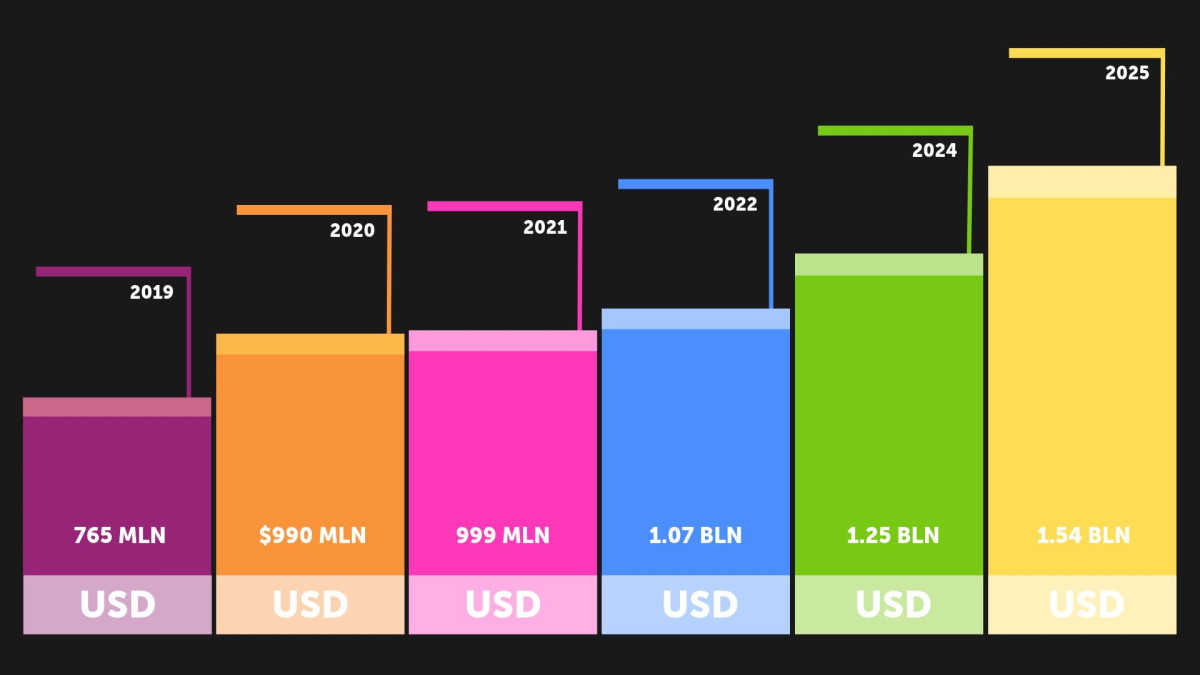
Source: Newzoo. No 2023 figure in the dataset.
Population and Coverage
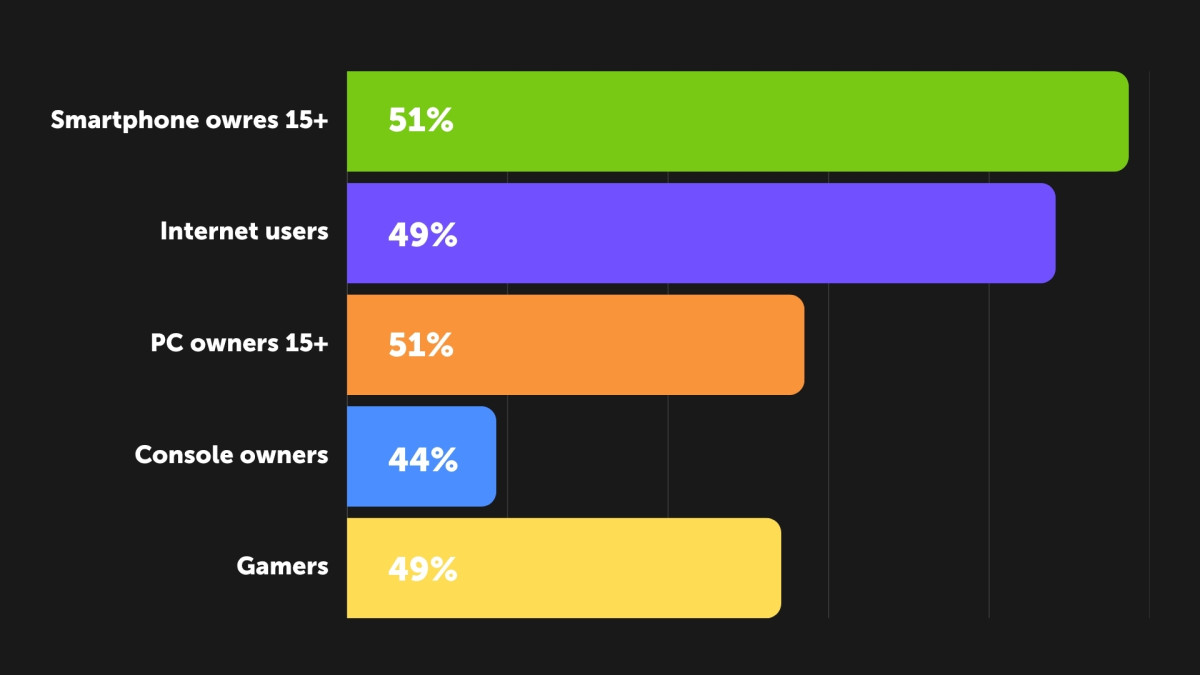
Source: Datareportal (ownership, internet users: ~77.5 mln), Newzoo (gamers). The gamers bar shows 54.1M against the population of 87.9M; the other bars are percentages.
Number of Gamers by Platform, 2025
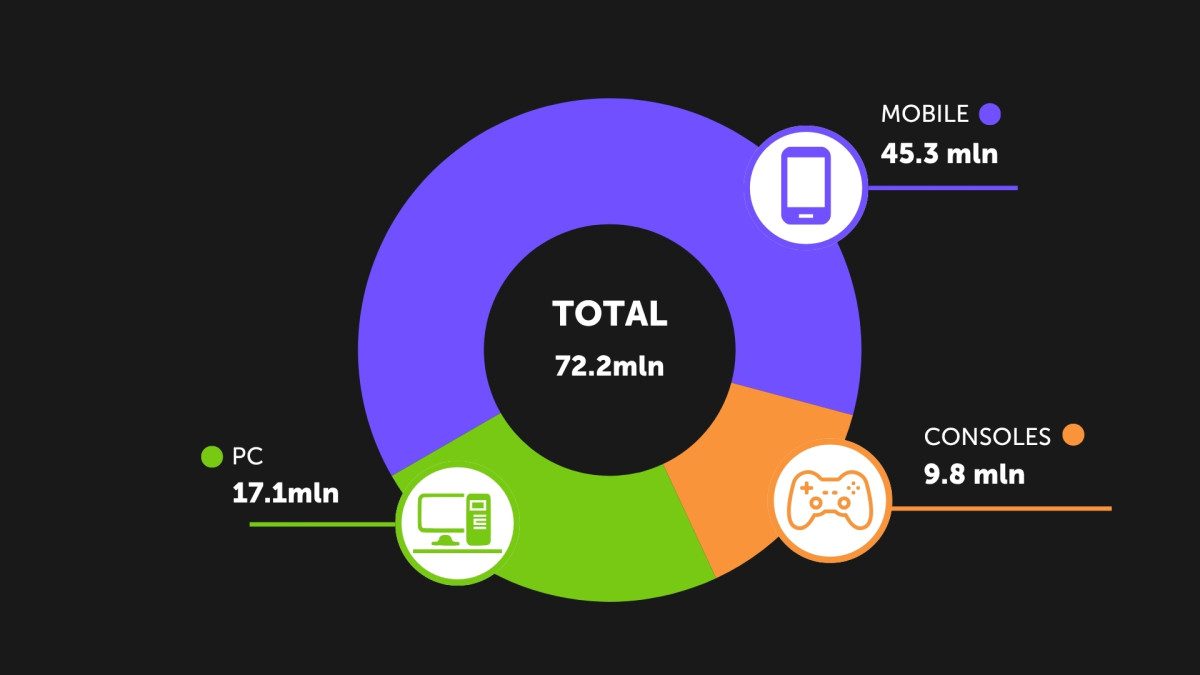
Source: Newzoo. The figures aren’t combined: the same person can play on a mobile device and on a PC or console, so the total is higher than the 54.1 million unique gamers.
Market Size by Platform, 2025
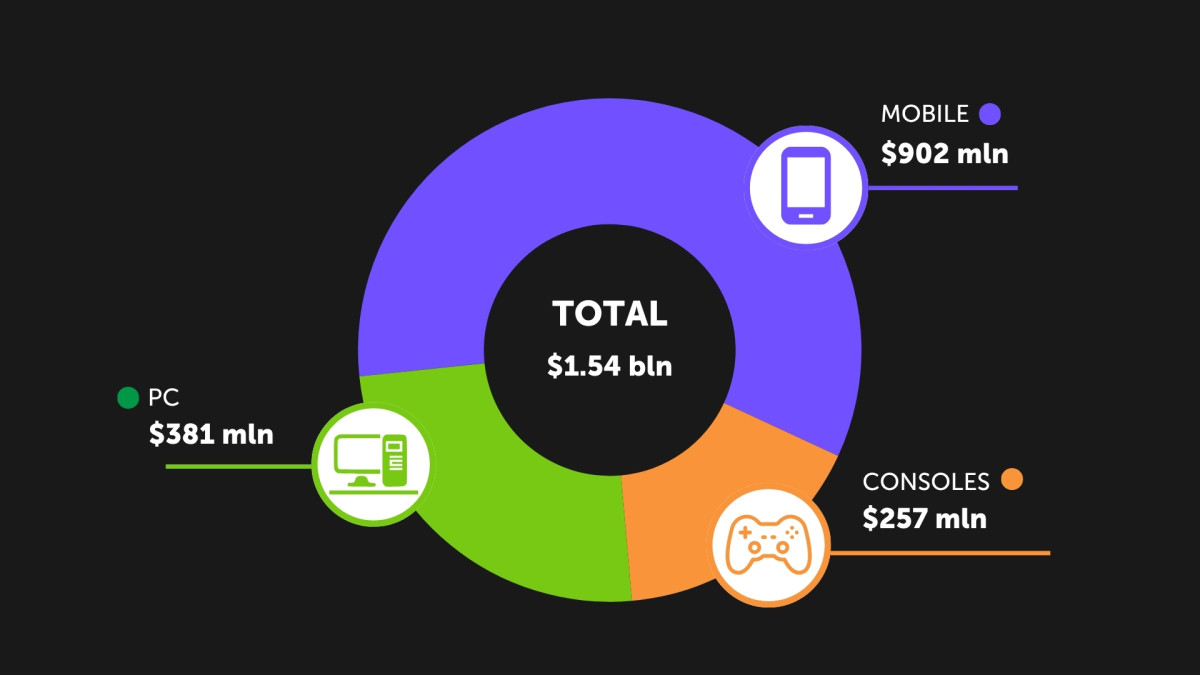
Source: Newzoo.
The mobile segment accounts for 45.3 million of the 54.1 million players and approximately 59% of total market revenue (USD 902 million out of USD 1.54 billion). The PC and console segments are significantly smaller in volume.
Mobile revenue in Turkey is the fastest-growing in the top 30: from 2022 to 2025, it grew by 71%, from USD 527 million to USD 899 million.
Player Spending
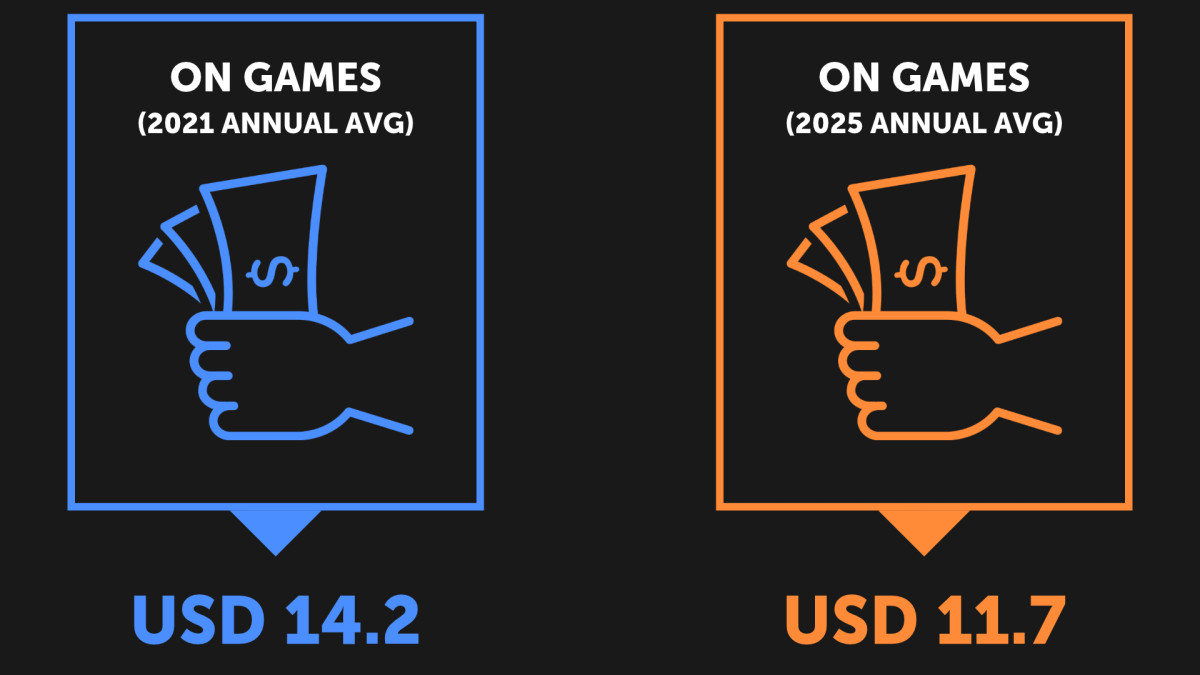
Source: Newzoo (2019–2021); SensorTower State of Mobile 2026, Gaming in Türkiye | MENA | EU (2024–2025). Market revenue divided by population.
Investments and the Startup Ecosystem
- According to InvestGame, since 2020 Turkish companies have raised USD 935 million across 132 funding rounds and completed seven exits totaling USD 2.9 billion, including earn-outs. Turkey accounts for 5.8% of all global gaming deals and 2.4% of their total value.
- The largest M&A deals include Peak Games (USD 1.9 billion), Loom Games (USD 1 billion), and Gram Games (USD 250 million).
- Loom Games, launched in 2025, reached a USD 1 billion valuation faster than nearly any other company in the industry. It was acquired by Scopely, which, in its own words, was drawn to the team’s product intuition and rapid iteration speed.
- Active local funds: Arcadia Gaming Partners (launched in 2025 by Akin Babayigit, one of the most active funds not only in Turkey but also globally), Boğaziçi Ventures (operating since 2013), Laton Ventures (Grand Games, Pine Games), Ludus Ventures (three exits in 2025: Playable Factory, Gleam Games, Paxie Games).
Turkey is currently one of the world’s most active emerging gaming investment markets.
Government Support and Grants
There are two distinct channels of government support in Turkey, and it’s important not to confuse them. The first is domestic: grants for development and R&D through KOSGEB and TÜBİTAK, plus tax incentives for technology parks. The second is export-oriented: reimbursement of marketing and operating expenses through the Ministry of Trade.
Scale of Support
According to data from the Minister of Industry and Technology Mehmet Fatih Kadır (2026 prices):
On top of that, there are 5 design centers and 13 R&D centers.
Export Support (Decree No. 10962, February 2026)
It was precisely thanks to this program that the country once experienced a hyper-casual boom. Since then, the program has evolved, become more transparent, and in some respects improved (the level of support has increased). Thanks to export support, Turkish companies can recoup approximately USD 2 million per year.
Player Profiles
In Turkey, people from virtually all age groups play mobile games. The majority of mobile game users are aged 18–44. The largest segments are 18–24 and 25–34, followed by 35–44, while the share of the 45–65 group is limited.
The main reason for such a wide age range is the variety of genres and the ability to play easily anytime, anywhere. This accessibility supports quick gaming sessions during short breaks, as well as greater regularity.
Eighty percent of Turkey’s population speaks no language other than Turkish. According to the EF EPI 2025 ranking, Turkey is 71st out of 123 countries. Under these conditions, game localization into Turkish is essential for reaching a broad audience.
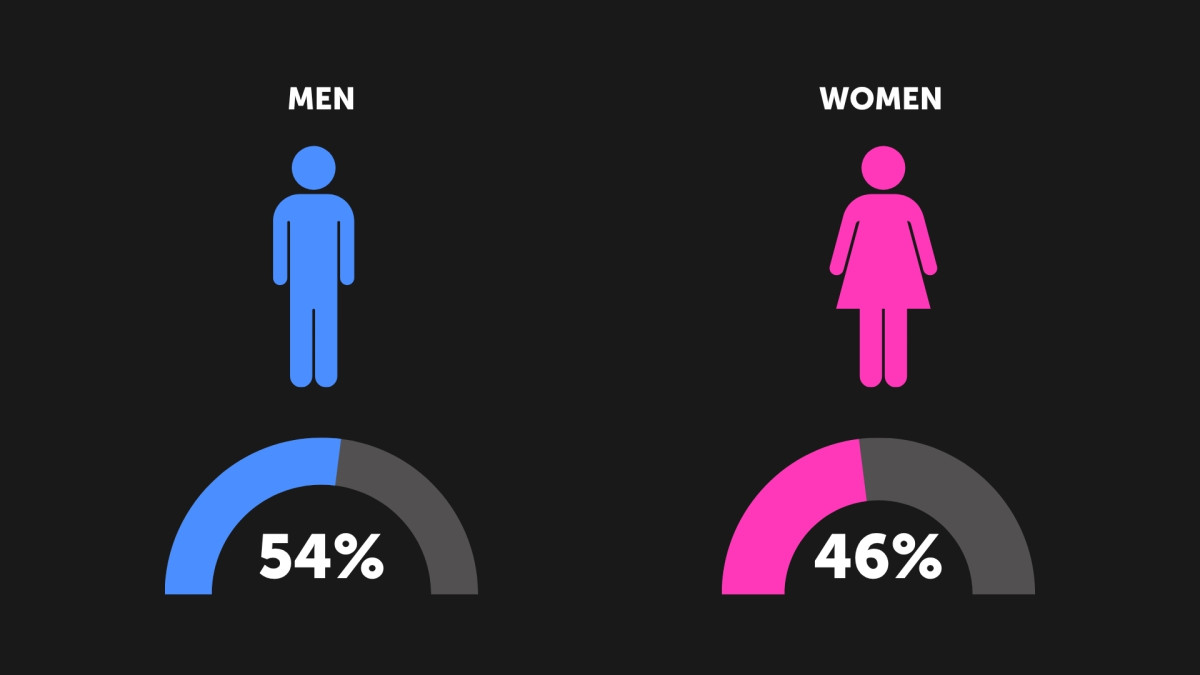
Player Demographics (2025)
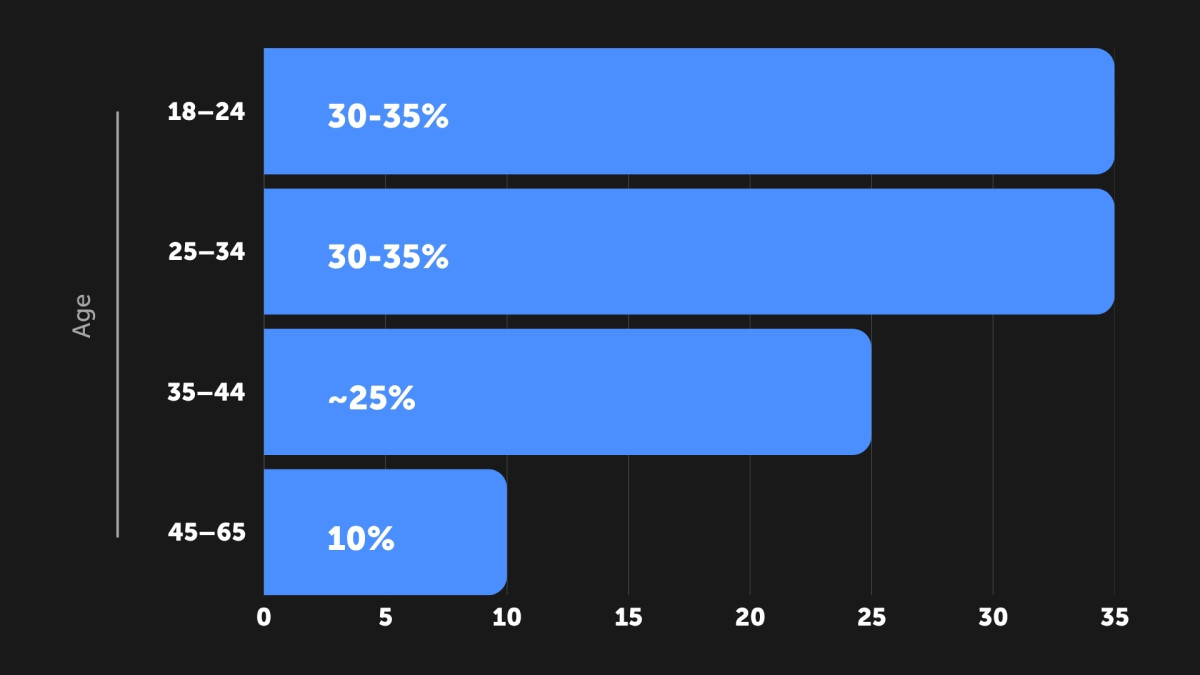
Share of the audience by age group, %. Source: Gaming in Türkiye.
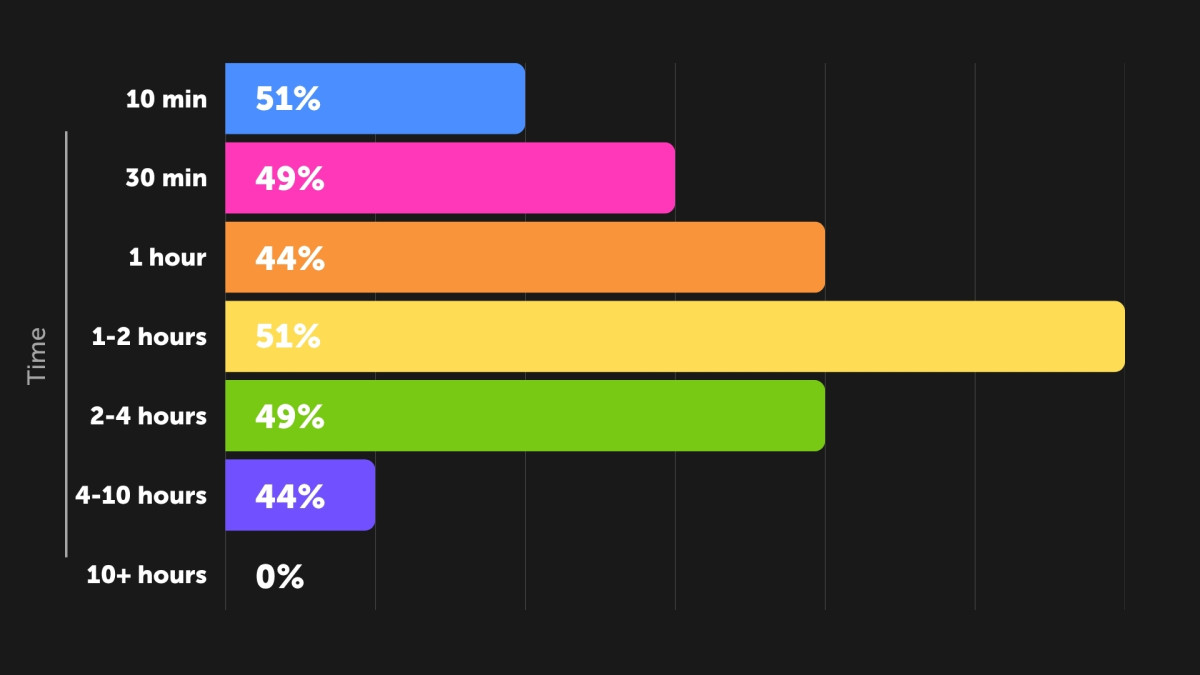
Average Daily Mobile Gaming Time (source)
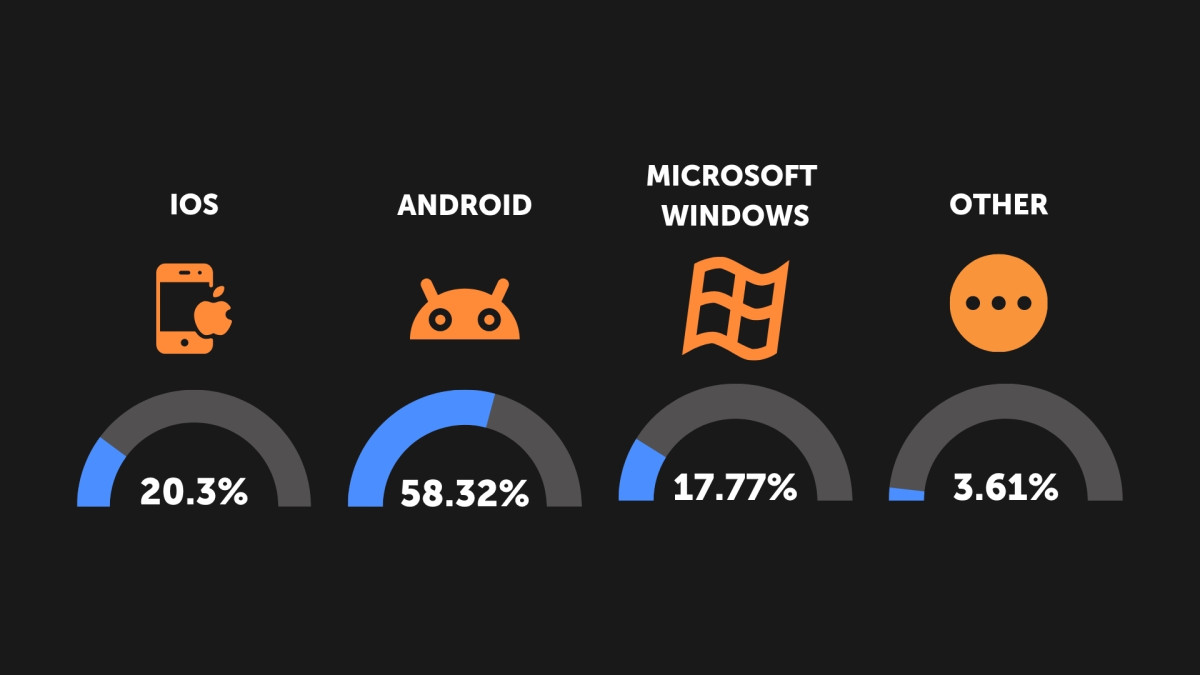
OS Distribution (Statcounter)
Average Internet Speed (Datareportal)
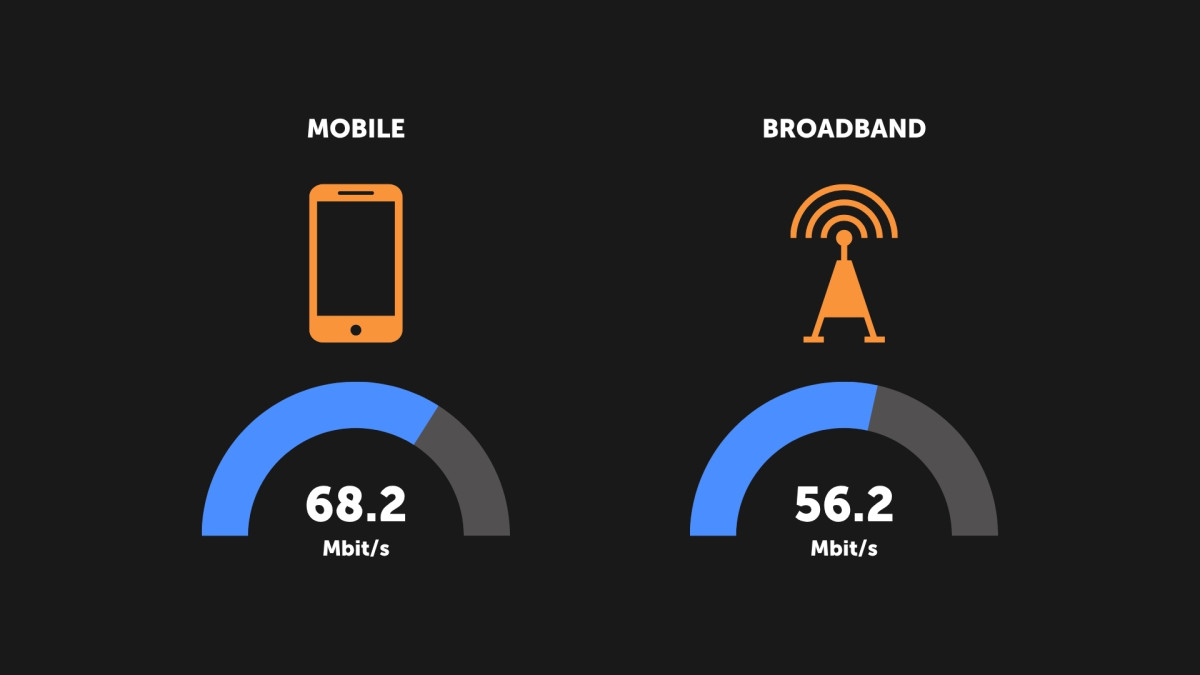
The arcs are drawn on a 0–100 Mbit/s scale.
Profiles by Age Group
The Most Popular Mobile Game Genres (iOS and Android, 2025)
Top Mobile Games (2025)
| Metric | Top 5 |
|---|---|
| By downloads | PUBG MOBILE, Subway Surfers, Block Blast!, Shawarma Legend (Turkish title), Brawl Stars |
| By revenue | PUBG MOBILE, eFootball™, Whiteout Survival, Royal Match, Last War: Survival Game |
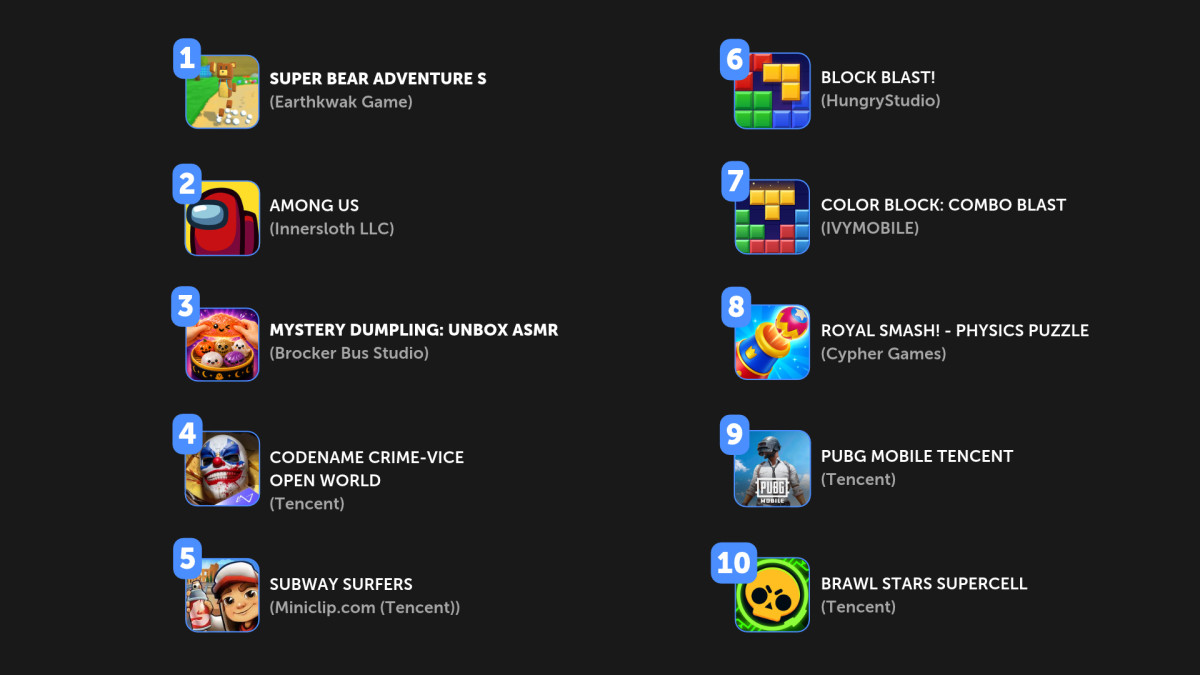
Top Free Mobile Games (August 2026)
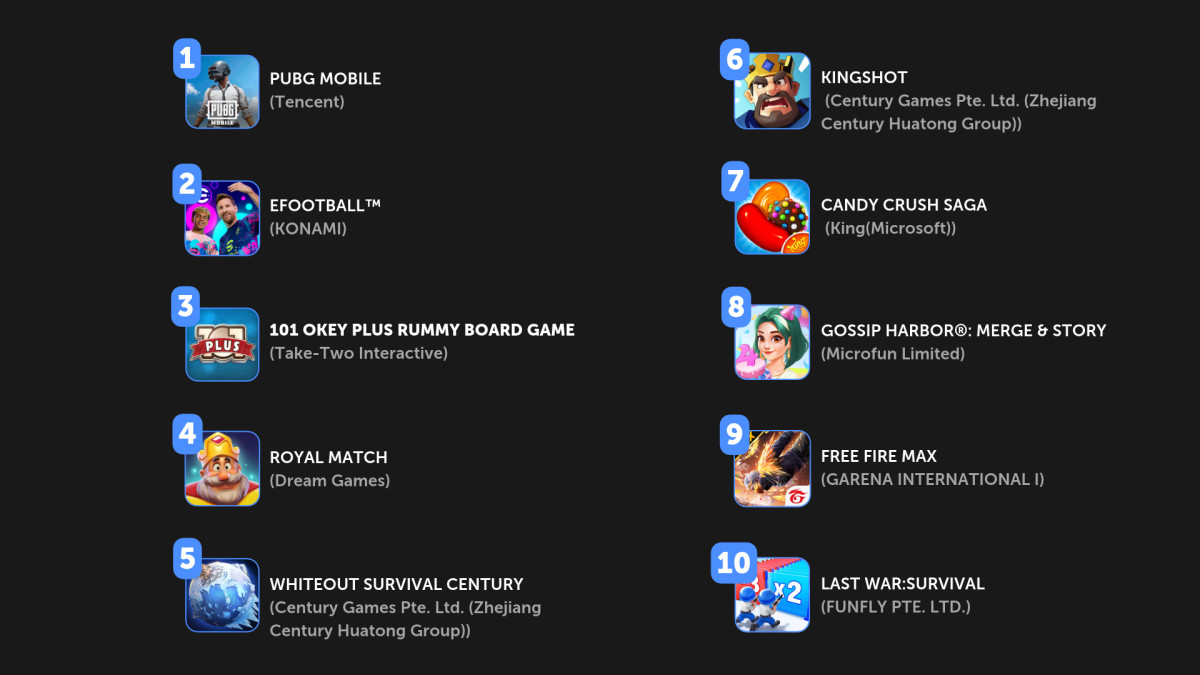
Top Mobile Games by Revenue (August 2026)
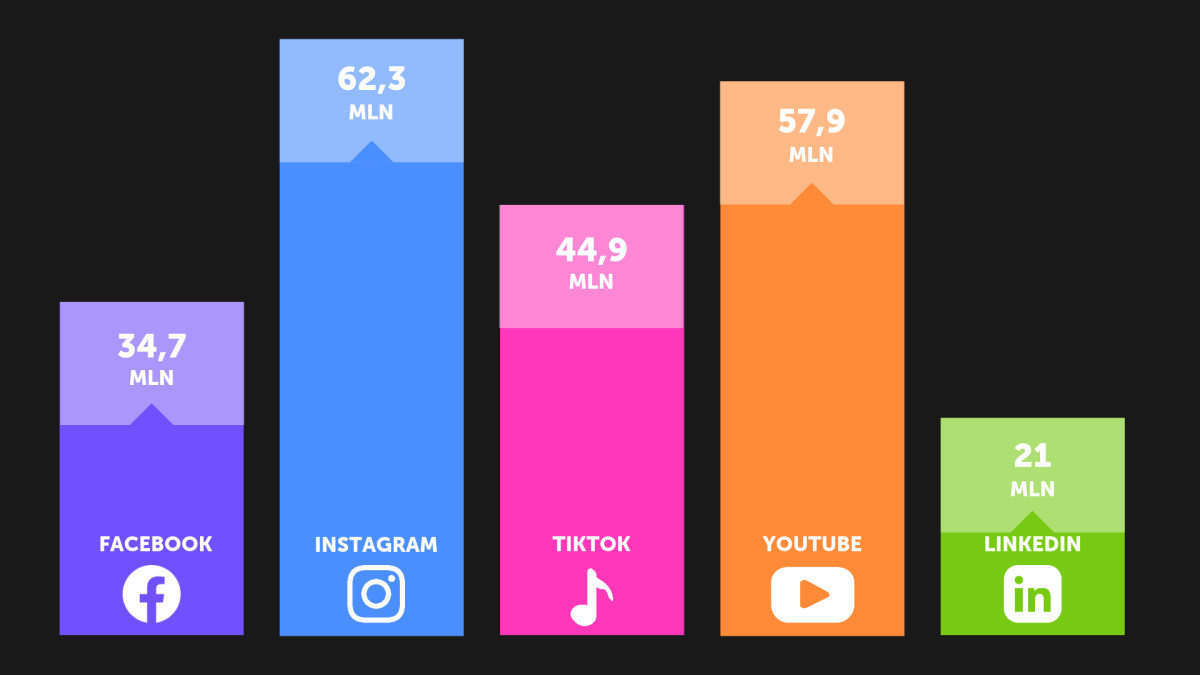
Popular Social Media (Datareportal)
Localization: Why It’s Critical for Turkish Gamers
The Language Barrier—a Measurable Problem
This is confirmed by the EF English Proficiency Index 2025. Historical trends show volatility: 32nd place in 2012, a drop to 73rd–79th in 2018–2019, a recovery to 64th in 2022, and a further decline by 2025.
Relying on an English interface or machine translation as a temporary solution doesn’t work systematically. For the majority of the audience, it’s a barrier.
What Makes for High-Quality Localization
Accuracy in Speech and Writing
- Grammatical accuracy and the absence of errors are key to building player trust. Translations must be done by native speakers or a team with expertise in Turkish.
- Take into account the difference between colloquial and formal Turkish. The tone and style of dialogue must fit the game’s genre and audience.
Technical and Linguistic Features of Turkish
- Support for the special characters of the Turkish alphabet (Ö, Ç, Ş, ı, İ, Ü, Ğ) must be implemented at the font and game engine levels.
- In Turkish, verbs often come at the end of a sentence. This may cause UI text fields to overflow, so text length requires separate verification and layout adjustments.
- Incorrect alignment of menus and subtitles, or missing Turkish characters, directly disrupts the player’s immersion.
Voice-over
- Selecting voice actors who meet the expectations of the Turkish audience is one of the most important aspects of localization for players.
- Synchronizing speech with the phonetics of Turkish is especially important in animated scenes.
- Gaming terms and slang should be translated in a way that preserves the gaming context, not word for word.
Cultural Sensitivity
- The Turkish gaming audience is sensitive to religious and political topics: references to sacred values, religious holidays, and political contexts require careful vetting.
- Humor must be adapted. What’s funny in one culture may be neutral or even offensive to a Turkish audience.
- Cultural elements should be meaningful, not superficial. In historical games, accuracy is important; in contemporary games, recognizable details of everyday life (street food, music, colloquial expressions) are key.
Technical Optimization
- Localization files must display correctly on different devices and at different screen resolutions.
- Post-translation testing is required to ensure all text is in place and contextually accurate throughout the game.
If you’re interested in the Turkish game market, set aside a budget for professional Turkish localization (not machine translation) as early as the soft launch phase. Font and UI testing for Turkish characters, a cultural audit of the content, and voice actor selection belong in the main product budget, not in a last-minute adjustment before release.
Turkish Localization Examples
Turkey’s combination of a massive mobile audience, a strong appetite for action and tactical games, and a near-total language barrier makes Turkish localization one of the highest-ROI investments a publisher can make in the region. At Allcorrect, we’ve worked on both mobile and PC titles brought to Turkish players. Here are two examples:
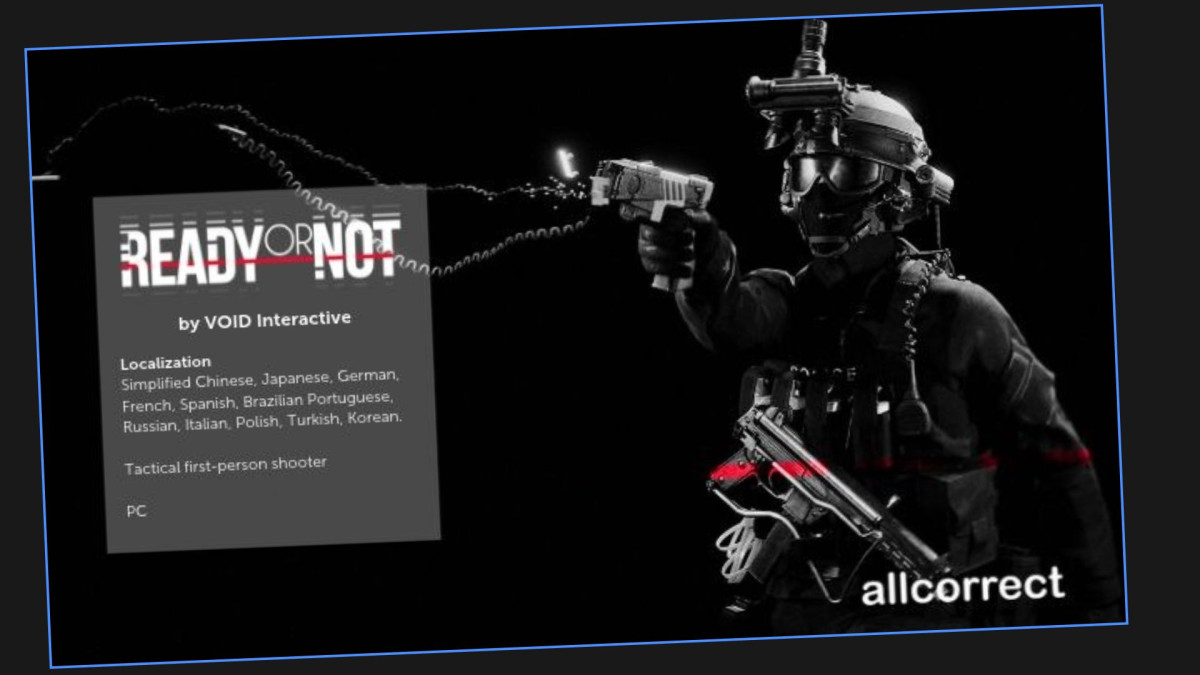
Ready or Not by VOID Interactive
This critically acclaimed tactical first-person shooter (Moby score: 7.6) was localized into 11 languages, including Turkish, for PC via Steam. Action and tactical games are among the most popular genres in Turkey—PUBG MOBILE has held the top position in the country’s revenue charts for years—and Ready or Not sits squarely in that space. We handled Turkish localization as part of a major multilingual rollout, adapting military terminology, mission briefings, and UI strings to read naturally for a Turkish-speaking audience without losing the game’s tense, authentic tone.
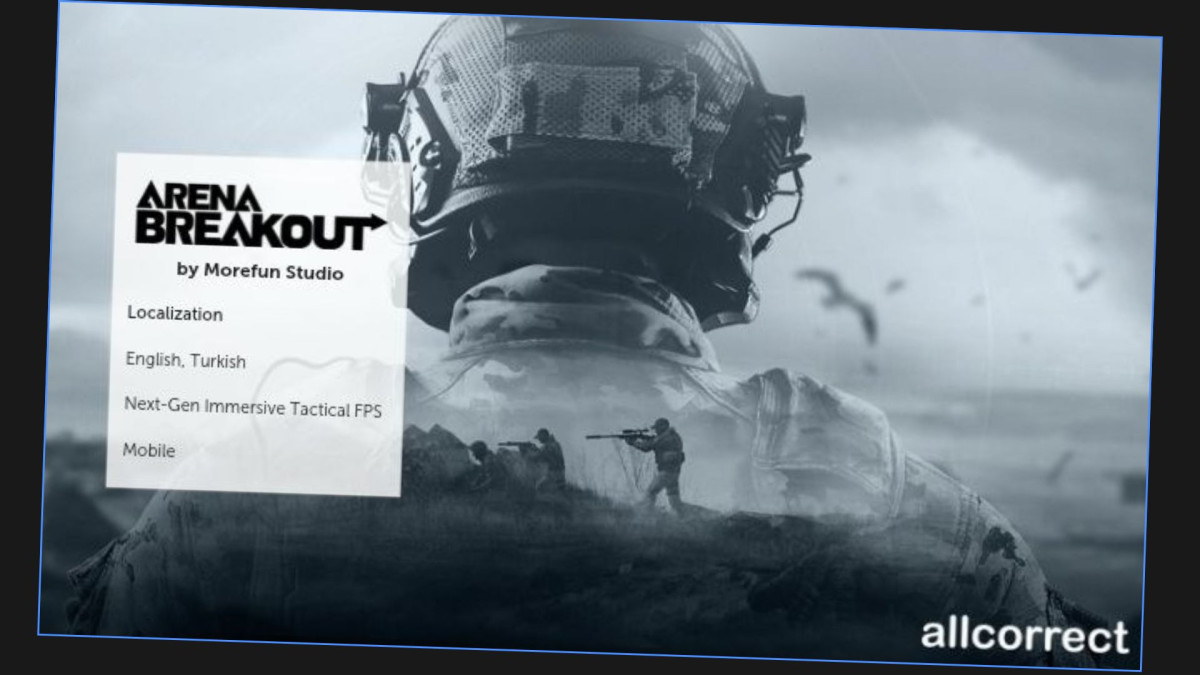
Arena Breakout by Morefun Studio
This next-gen immersive tactical FPS was localized specifically into Turkish for mobile—a combination that maps directly onto Turkey’s market profile: 45.3 million mobile gamers and a dominant preference for action titles. It was localized into just two languages, English and Turkish, which underlines how deliberately the publisher targeted the Turkish audience. We adapted weapon descriptions, tactical callouts, and the interface, paying close attention to the demands of the language, including character support for special letters and the UI text expansion that Turkish’s agglutinative word structure tends to produce.
Planning to localize your game for Turkey? Check out our localization guide and pricing to get started.
Conclusion
Turkey combines two gaming markets in one country.
In addition to a strong domestic development market, Turkish teams receive government support. This is a huge boon for small teams, which can experiment and launch their products much more effectively.
While Turkey is more of a tier-3 country as a sales market, as a development hub it is currently one of the best regions in the market.


