
The global gaming market in 2025 continued to grow, but the picture behind the numbers is far from simple. While overall revenue increased, the dynamics across regions, platforms, and genres vary significantly. This gaming market analysis focuses on the key trends shaping the industry and what they mean for developers and publishers.
- What Was Happening in the Gaming Market in 2025?
- Why Does Market Growth Not Mean Equal Opportunity?
- General Statistics
- What Was Driving Mobile Game Growth in 2025?
- Why Are Asian Studios Gaining More Influence?
- Why Does Market Fragmentation Matter for Studios and Publishers?
- What Was Happening in the PC and Console Market?
- Top Games
- 2025 Global Players
- How Is AI Changing the Gaming Industry?
- Overall Conclusion
- FAQ
What Was Happening in the Gaming Market in 2025?
The gaming market grew in 2025, but the growth was uneven. Overall revenue was up, yet performance differed sharply by platform, genre, and region.
The surface-level picture looks positive: the market grew by 7.5% in 2025. The main drivers were:
- PC: +10.4% YoY
- Mobile: +7.7% YoY
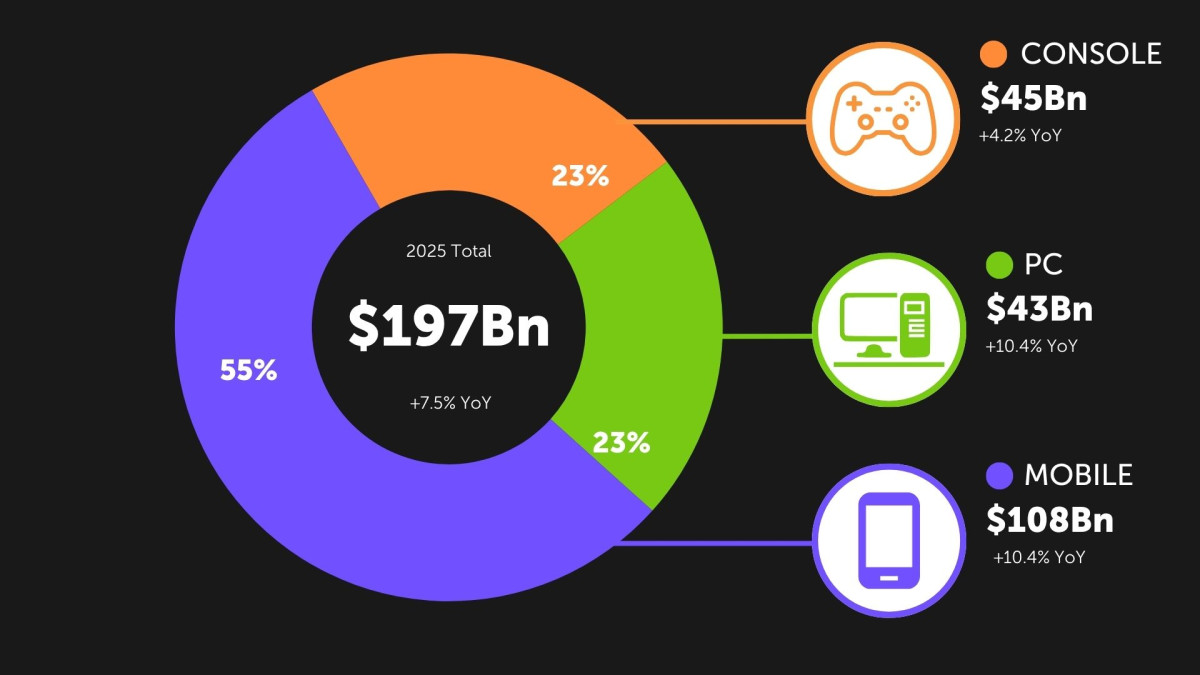 Source: https://newzoo.com/resources/blog/year-in-review-2025-to-date
However, aggregate growth hides a more complicated reality. Not every platform benefited in the same way, and not every region expanded at the same pace. In practice, the gaming industry now behaves less like one global market and more like a set of overlapping regional and platform-specific ecosystems.
In 2025, gaming kept growing as a whole, but the real story was fragmentation rather than uniform expansion.
Why Does Market Growth Not Mean Equal Opportunity?
Because revenue growth is concentrated, not evenly distributed. Some categories, studios, and regions are outperforming the rest, while others face slower growth or structural pressure.
This matters because headline numbers can create a misleading sense of stability. A rising market does not automatically mean better conditions for every developer or publisher. In 2025, the strongest gains came from particular segments rather than from broad-based industry momentum.
For strategy teams, this changes the question from “Is the market growing?” to “Which segment is growing, where, and for whom?”
Market growth in 2025 created opportunities, but only in selected parts of the industry.
General Statistics
Top 20 Countries by Gaming Market Size
|
Rank |
Country |
Market Size |
| 1 | China | 53,200 |
| 2 | United States | 49,800 |
| 3 | Japan | 17,600 |
| 4 | South Korea | 7,840 |
| 5 | Germany | 6,960 |
| 6 | United Kingdom | 6,600 |
| 7 | France | 4,110 |
| 8 | Canada | 3,130 |
| 9 | Brazil | 2,670 |
| 10 | Mexico | 2,670 |
| 11 | Italy | 2,650 |
| 12 | Australia | 2,100 |
| 13 | Spain | 2,090 |
| 14 | Indonesia | 2,020 |
| 15 | Taiwan | 1,960 |
| 16 | India | 1,580 |
| 17 | Turkey | 1,390 |
| 18 | Saudi Arabia | 1,360 |
| 19 | Netherlands | 1,220 |
| 20 | Thailand | 1,180 |
What Was Driving Mobile Game Growth in 2025?
Mobile game growth in 2025 was driven mainly by specific high-performing categories, especially 4X strategy games. This is not the same as broad, balanced growth across the entire mobile segment.
That distinction is important. When one genre carries a large share of revenue growth, it suggests concentration rather than healthy diversification. It also means that teams outside those categories may not feel the same upside, even while the overall mobile market appears strong on paper.
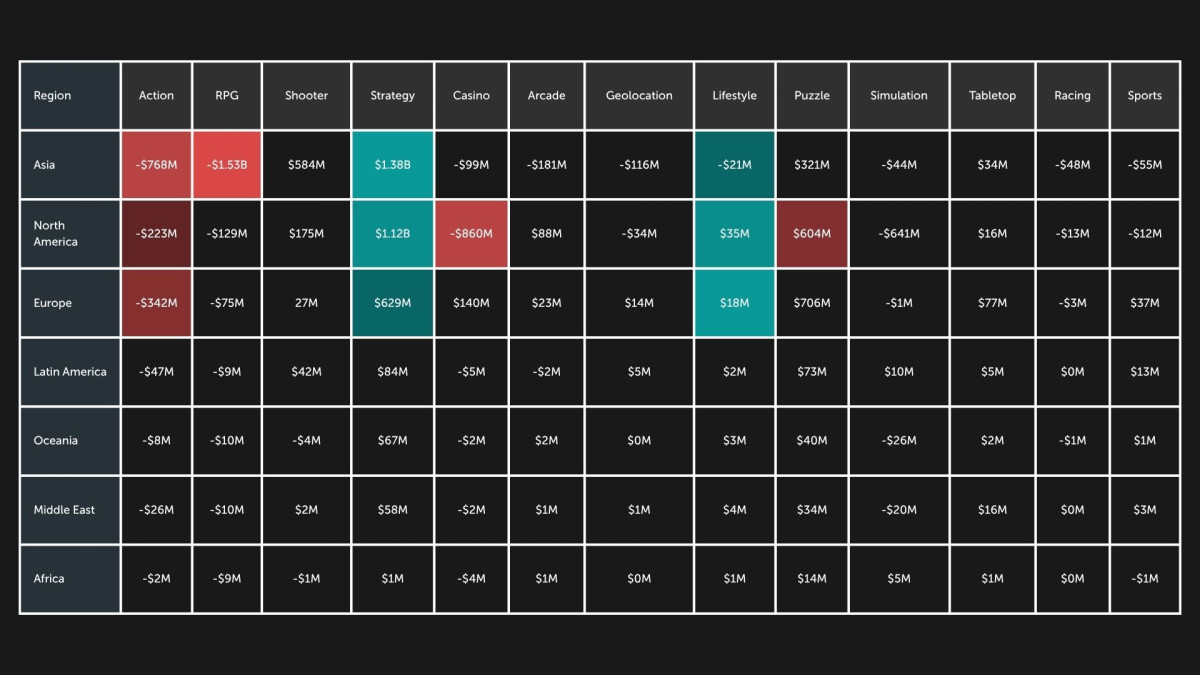 Source: https://sensortower.com/report/state-of-gaming-2026/download
This is one reason why mobile remains attractive but more competitive: success increasingly depends on sharp genre-market fit, strong live operations, and regional product alignment.
Mobile grew in 2025, but much of that growth was concentrated in a narrow set of winning categories.
Why Are Asian Studios Gaining More Influence?
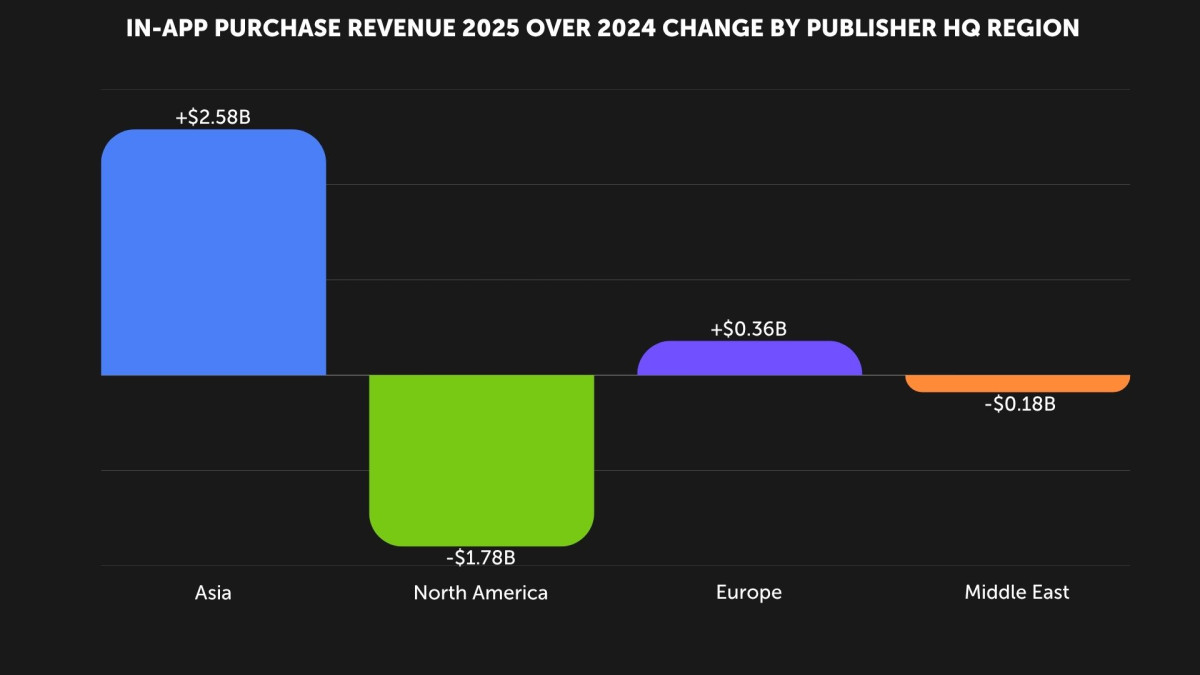
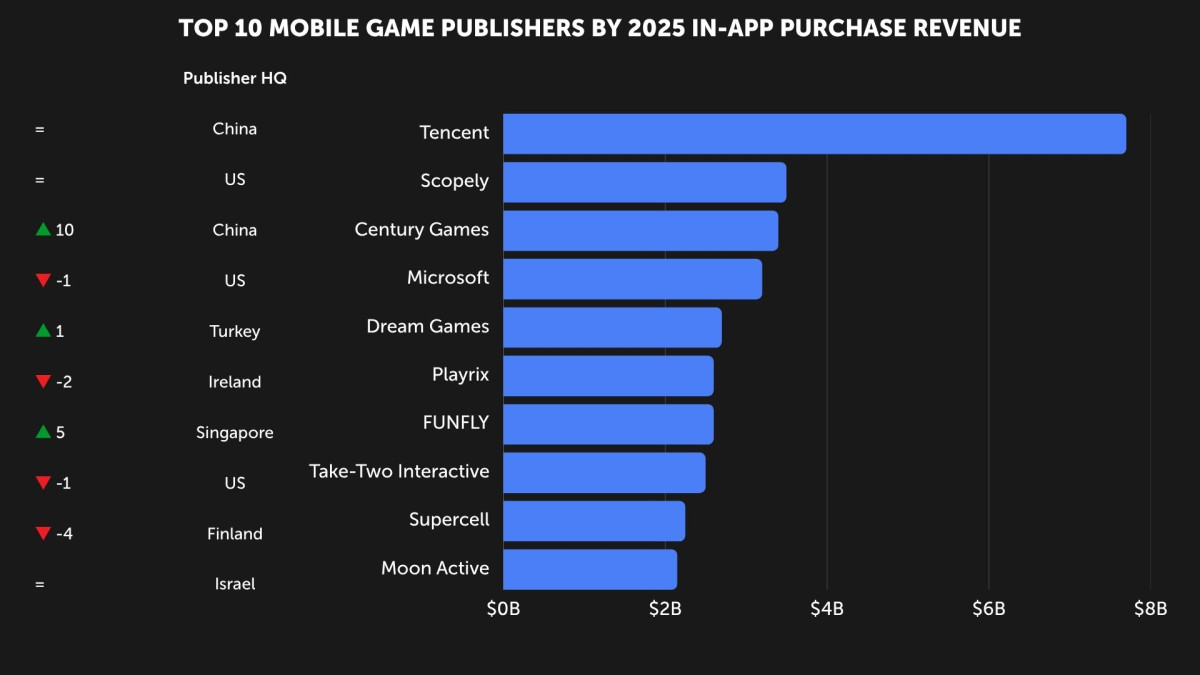
Asian studios, especially Chinese teams, played a larger role in shaping gaming revenues in 2025. They launched some of the market’s most commercially successful projects and responded quickly to player demand.
There is a visible trend: several of the most profitable mobile releases came from Asian developers, including titles such as Kingshot and SD Gundam G Generation ETERNAL. This reflects more than a temporary spike. It suggests stronger execution in production scale, monetization design, and adaptation speed.
The regional balance was shifting in other ways, too. As Asian companies grew, some North American companies were losing relative ground. That affected not only revenue charts but also hiring, investment confidence, and risk tolerance across the market.
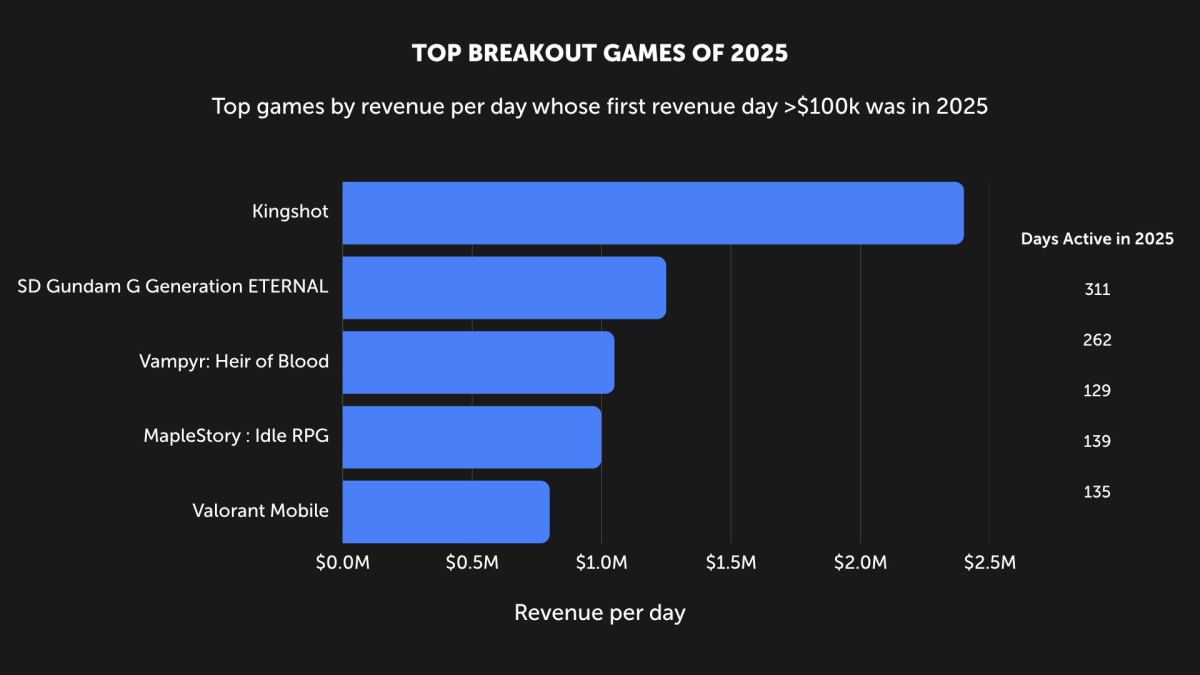
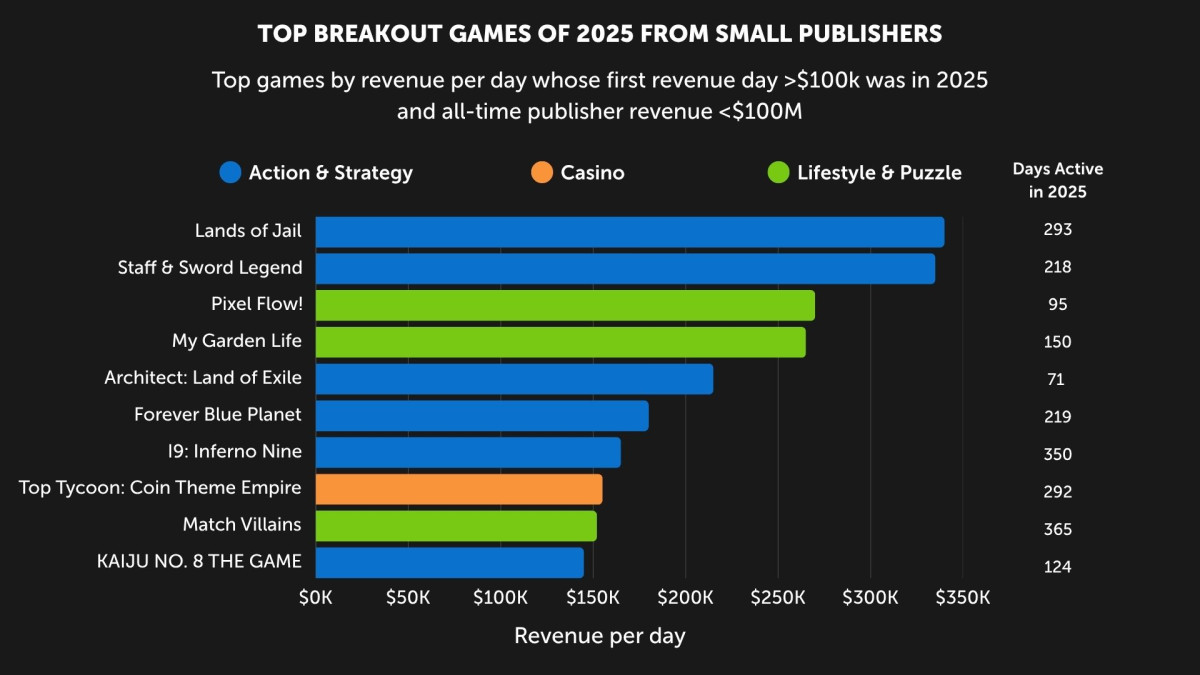
For developers and publishers, this means competitive benchmarking can no longer focus mostly on North American and Western European leaders. Increasingly, the most relevant benchmarks come from Asia.
Asian studios aren’t just participating in market growth—they’re defining where much of that growth happens.
Why Does Market Fragmentation Matter for Studios and Publishers?
Because fragmented growth makes global scaling more complex. A strategy that works in one region, platform, or genre may underperform in another.
There’s an important connection here: fragmentation affects budgets, operations, and localization planning. That point should be made even more explicitly. When market conditions differ by geography, global rollout becomes less predictable. Teams need to decide:
- which regions to prioritize first,
- which platforms deserve investment,
- which monetization assumptions still hold,
- and how localization budgets should be structured by market potential.
This is especially relevant for service providers and game companies working internationally. A fragmented market increases the value of market-specific research, localization planning, and regional content strategy.
Fragmentation raises execution complexity, so global growth now requires more regional precision.
In such a fragmented environment, scaling globally requires careful planning—including how localization budgets are structured across regions.
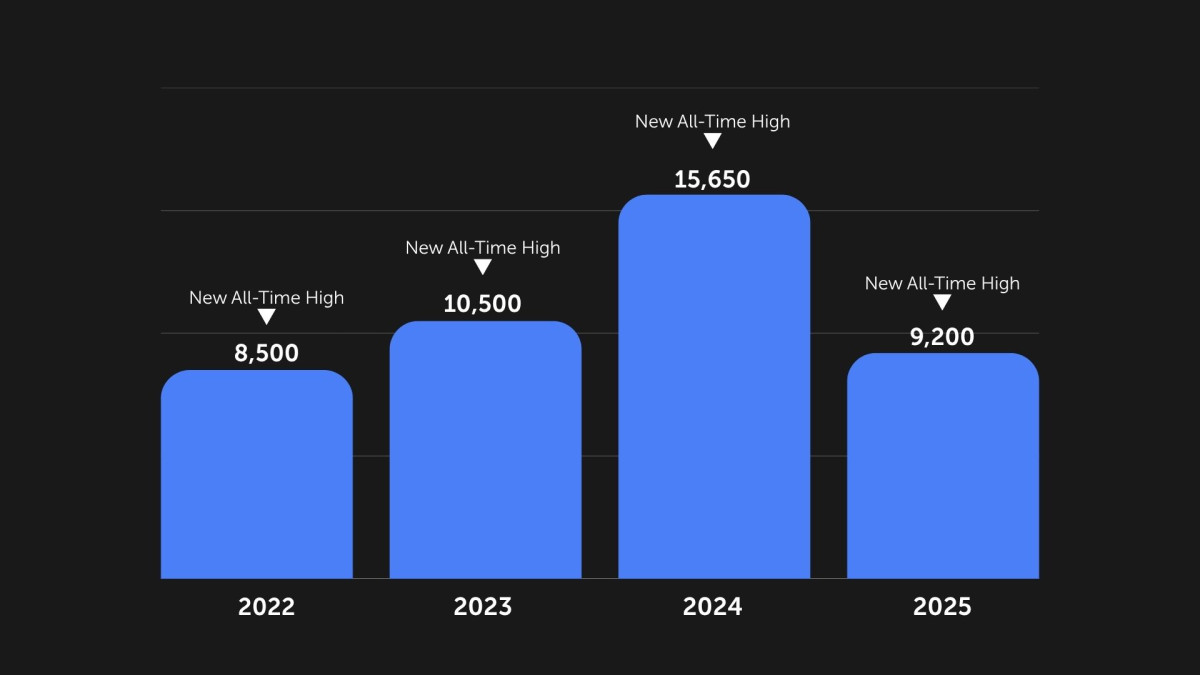 Source: https://www.matthewball.co/all/presentation-the-state-of-video-gaming-in-2026
What Was Happening in the PC and Console Market?
The PC and console segments look healthier than many teams expected, especially on PC. In 2025 Steam continued to support strong discoverability for indie and mid-sized titles, while console revenue was dominated by major franchises but gradually opening up.
One of the clearest trends was the “indie renaissance” on PC. Steam gave solo developers and small teams a realistic path to visibility, even without massive marketing budgets. Mid-sized teams also performed well, with projects like Clair Obscur: Expedition 33 often cited as proof that strong positioning and execution can break through.
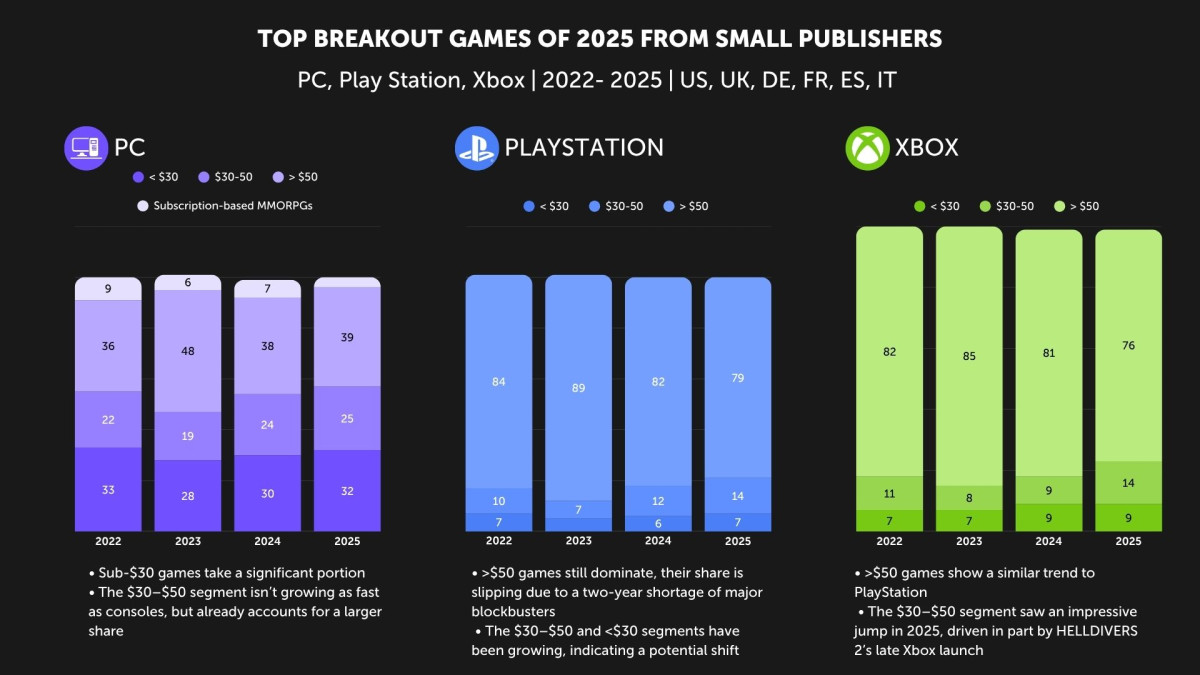 Source: https://newzoo.com/resources/trend-reports/the-pc-console-gaming-report-2026
At the same time, platform economics still differed. On PC, lower-priced titles—including games priced at up to 30 USD—accounted for a meaningful share of the market. On PlayStation and Xbox, blockbuster titles still dominated revenue, although indie and AA games started gaining share.
PC offered broader room for smaller teams, and consoles still favored major titles while slowly becoming less concentrated.
Top Games
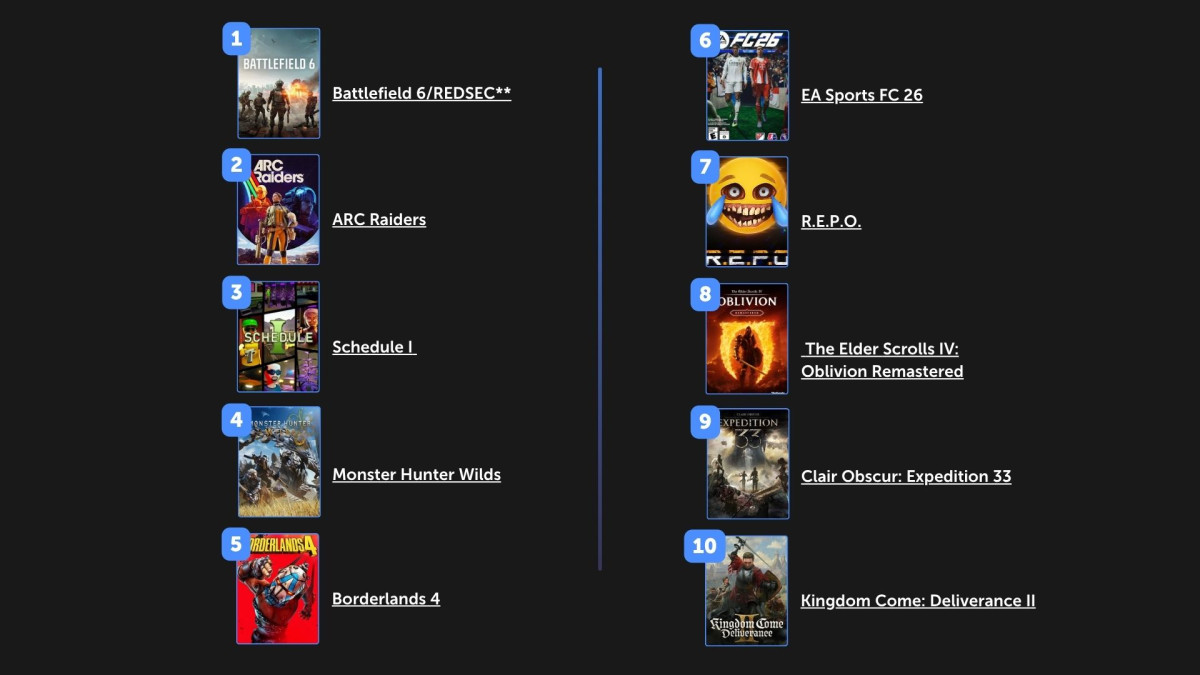
2025 releases: Top 10 PC games by revenue
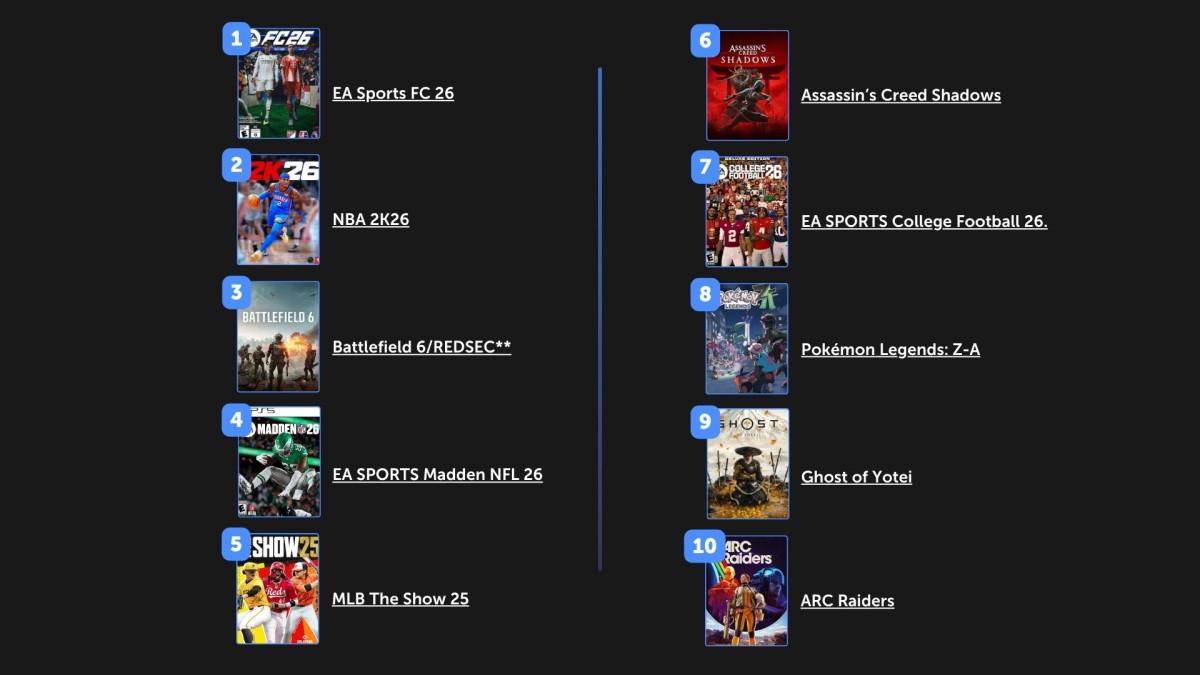
2025 releases: Top 10 console games by revenue
2025 releases: Top 10 Nintendo Switch games by revenue
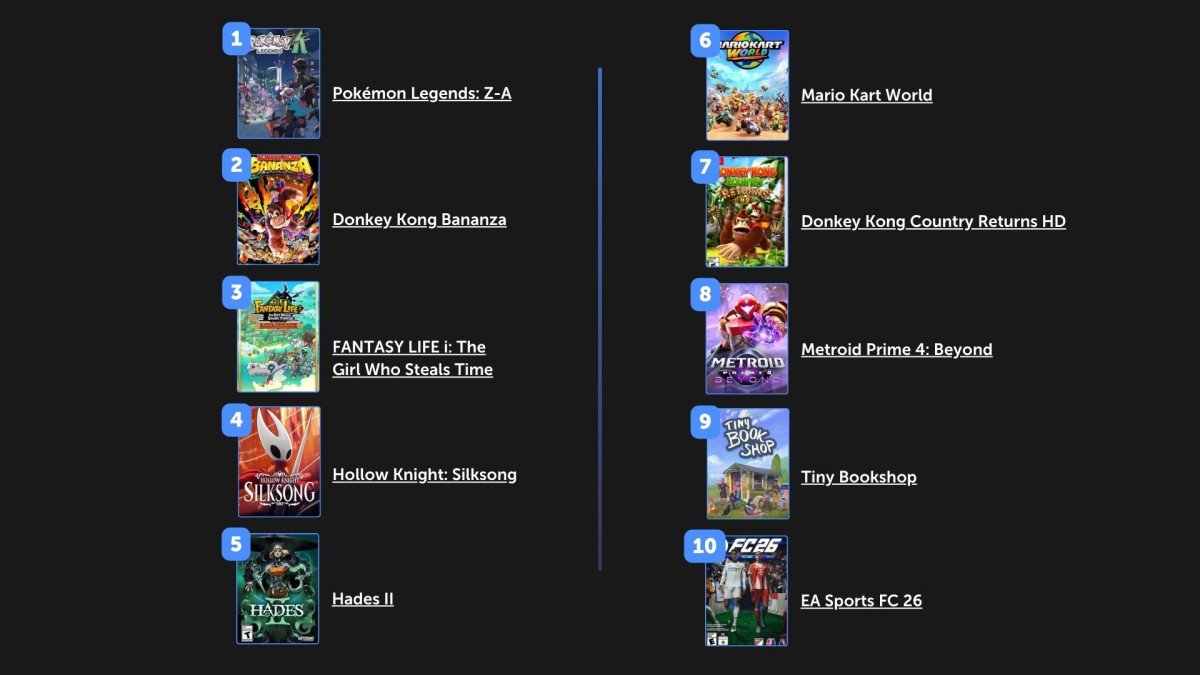
The best-selling games on PC, consoles, and Nintendo Switch in the US, the UK, France, Germany, Italy, and Spain confirm the point made above.
The year 2025 also saw the launch of the Nintendo Switch 2, which became the most successful console ever, for example, in the US. But the situation has changed since then, and Nintendo itself has revised its sales plans following a weak (relative to prior expectations) holiday season in the West.
2025 Global Players
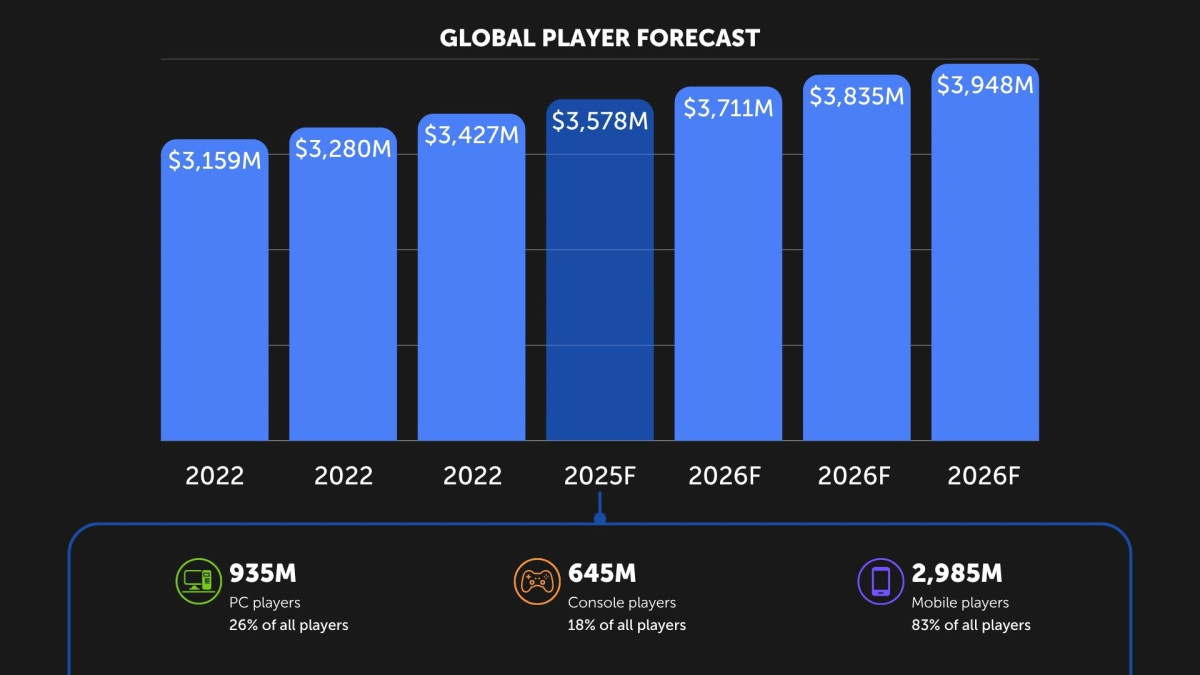
As for players, their numbers continue to grow, according to Newzoo. However, according to Sensor Tower, for example, the number of downloads is falling year after year. This means that the audience is growing solely due to new players on PC and consoles. At the same time, there are more and more people around the world who play video games, reinforcing the expansion of the global gaming audience. This creates additional complexity for developers, who have to consider how games are localized for diverse player bases across multiple regions.
How Is AI Changing the Gaming Industry?
AI is expanding production possibilities, but it is also raising concerns about jobs, quality control, and platform policy.
Smaller teams may use AI to compete more effectively on content scale, while many developers worry about job displacement and the long-term effect on creative work. Platform policy is also diverging: PC storefronts such as Steam are moving toward clearer disclosure practices, while mobile ecosystems appear more flexible.
This means AI isn’t just a tooling issue. It is becoming a production, compliance, and trust issue. Studios now need to decide not only whether to use AI, but also how openly, in which pipelines, and under what quality standards.
AI increases leverage for some teams, but it also creates new risks around labor, policy, and audience trust.
Overall Conclusion
The video game industry in 2025 was a growth market without uniform development. Revenue existed, but it was unevenly distributed, and success often depended on accurately targeting the right segment and audience.
The market became more diverse and dependent on:
- Specific genres
- Individual projects
- Regional dynamics
The world is changing, approaches are changing, and the market in which we operate is changing as well. To be successful, we must change along with it—be curious, productive, and unafraid to take risks.
FAQ
1. Did the gaming industry grow in 2025?
Yes, the gaming industry grew in 2025, but the growth was uneven. Overall revenue was up, yet the strongest gains came from specific platforms, genres, and regions rather than from the market as a whole.
2. Why was the 2025 gaming market considered fragmented?
Because different parts of the market were moving in different directions. Some segments were expanding quickly, while others faced slower growth, tougher competition, or regional pressure.
3. What was driving mobile game revenue in 2025?
A major share of mobile growth was driven by high-performing categories such as 4X strategy games. That means mobile growth was real, but not evenly spread across all genres.
4. Why did Asian game studios become more important?
Asian studios shipped many of the most commercially successful titles and responded quickly to market demand. Their rising influence is reshaping global competition and benchmark standards.
5. Were indie games doing well in 2025?
Yes, especially on PC. Steam continued to create opportunities for indie and mid-sized teams, while lower-priced titles remained an important part of the PC ecosystem.
6. How does player growth affect game localization?
A broader global audience makes localization more important, not less. As player growth spreads across regions, teams need more precise localization and market adaptation to convert audience reach into revenue.


