Game localization starts with a glossary paradox: you need the full game text to build terminology, but need terminology to translate consistently. At Allcorrect, we created an AI pipeline that extracts terms from lockits, adds in-game context, and delivers ready glossaries for human or AI workflows. This cuts prep time tenfold and eliminates end-game rework.
Content:
- What is a game localization glossary?
- Why do new games lack ready glossaries?
- What are common game glossary problems?
- Why is a glossary critical for AI game localization?
- How to automate game glossary creation?
- What results from automated game glossaries?
- FAQ
What is a game localization glossary?
Ask any editor in the gaming industry about the foundation of a high-quality localization project, and they will tell you it’s the glossary. (Ask any translator, and they’ll probably sigh deeply and agree).
It’s the dream scenario: starting a project with a pristine, approved glossary containing all your key terms—every character name, location, weapon title, and invented word that makes your universe unique. It speeds up the workflow, ensures consistency, and stops your “Fire Sword” from becoming a “Flame Blade” halfway through Chapter 3.
But that dream rarely comes true.
Why do new games lack ready glossaries?
Sure, if you’re working on Sequel to Popular RPG 5, you’re safe. The universe is established, the terms are set in stone. But for the vast majority of new titles, the project is a “blank slate.” The translator doesn’t just lack the translations—they often don’t even know which words are terms yet.
Even if the dev team manages to provide a list of keywords (which is tough when the game is still being built), translating them in a vacuum is dangerous. To translate a glossary correctly, you technically need to read the entire game script first to understand the context.
In the fast-paced world of game dev, nobody has time for that. Thus, the localization of new games almost always starts without reliable terminology.
What are common game glossary problems?
Historically, localization teams have dealt with this using two “band-aid” solutions:
- The “Fix It in Post” Method: You build the glossary as you translate the game. You constantly update it, change your mind, and then, at the very end, you spend frantic hours running consistency checks to “scrub” the text of old, incorrect variants.
- The “Blind Guess” Method: You force yourself to translate the glossary at the very start without in-depth context. An experienced translator can probably guess 80% of it correctly. But the remaining 20%? Those are ticking time bombs. You end up translating a term without knowing the specific game mechanic or lore attached to it. You fix the obvious errors later, but factual errors often slip through.
Both methods work—the industry has survived on them for years—but they aren’t ideal. They burn the budget on rework, and they burn time. (Don’t forget: if you spend a week translating a glossary before you start working on the game script, you’ve just delayed the whole project by a week).
In the end, traditional workflows make every new project more expensive than necessary.
Why is a glossary critical for AI game localization?
The stakes get even higher when it comes to AI-assisted localization.
If you feed a bad glossary into an AI model, the damage is amplified. The AI won’t just use the wrong word; it will mimic the style and linguistic construction of that wrong word, potentially hallucinating content that contradicts the game’s lore or mechanics.
On the flip side, if you skip the glossary in an AI workflow, you spend double the time later trying to merge different outputs to make them look consistent.
In the end, traditional workflows make every new project more expensive than necessary.
How to automate game glossary creation?
Keeping all those headaches in mind, we decided to build our own tool to solve the glossary problem once and for all.
We didn’t just slap a “Generate” button on a chatbot. We built a pipeline using several different families of AI models, where each model has a specific job to do.
Here is the simplified version of our “Secret Sauce” :
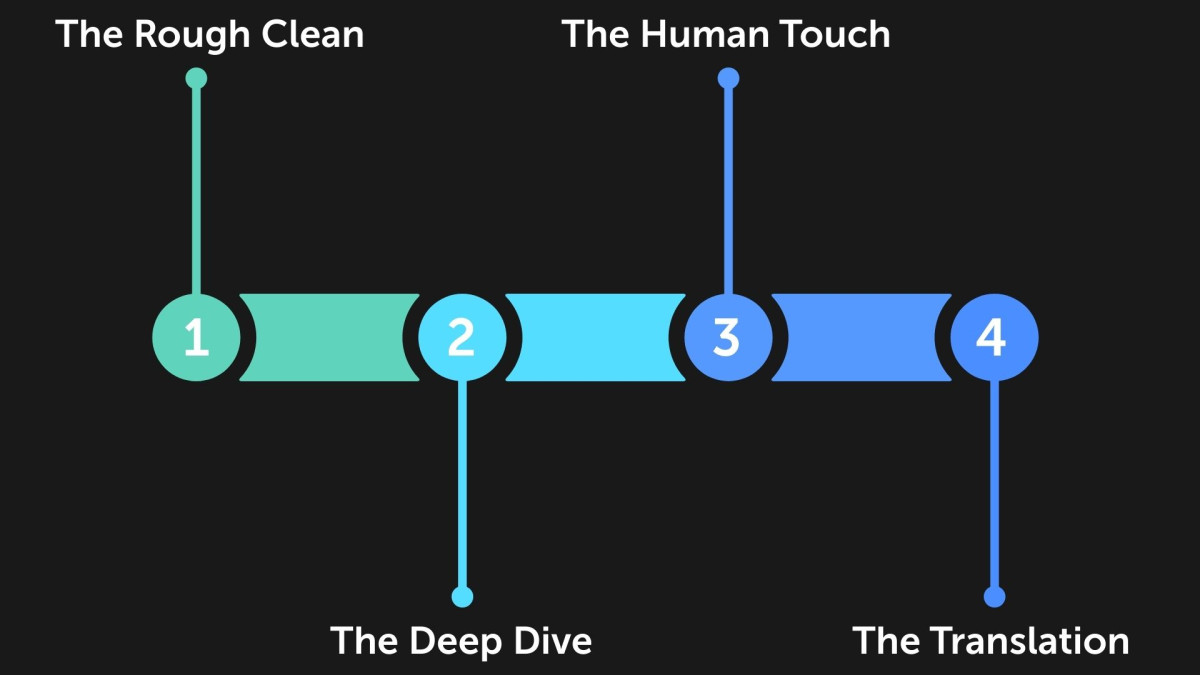
Step 1: The Rough Clean — The first model analyzes the game text and filters out everything that is obviously not a term. It merges duplicates and produces a clean list of term candidates in minutes, not days.
Step 2: The Deep Dive (Context Is King) — The second model filters false positives and generates descriptions for each term from the lockit, giving full context before translation.
Step 3: The Human Touch (Optional) — A linguist reviews the list, adjusts, and polishes it quickly — human expertise focused only on refinement.
Step 4: The Translation — Then we translate. Either by human experts or instantly via run.loc, ensuring consistent results across all languages.
What results from automated game glossaries?
We’re already using this workflow, and the results are huge for our clients:
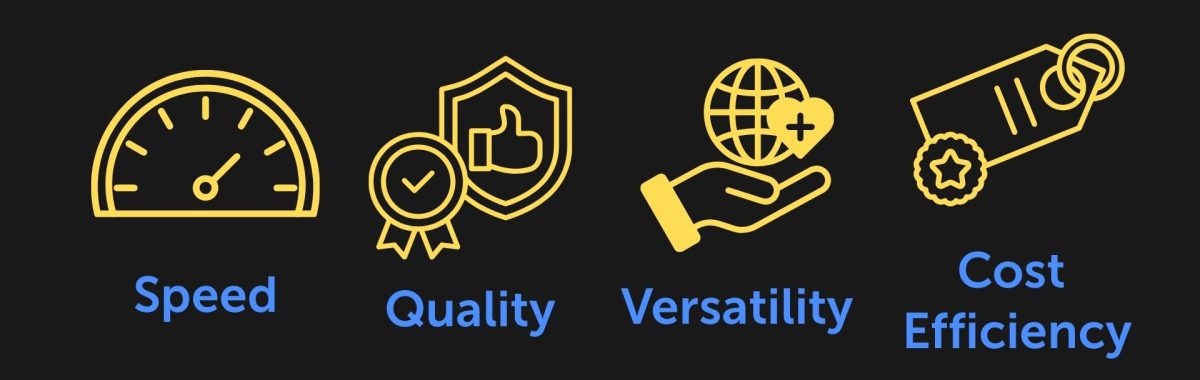
- Speed: Glossary prep time cut tenfold, allowing translation to start much sooner.
- Quality: Terms come with real-game context, eliminating “guesswork”.
- Versatility: Works for both human and AI localization equally well.
- Cost Efficiency: Fewer man-hours on rework = better budget results.
A glossary shouldn’t be a bottleneck or a guessing game — it should be the roadmap to great localization. Allcorrect solved the “glossary paradox” by building an AI pipeline that extracts terms, adds context, and delivers polished glossaries faster than ever.
Ready to streamline your next localization project? Contact us to see how run.loc can handle your terminology.

1. What is the glossary paradox?
The glossary paradox is when translators lack both translations and even identification of key terms at project start, creating a “chicken-and-egg” problem: you need the game text to build the glossary, but need the glossary to translate accurately.
2. Why do traditional glossary methods fail?
Traditional methods either build glossaries during translation (“fix it in post”) or translate them blindly upfront (“blind guess”). Both lead to frantic consistency checks, rework, and budget burn.
3. How does AI make bad glossaries worse?
AI amplifies glossary errors: it not only uses wrong terms but also mimics their style, potentially hallucinating content that contradicts game lore or mechanics.
4. How does your pipeline solve the glossary problem?
The pipeline uses multiple AI models: Step 1 filters term candidates, Step 2 adds context descriptions from the lockit, Step 3 allows linguist review, Step 4 provides a translation, either human or via run.loc.
5. How much faster is glossary preparation now?
The workflow cuts glossary preparation time “tenfold,” enabling teams to start actual game content translation much sooner.