
Taiwan is a compact market with a big gaming spend: $2.15 billion in 2025 and the second-highest mobile spend per capita in the world. We break down the players, the top publishers, the rules for international studios and what good zh-TW localization takes.
Taiwan’s gaming market generated $2.15 billion in 2025 from 18.3 million players (Newzoo), which makes it the 12th–13th largest gaming market in the world for a population of just 23 million people. Mobile games bring in 64% of revenue, and the Taiwan market ranks second globally in mobile game spending per capita—$94 per year, behind only Hong Kong (AppFigures, 2024). This overview covers market size, player behavior, top publishers and games, rules for international publishers, and what high-quality Traditional Chinese (zh-TW) localization requires.
Key Takeaways
- Size: $2.15 billion in 2025, forecast $2.24 billion in 2026 (+4%)—Newzoo.
- Players: 18.3 million, of which 11.5 million pay; average spend $117.56 per player per year—Newzoo, 2025.
- Platforms: mobile is 64% of revenue ($1.37 billion); PC is the fastest-growing segment since 2021 (+36%)—Newzoo.
- Genres: RPG (39.9%), strategy (19.8%) and casino (15.5%) generate about 75% of app-store mobile revenue—AppMagic, 2025.
- Entry: no game licensing or mandatory local agent, except for games with Chinese capital; gacha odds must be disclosed.
- Language: Traditional Chinese for Taiwan (zh-TW) is required; text converted from Simplified Chinese is viewed negatively.
General Information
Taiwan is an island in East Asia, with Taipei as its main business and cultural center. Mandarin Chinese (Guoyu, 國語) is the main language of everyday life, and the writing system consists of traditional Chinese characters.
The economy is highly developed and export-oriented. According to IMF estimates (World Economic Outlook, April 2026), nominal GDP in 2025 was $920.1 billion, and GDP at purchasing power parity was $2.10 trillion. In 2025, the economy grew by 8.68%, and in August 2026, the statistics agency DGBAS raised its growth forecast for 2026 to 11.05%—a 39-year high. The main drivers are electronics and semiconductors.
The audience has high purchasing power: in terms of per capita spending on mobile games, Taiwan ranks second in the world behind Hong Kong—$94 per year (AppFigures, 2024).
Amounts in New Taiwan Dollars (TWD) have been converted to U.S. dollars at an exchange rate of approximately 31.8 TWD per $1 (September 2026).
Key Characteristics of the Taiwanese Gaming Market
Small population, high average transaction value
With a population of 23 million, it ranks as the 12th or 13th largest gaming market in the world: $2.15 billion in 2025 (Newzoo). The average player spends $117.56 per year, while paying players spend $187.03.
A mobile-first market with aggressive monetization
Mobile games account for 64% of the market’s revenue ($1.37 billion out of $2.15 billion) and 14.9 million out of 18.3 million players (Newzoo, 2025). Three genres—RPGs, strategy games, and social casino games—account for 75% of mobile game revenue in app stores (AppMagic, 2025).
A mature market with slow growth
From 2022 to 2024, the market remained stable at around $2.0 billion; in 2025, it grew by 7%; the forecast for 2026 is $2.24 billion, up 4% (Newzoo). Since 2021, the PC segment has been growing the fastest (+36%), while the mobile segment grew by 8%.
Extremely high digital penetration
96.7% of the population uses the internet; the number of active cell phone numbers is 127% of the population (many people have more than one number); the median mobile internet speed is 114 Mbps, and the median fixed-line internet speed is 252 Mbps.
Entry is possible only through localization and compliance with local regulations
Mandarin is the primary language for 66.3% of residents, and Taiwanese (Hokkien) for 31.7% (2020 census). Games from companies with Chinese capital are released only through a local agent.
Sources and references for each figure can be found in the corresponding sections below.
Taiwanese Gaming Market Overview
Taiwan is a mature mobile-first market: $2.15 billion in revenue in 2025 and 18.3 million players out of a population of 23 million.
Market Growth Trends
Revenue by platform, $ million (Newzoo):
- Between 2019 and 2025, the market grew by 87%. The bulk of this growth occurred in 2020 (+42%) and 2021 (+15%); from 2022 to 2024, the market plateaued (at a volume of approximately $2 billion), and in 2025, it resumed growth, rising by 7%.
- Since 2021, the PC segment has been growing the fastest: +36% (from $438 million to $594 million). Consoles grew by 15%, and the mobile segment by 8%.
- In 2025, Taiwan shares 12th–13th place with Spain among the 94 markets covered by Newzoo data—between Mexico ($2.61 billion) and Australia ($2.12 billion).
- In its 2025 ranking of markets by mobile game revenue, AppMagic puts Taiwan in sixth place (AppMagic, Monetization Report 2025).
- Two sources, two totals: Ministry of Finance data put the 2025 industry revenue at 71 billion TWD ($2.24 billion; see “Industry Size” below), while Newzoo estimates $2.15 billion for the same year. The sources use different methodologies.
Population and Reach
Number of Gamers by Platform, 2025
The numbers aren’t cumulative: the same person can play on a mobile device, a PC, or a console.
Player Spending
ARPPU (average revenue per paying user) is total revenue divided by the number of paying players.
According to the MIC survey, 35.5% of gamers pay, while according to the Newzoo model, the figure is 63%: the sources use different definitions of what constitutes a “paying” player.
Mobile Market Structure: Genres and Publishers
Mobile Game Revenue by Genre, 2025 (AppMagic; genres follow the AppMagic classification):
In 2025, RPGs and casino games saw a decline in revenue, while strategy, puzzle, and simulation games saw revenue growth. The picture is similar for the first nine months of 2026: RPGs were down 10.6% compared to the same period in 2025, casino games were down 4.3%, strategy games were up 2.0%, simulation games were up 14.2%, and puzzle games were up 37.0%.
Top 10 Mobile Game Publishers by Revenue in Taiwan, 2025 (AppMagic):
Two Taiwanese publishers—Wanin and Gamania—are in the top 10. The third-largest local publisher, IGS (鈊象電子), ranks 13th with $18.2 million. The top 10 account for about 24% of mobile game revenue in app stores: the market is only slightly concentrated.
What Else Is Important to Know About the Market
- Strategy games are the only growing genre among the top three. Taiwan was the third-largest market by revenue for the two biggest 4X hits (4X is a strategy subgenre: explore, expand, exploit, exterminate): 8.5% of Last War: Survival’s revenue, behind South Korea and the U.S. (Sensor Tower, 2024), and 6.8% of Whiteout Survival’s revenue since its release in February 2023, as of August 2023 (Sensor Tower, 2023).
- Asian RPGs are highly profitable. Taiwan accounted for 13.5% of the revenue from the Korean version of MapleStory M (Sensor Tower, September 2023) and 5.1% of the revenue from the Korean version of Odin: Valhalla Rising (Sensor Tower, July 2023), as well as 10% of the revenue generated by AFK Journey from China’s Lilith Games in August 2024 (AppMagic, August 2024 charts).
- Local social casinos are a notable feature of the market. Taiwan’s top-grossing mobile game is the local 星城 (Xin Stars) by Wanin: $62.8 million in 2025 (AppMagic). The 2024 top 10 included four Chinese games, two Taiwanese games (both casino games), two Korean games, and two Japanese games (LTN, July 2025); by comparison, in the first quarter of 2020, 8 out of 10 games were Chinese (LTN, June 2020).
- Taiwan is often the second launch market for Asian games. Asian projects often start as mini-games in China, then launch as full-fledged apps in Hong Kong, Macau, and Taiwan, followed by Japan and South Korea, and only then globally; a good example is Legend of Mushroom (SocialPeta, 2024).
- Intense competition for users. In 2025, the “Hong Kong, Macau, Taiwan” region, along with North America, led in the number of ad creatives per advertiser—117 (SocialPeta and Reforged Labs, 2025).
- PCs and consoles. PCs and consoles account for 36% of the market—$784 million in 2025 (Newzoo). Among console owners, 69.8% own a Nintendo Switch, 41% own a PlayStation, and 28.8% own an Xbox (MIC). In February 2025, Nintendo announced the establishment of a Taiwanese subsidiary, to which it planned to transfer its business in the region effective April 1, 2025 (INSIDE). The share of Traditional Chinese among Steam users was 1.27% in September 2026 (Steam Hardware & Software Survey); this language is also spoken outside of Taiwan.
- Esports. Since January 2023, Riot Games has self-published League of Legends in the region following a 12-year partnership with Garena (Riot Games). 38.3% of those surveyed by MIC are involved in esports in one way or another, and 46.8% have purchased esports equipment.
- Taiwan’s largest gaming expo. Taipei Game Show 2026 drew nearly 400,000 visitors over four days; the B2B zone featured 2,100 participants from 43 countries and regions and nearly 2,500 meetings (official press release).
- Payments. In addition to credit cards, Google Play in Taiwan offers payment options through mobile carriers and at 7-Eleven, FamilyMart, and Hi-Life convenience stores (Google). The largest digital content payment platform—MyCard (Soft-World)—has 2,400 partner games, and more than 70% of the top 30 games by revenue on iOS and Google Play use it. According to data from one payment processor (Hongyang Technology), 45% of top-ups are made through convenience stores, 20% via credit cards, 15% via e-wallets, and 10% through mobile carriers; this breakdown reflects the structure of a single company, not the entire market (both facts—The News Lens / CNA, 2025).
Investments and the Startup Ecosystem
Major Public Companies (Fiscal Year 2025)
Trends in Transactions and Investments
- Consolidation in the payments sector. The largest deals in recent years have involved the acquisition of payment platforms: Wanin, a social casino publisher, gained control of GASH and increased its stake in Soft-World, the owner of MyCard (MoneyDJ, 股感).
- Art outsourcing goes public. Winking Studios, owned by Acer Gaming, is based in Singapore and London and is acquiring studios overseas; Acer Gaming itself went public on the Taiwan Stock Exchange in 2026 (TWSE).
- Early-stage funds are emerging. In 2025, a private fund for Taiwanese esports teams was launched (INSIDE); meanwhile, the state agency TAICCA announced the creation of the “Digital Games Fund” (TechNews).
- There is still almost no venture capital in the indie segment. According to a 2023 TAICCA survey, 88% of indie studios operate on their own funds (數位時代).
The Indie Scene and Related Strengths
- Indie games are reaching a global audience. Taiwanese titles are selling hundreds of thousands of copies on Steam; examples include Nine Sols, which has a majority of its buyers outside of Taiwan (Push Square, 鏡週刊), and 活俠傳 (4Gamers).
- A leading game art outsourcing company. Winking Studios is one of the world’s largest game art outsourcing companies (TWSE).
- The gaming hardware market. For Taiwanese device manufacturers, gaming is one of the key segments—ASUS is a prime example (ASUS IR).
Taiwan is not a venture capital hub: the money in the industry comes from the profits of mature public companies and consolidation in the payments and social casino sectors, not from startup funding rounds.
Public Support and Grants
There is a public support system, but it is modest: the main public gaming grant consists of ADI awards to indie developers ranging from 1.0 to 1.6 million TWD ($31,000–$50,000) per project, plus up to 4 million TWD (about $126,000) for product development; TAICCA had a one-time VR game program offering up to 1.2 million TWD (about $38,000) per project.
These programs are not the only ones available: there is the “green channel”—a fast-track to investment—where teams selected by ADI are referred to TAICCA and, through a streamlined procedure, receive funding from the National Development Fund (up to 49% of the project budget, including marketing); there is the GameWorks Lab accelerator, support for indie teams to attend trade shows, as well as general business tax deductions for R&D and SBIR grants.
Support is organized into two streams. The first is the Ministry of Digital Affairs (MODA) and its Digital Industries Administration (ADI, 數位產業署): games have fallen under their jurisdiction since 2022. The second is the TAICCA agency (文策院) and the National Development Fund, which invest in cultural content, including games.
Industry Size
According to the Ministry of Finance (Taipei Times, 2026):
- The gaming industry’s revenue grew from less than 50 billion TWD ($1.57 billion) in 2020 to 71 billion TWD ($2.24 billion) in 2025, an increase of 48.7%.
- There are between 1,114 and 1,149 companies operating steadily in the industry. The number of development studios has decreased by 12% (to 642), while the number of publishers has increased by 77% (to over 200).
- Publishers’ revenue has more than doubled over the past five years, while developers’ revenue has increased by 9%. The market is shifting from development toward publishing and operations.
Regulations: What an International Publisher Needs to Know
| Topic | Rule |
|---|---|
| Age rating | Five rating levels: 0+, 6+, 12+, 15+, 18+. The publisher assigns the rating itself and registers it with the regulatory agency prior to release; the rating must be included in advertisements |
| Loot boxes and gacha | Effective January 1, 2023, it is mandatory to disclose the contents and drop rates (as a percentage) for any paid random items (official announcement). If the violation is not corrected by the specified deadline, the fine is 30,000–300,000 TWD ($940–9,400); for a repeat violation, the fine is 50,000–500,000 TWD ($1,570–15,700) (PTS) |
| Games with Chinese capital | If a developer, producer, or publisher has ties to Chinese capital, the game may only be released through a local agent. Prior to launch, the agent must submit information regarding the companies involved, payments, support, and data flows between servers; advertising and marketing are prohibited without registration, and platforms and payment providers are instructed not to support the game (rating portal) |
| Standard online gaming agreement | A 7-day cancellation period after the first launch, with a refund of any unused purchased currency; a ban on setting an expiry period for purchased in-game currency; at least 30 days’ notice of service termination; consent from a legal guardian for minors |
| VAT | A non-resident seller of electronic services to individuals is required to register and pay 5% VAT on annual sales exceeding 600,000 TWD (approximately $19,000); the threshold was raised from 480,000 TWD (approximately $15,000) in April 2025 |
| Social casinos | Games that use virtual coins, whose balance directly depends on the outcome of the game, are rated 15+ and include a warning that they must not be used for gambling |
| Fraud prevention | The 2024 law requires online game operators and issuers of game points (prepaid credits such as MyCard and GASH, which are exchanged for in-game currency and merchandise) to retain registration and transaction data and to suspend suspicious accounts upon notification |
For a publisher without Chinese capital, the barriers to entry are low: there are no requirements for game licensing or for a mandatory local agent; the publisher must independently assign a rating, disclose probability information, and pay taxes.
Player Profile
- 81.4% of Taiwan’s internet users play games—up from 69% a year earlier (MIC, 2024). Gaming spans all adult age groups; the median age of the population is 45.4.
- Taiwanese players play frequently but for short periods: 45.3% play daily, and 75.6% play no more than two hours a day. Peak play times are weekday evenings (48.2%) and weekends (38.3%).
- Mobile gamers are price-sensitive: 70.1% want to play only free games, with 89.2% logging in every day and 61.7% actively playing 1–2 games.
- Mandarin Chinese is the primary language for 66.3% of residents, and for more than 80% of young people under 34 (The News Lens, 2020); localization into Traditional Chinese is required.
Operating System Distribution (Statcounter, September 2026)
Figures cover all devices (mobile and desktop).
Most Popular Mobile Game Genres (iOS and Android, 2025)
Puzzle games and RPGs are downloaded most often; puzzle games and simulators top the polls, while RPGs, strategy games, and casino games generate the most revenue.
Top Mobile Games by Downloads, September 2026
Top Mobile Games by Revenue, September 2026
Source for both rankings: AppMagic, Top Charts—Taiwan, Games, App Store and Google Play, September 2026. Figures in parentheses indicate estimated monthly downloads and revenue; publishers are as listed in AppMagic.
Social Media
Except for LINE, all figures represent advertising reach as of the end of 2025, according to DataReportal, Digital 2026; this is not the number of active users.
Gaming communities and marketing channels:
- Bahamut (巴哈姆特)—a major gaming portal and forum: more than 6 million members as of June 2025; the site ranks among the top 5 in Taiwan in terms of traffic (NOWnews).
- Where people learn about games: friends and family—31.8%, online communities—28.1%, ads on video platforms—27.9% (InsightXplorer, 2025).
- Where people follow games: Facebook fan pages—42.4%, Facebook groups—36.3%, official LINE accounts—30.6%, LINE groups—25.5%, official Discord servers—14.9%.
- Threads is particularly popular in Taiwan: in early 2024, it was the most downloaded social media app in Taiwan almost every day (MIT Technology Review).
Localization: Why It’s Critical for Taiwanese Gamers
Short answer: games for Taiwan need Traditional Chinese written for Taiwan (zh-TW), not Simplified Chinese converted character by character. Wording typical of other Chinese-language markets, wrong punctuation, fonts and line breaks are all visible to players and get criticized.
The Language Barrier: What the Data Shows
EF EPI: no data is available for Taiwan. Taiwan is not included in the EF English Proficiency Index 2025 (123 countries and regions). The last time it appeared in the rankings was 2019, when it placed 38th out of 100 with a score of 54.18 on the old scale.
What Makes for High-Quality Localization
Traditional Chinese—Specifically, Taiwanese (zh-TW)
- Traditional Chinese characters are used in Taiwan, Hong Kong, and Macau, but zh-TW and zh-HK are different variants with different vocabularies: strawberry is 草莓 in Taiwan, while in Hong Kong 士多啤梨 is also used (Keywords Studios, vendor material).
- Converting characters alone is not enough. Even in the open-source OpenCC converter, simply replacing characters, using the Taiwanese character standard, and replacing the lexicon with the Taiwanese one are three different configurations, and some characters are converted in more than one way.
- Wording typical of other Chinese-language markets is viewed negatively: players quickly notice terms that sound unnatural to them, for example 視頻 instead of 影片 (“video”) and 質量 instead of 品質 (“quality”) (blink.tw).
- Releasing in Simplified Chinese alone has sparked discontent: Starfield launched without Traditional Chinese localization, and Taiwanese players created an unofficial translation mod (4Gamers).
Examples of discrepancies in gaming and IT terminology (L10N TW community glossary):
| Meaning | Taiwan (zh-TW) | Simplified Chinese (zh-CN) |
|---|---|---|
| Software | 軟體 | 软件 |
| Network | 網路 | 网络 |
| Server | 伺服器 | 服务器 |
| Mouse | 滑鼠 | 鼠标 |
| Video | 影片 | 视频 |
| Quality | 品質 | 质量 |
| Screen | 螢幕 | 屏幕 |
| Memory (RAM) | 記憶體 | 内存 |
| Program | 程式 | 程序 |
| Save | 存檔 | 保存 |
Technical Features
- Fonts. The same Unicode code is displayed in different styles for Traditional Chinese, Simplified Chinese, Japanese, and Korean, so you need a font specifically for zh-TW and the correct language tag (Han unification).
- Punctuation. Use the quotation marks 「 」 and nested 『 』, not “ ” as in Simplified Chinese text; the characters are full-width, and the period is centered within the character space (Chinese punctuation).
- Line breaks. There are no spaces between words; there are lists of characters that cannot be placed at the beginning or end of a line—the engine must adhere to these rules (Line breaking rules in East Asian languages).
- Text length. Chinese text is usually shorter than English text, but requires more vertical space between lines (LocalizeDirect).
- Numbers and dates. Large numbers are expressed and abbreviated using the units 萬 (10,000) and 億 (100 million), for example, 150萬; when written in Arabic numerals, the place values in Taiwan are separated in groups of three (Chinese numerals). The Minguo calendar, used on many local documents, counts from 1912: 2026 is year 115 (Minguo calendar).
- Text input. The primary method of text input in Taiwan is Zhuyin (Bopomofo) (Bopomofo), rather than Pinyin. You should test the name, chat, and search fields with this keyboard.
Voice-Over
- Taiwanese Mandarin differs from Mandarin spoken in other regions in pronunciation: “erization” is almost nonexistent, the neutral tone is less common, and some readings are different (Taiwanese Mandarin).
- There is a separate Taiwanese dub: Overwatch has one, and its voice actors received positive press coverage in 2016 (ETtoday).
Cultural Sensitivity
- Maps, flags and region names. Geographic content is a sensitive area: region and language selectors, flags, maps and place names should be reviewed by a native speaker and checked against your brand and legal guidelines before release. Mistakes here are noticed quickly and criticized publicly.
- Superstitions. During the “Ghost Month” (the seventh lunar month) in Taiwan, people avoid moving, getting married, and buying cars (Ghost Festival); the number 4 is homophonic with the word “death” (Tetraphobia).
- Calendar for live operations: Lunar New Year, February 28, Children’s Day and Qingming Festival in early April, Dragon Boat Festival, Mid-Autumn Festival, October 10 (Public holidays in Taiwan).
Regulatory Texts in the Game
- The game (description, download page, or splash screen) must display the age rating icon and warnings in Chinese, including a notice about paid content; advertisements must display the rating level.
- For gacha, you need probabilities expressed as percentages and a required phrase: 「此為機會中獎商品,消費者購買或參與活動不代表即可獲得特定商品」 (消基會).
Taiwan’s share of revenue from localized Asian hits demonstrates the value of localization.
If the Taiwanese market is of interest, it’s worth allocating a budget for professional zh-TW localization as early as the soft launch stage: a text version created by native Taiwanese speakers that is distinct from Simplified Chinese, font and line break testing, a political and cultural content audit, regulatory texts, and support in Traditional Chinese.
Conclusion
Taiwan is a market with a small audience and very high average spending per customer.
As a market, it is one of the most lucrative in the world. 18.3 million players generate $2.15 billion annually—making it the 12th or 13th largest market globally, with a population of 23 million (Newzoo, 2025). However, the market is mature. Mobile gaming revenue is concentrated in three genres—RPGs, strategy games, and social casinos (75% of revenue in app stores, AppMagic): RPGs (−16.4% in 2025) and casino games (−17.6%) are declining, while strategy games (+9.9%), puzzle games (+23.5%), and simulation games (+42.2%) are growing. Since 2021, the PC segment has been growing the fastest.
As a location for development and investment, it is not a venture capital hub. There is little venture capital in the gaming industry, and public support is limited: grants of 1.0–1.6 million TWD ($31,000–$50,000) are available to indie teams, but only for companies registered in Taiwan; there are also investment opportunities through TAICCA and a general tax deduction for R&D.
The formal barriers to entry for international publishers are low: self-rating and disclosure of odds in the game. The exception is companies with ties to Chinese capital: they need a local agent and must register before launch. The real barrier is competition and the quality of localization: the charts are dominated by Korean, Chinese, and local hits, and text written in Simplified Chinese or containing mainland Chinese vocabulary is viewed negatively.
Taiwan Localization Examples
Players in Taiwan expect Traditional Chinese that reads naturally to them. Here are two recent Allcorrect projects where Traditional Chinese was among the target languages:
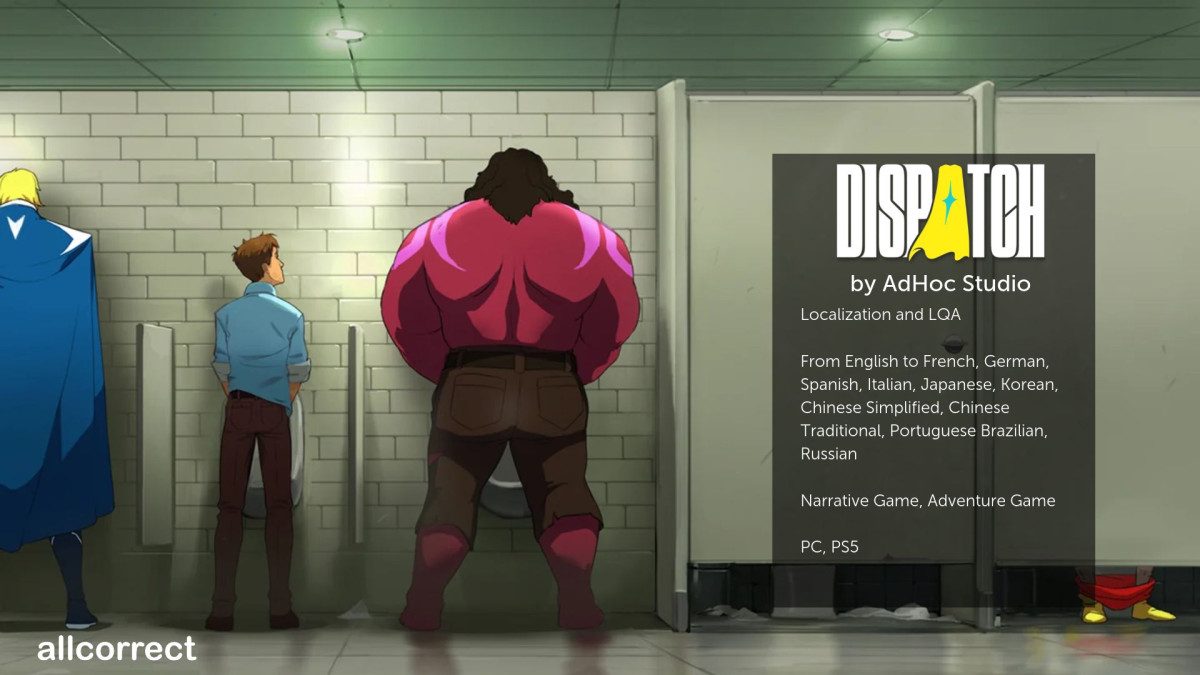
by AdHoc Studio. This narrative adventure game for PC and PS5 was localized and tested by Allcorrect (localization and LQA) in 10 languages, including Traditional and Simplified Chinese, Japanese and Korean.
Read the case
by 34BigThings srl. This action racing game, released on PC (Steam), PlayStation 5, Xbox Series X|S and Nintendo Switch 2, was localized into 11 languages, including Simplified and Traditional Chinese, Japanese and Korean.
Read the casePlanning to localize for Taiwan? Check out our localization guide and pricing to get started.


