The final credits of a beloved game can sometimes feel less like the end of entertainment and more like a real farewell. Why does the world around you feel empty after a major RPG? Why do new stories suddenly seem bland? And why do your thoughts keep returning to the characters and the choices you made? Let’s explore where post-game sadness comes from, why RPG fans are especially prone to it, and how to get through it without endlessly replaying the same game.
- Why Games Can Feel Deeply Meaningful—Then Leave You Empty
- Why You Feel Like You’ve Lost a Close Friend: Parasocial Bonds
- Why You Can’t Stop Thinking About the Ending: Rumination
- Post-Game Anhedonia: Why Everything Suddenly Feels Boring
- Why RPG Players Get Hit Harder: Narrative, Customization, and Long Attachment
- Why Does This Matter for Localization?
- Ways to Get Over Post-Game Depression Faster
The final credits of a beloved game can sometimes feel less like the end of entertainment and more like a real farewell. Why does the world around you feel empty after a major RPG? Why do new stories suddenly seem bland? And why do your thoughts keep returning to the characters and the choices you made? Let’s explore where post-game sadness comes from, why RPG fans are especially prone to it, and how to get through it without endlessly replaying the same game.
Once you’ve finished a game (especially a narrative-heavy one), you’ll likely run into a feeling of emptiness and reluctance to return to reality. You want to go back into the game’s world, replay the story again, but you won’t experience anything new (especially if you finished the game at 80–100% completion with all the DLC and branches), and new titles start to feel boring and far less interesting. Switching gears ends up being difficult. This state is called “post-game depression”An informal gaming-community term for the emptiness and longing that follow the end of a story-driven game. It is not a clinical diagnosis., and the term originated in the gaming community long before psychology took an interest in it.
A quick heads-up: to explain how this works, we’ll be referencing key story moments from Red Dead Redemption 2, The Witcher 3, and Baldur’s Gate 3—including some major plot points. If you haven’t finished these games yet, read at your own risk.
Recently, in the spring of 2026, researchers from SWPS University and the Stefan Batory Academy of Applied Sciences in Poland took a serious look at post-game depression.
Constantly replaying the same thoughts—in this case, about the plot (scientifically known as “rumination”Repetitive, passive replaying of the same thoughts about a distressing experience, without working through them or reaching a conclusion.)
Struggling emotionally with the ending of the story
A desire to replay the game
A temporary loss of enjoyment from watching films or other media (scientifically known as “media anhedonia”A temporary drop in the ability to enjoy a category of media. It is narrower than general anhedonia, which affects pleasure in life as a whole.)
The study’s authors describe post-game depression as a distinct kind of loss, somewhat resembling a breakup with someone close or the end of an important life stage.
Before continuing, there’s an important distinction to be made: in psychology, there is no such concept as “post-game depression.” It is NOT a recognized CLINICAL DIAGNOSIS, and the researchers specifically stress that it shouldn’t be equated with clinical depression.
While playing a game, the brain keeps dopamine levels elevated for a long stretch of time because the gameplay is packed with constant goals, rewards, and interesting plot twists. When the game abruptly ends, the player can experience a subjective feeling of an emotional fall.
Illustration of dopamine during play versus after the credits.
Almost everyone who engages with media is familiar with this state. It can also show up after finishing a long TV series or film. And it usually passes within a few days (a couple of weeks at most), once the brain adjusts to a different activity and starts drawing enjoyment from it again. However, if this state lasts longer than three weeks and is paired with apathy or even a loss of interest in real life, it’s worth pausing to consider seeing a specialist. At that point, we may be talking about a broader psychological condition.
Before we dig deeper into this phenomenon, it’s worth noting that the Polish study mentioned above found that fans of RPGs are the most susceptible to post-game depression. This can be explained by the fact that RPG narratives are built on multi-hour story arcs with well-developed characters. Over that time, the player has a chance to grow attached to them, much like to characters in a book. What’s more, unlike other genres where the player watches the story unfold from the outside, in RPGs, the player lives a virtual life—making decisions and building relationships with in-game NPCs. That’s why the connection with the game becomes parasocialA one-sided emotional bond with a media figure who doesn’t know you and can’t reciprocate the attachment.. On top of that, RPGs often have closed endings that can’t be continued.
Why Games Can Feel Deeply Meaningful—Then Leave You Empty
Let’s look at the first cause of “post-game depression”: the full experience of living a life. Take The Witcher trilogy. The third installment alone takes dozens of hours to complete, and during that time the player either makes choices somewhat at random (everyone’s experience is different) or weighs decisions, which might echo several chapters later, from a moral standpoint, reflecting on themes the game raises.
This brings us to hedoniaPleasure drawn from the experience itself: fun, enjoyment, and entertainment in the moment. and eudaimoniaMeaning and fulfillment drawn from insight into deeper questions of life, rather than simple pleasure.. What’s the difference between them? Researchers worked this out long ago through the concept of the “eudaimonic gaming experience.” The term is traced back to Aristotelian eudaimonia, which rejects the idea that the purpose of life is simple pleasure-seeking. Instead, Aristotle proposed striving for virtue and the realization of one’s potential—which is exactly what the Greek word eudaimonia itself implies (“eu”—good, “daimon”—spirit).
Communication researchers Mary Beth Oliver and Arthur Raney, back in the early 2010s, brought this distinction into media studies, proposing the term “eudaimonia” for a specific type of satisfaction drawn from entertainment content:
Responses—fun in the moment
Responses—an understanding of the deeper questions of human existence
Their work didn’t stop there. In 2015, Oliver and colleagues ran an experiment asking players to recall a game that felt “fun” or “meaningful” to them and rate their impressions. The result: pleasure levels were high in both cases, but appreciation was higher among those recalling a “meaningful” game. Such participants didn’t express their emotions dryly, simply using the words “liked” or “disliked,” but described a range of different feelings: being moved, joyful, sad, inspired, or deeply touched. An emotional rollercoaster. That’s the difference between the hedonic and eudaimonic experience. Fun is always pleasant, but does a sad cutscene feel pleasant to you? If yes, that’s eudaimonia.
Notably, the eudaimonic gaming experience is made up of three interrelated components: personal significance, experiencing complex feelings, and self-reflection. Personal significance here is defined as the connection between in-game elements and existential themes from the player’s real life. The authors later proposed a fourth component, insight—the sense that the game gave you a new understanding of life. Put simply, when a player sees the final scenes of an RPG and feels they’ve lived a small life and understood something about themselves, this component comes into play, temporarily actualized by the game. And when that aspect, or need, suddenly stops being fulfilled (because there’s nothing left to play), the familiar emptiness sets in.
Fun is the hedonic layer of a game. Meaning is the eudaimonic one. When a story gives you both and then ends, the second one is what you lose first.
Let’s break this down with an example (what’s with all this philosophy—are we in a lecture here?). Take Red Dead Redemption 2. Arthur Morgan has an honor meter, which formally works like an ordinary in-game variable that can affect NPC’s attitudes toward the player, store discounts, and quest outcomes. But essentially, it’s a choice—a choice as to what kind of person to be.
 Screenshot from Red Dead Redemption 2: a high-honor Arthur Morgan. Source: Nexus Mods
The choice between cruelty and decency here doesn’t feel like a mere game mechanic. You can clearly see the eudaimonic experience layered on top of the hedonic, because the player projects these choices onto themselves. The game engages in existential themes of mortality and redemption that resonate beyond the game itself.
The hedonic layer of Red Dead Redemption 2—shootouts, open-world freedom, the companions’ funny comments—is undoubtedly fun. Meanwhile, the game’s eudaimonic layer is built on mixed, often painful emotions. At first, you’re having fun pulling off a bank robbery. But at a certain point, you start to feel anxiety over the protagonist’s worsening health condition. By the finale, there’s hardly a thought left about combat—your focus shifts to honesty in a dishonest world, redemption, and sacrificing for others. All the decisions accumulated over dozens of hours converge into one highly emotional outcome. And the need to process themes of mortality (and the ruthlessness of certain companions) is satisfied by the game at that moment. When the game ends, that processing—or rather, the channel for it—disappears. And what follows is a void in the player’s soul. That’s the insight.
Why You Feel Like You’ve Lost a Close Friend: Parasocial Bonds
The second cause—parasocial relationships—has been studied by science for far longer.
Parasocial relationships are an emotional attachment to a media figure whom a person doesn’t actually know and who cannot reciprocate (Ah, Arthur Morgan…). Sociologists Donald Horton and Richard Wohl described in 1956 how TV viewers grow attached to hosts, perceiving them as personal acquaintances. The concept migrated to game-dev psychology because in video games, this bond becomes even stronger than it is with TV.
While a film viewer passively watches the protagonist, a player controls their fate. This is where the term “character attachment”A psychological merging of the player’s mind with the character they control in a role-playing game. applies (introduced by psychologists Lance Lewis, René Weber, and Nicholas Bowman in 2008). It isn’t directly equated to a parasocial relationship, since the latter assumes the character remains a separate figure with whom a “friendship” is built, while the former can extend to full identification.
Character attachment is broken down into four components:
Identification/friendship—the sense that the character is a friend or part of the player themselves
Suspension of disbelief—the ability to perceive the virtual world and what happens in it as real, without noticing game tropes
Control over the character
Responsibility for the decisions made
Researchers distinguish attachment through identification from attachment through parasocial interaction. According to a paper published on Game Studies, Garrus from Mass Effect triggered reactions closer to a parasocial friendship in players, while Tali caused those closer to identification and “merging” with the player’s experience. Both mechanisms can operate in parallel, but with varying intensity depending on how a character is written.
Why You Can’t Stop Thinking About the Ending: Rumination
The third cause is rumination—an obsessive, looping return of thoughts to a past experience without productively processing the emotions involved. The word itself comes from the Latin ruminari—the process of an animal re-chewing food it has already swallowed. The definition relevant to us was given by psychologist Susan Nolen-Hoeksema, who created the so-called “response styles theory.”
Rumination is a way of responding to a depressed mood through repetitive, passive focus on the symptoms of distress and on its possible causes and consequences, rather than through active problem-solving. Unlike analyzing a situation, rumination doesn’t move a thought forward—it spins it in circles.
Thoughts circle the same scene instead of moving forward.
Rumination turned out to be the most pronounced symptom of post-game depression in a study by Kamil Janowicz (SWPS University) and Piotr Klimczyk (Stefan Batory Academy). On their Post-Game Depression Scale, the “game rumination” subscale showed the highest intensity among all four components, while media anhedonia was the weakest. Survey participants complained most often not about sadness, exactly, but specifically about being unable to stop thinking about the plot and the story’s turning points days after the ending.
That said, the authors are honest that their study has limitations, since it’s based on cross-sectional data. So it’s not yet possible to say what comes first in rumination: whether it’s the game ending or whether people who are already prone to obsessive thoughts experience story endings more intensely and get stuck in them more often.
Why does the brain get stuck in this loop? An unresolved emotional question demands resolution, and if a clear conclusion can’t be found, the brain starts searching for one on its own, replaying the same and alternative scenarios of how the story could have gone differently. The more poignant the ending, the harder it is for the psyche to process. In this sense, rumination is a symptom of information that remains “undigested.” Unlike reflection, which finds meaning and reaches a conclusion, rumination is experienced by people as unpleasant and, most importantly, unstoppable. Thoughts keep circling instead of letting the experience go.
Reflection ends in a conclusion. Rumination keeps going. That difference is why the same ending can feel meaningful one day and unbearable the next.
That’s precisely why this factor is considered key—it sustains depressive states in general, not just longing for the game. The mechanism is the same as with the end of an important relationship, only this time it’s a virtual character the player was invested in.
Post-Game Anhedonia: Why Everything Suddenly Feels Boring
The fourth and final cause, already touched on earlier, is media anhedonia. The term itself is borrowed from clinical psychology, where anhedonia is defined as “a markedly reduced interest or pleasure in all activities.” Modern researchers break it down not into one, but several separate dimensions:
A reduced ability to anticipate future rewards
A reduced ability to experience pleasure at the moment of the event itself (consummatory pleasureThe enjoyment felt during the activity itself, as opposed to looking forward to it.)
Disrupted reward-based learning (the psyche’s inability to effectively link an action to expected satisfaction)
With media anhedonia, it’s not the overall capacity for pleasure in life that suffers, but specifically the ability to engage with one particular category—media.
The mechanism of media anhedonia is tied to hedonic adaptationThe way the psyche adjusts to the intensity of an experience, so that repeated or prolonged exposure produces less satisfaction over time.—how the psyche adjusts to the intensity of experiences. This adaptation reduces sensitivity to a stimulus after prolonged or repeated exposure to it. Culturally, this works as follows: satisfaction from (repeated) consumption of cultural products declines faster when that consumption is very frequent and intense. An RPG keeps the player at a high level of engagement for weeks through its mechanics and story, and the psyche adapts to this intensity as its new baseline. After the game ends, the brain is already calibrated to that framework, that density of experience, and can’t switch to a new stream of information, because it can’t instantly reproduce the same intensity. Put bluntly, everything will feel slow, boring, and far less interesting to you, even though the game you just finished may well have felt the same way when you started it.
All of this is a protective response of the psyche, which is simply “wearing out” the previous experience and isn’t ready to quickly switch to a new source—it just doesn’t have the resources left to fully respond to a new, less intense stimulus.
Why RPG Players Get Hit Harder: Narrative, Customization, and Long Attachment
Pick a game to see how its story hooks players:
Customization and Branching Storylines
In a linear shooter or action-adventure game, if you take two players, they’ll see the same exact story. The lines and scenes will be identical. In an RPG, though, players aren’t just going through a pre-written script—they’re co-authoring it, from their character’s appearance down to their conversational style. And with that, two people can end up with two completely different, unique adventures. After finishing the game, it’s not just access to the content that disappears—the story the player built also comes to an end.
Baldur’s Gate 3 demonstrates this clearly. For example, one player might create a paladin hero who always helps strangers, avoids violence, and looks for compromises, while another creates a bard, who… well, is just a bard. Someone who dies in the very first turn of every combat encounter but keeps everyone’s spirits up throughout the whole game by playing the Bard Dance. Oh, and who will definitely kick a squirrel because they never figured out how to use the Speak with Animals spell. Formally, both are playing through the same campaign, but emotionally, they experience different versions of the game. The dialogue will differ, companion relationships will differ, quest outcomes may differ, too, and let’s not even get started on the romance routes.
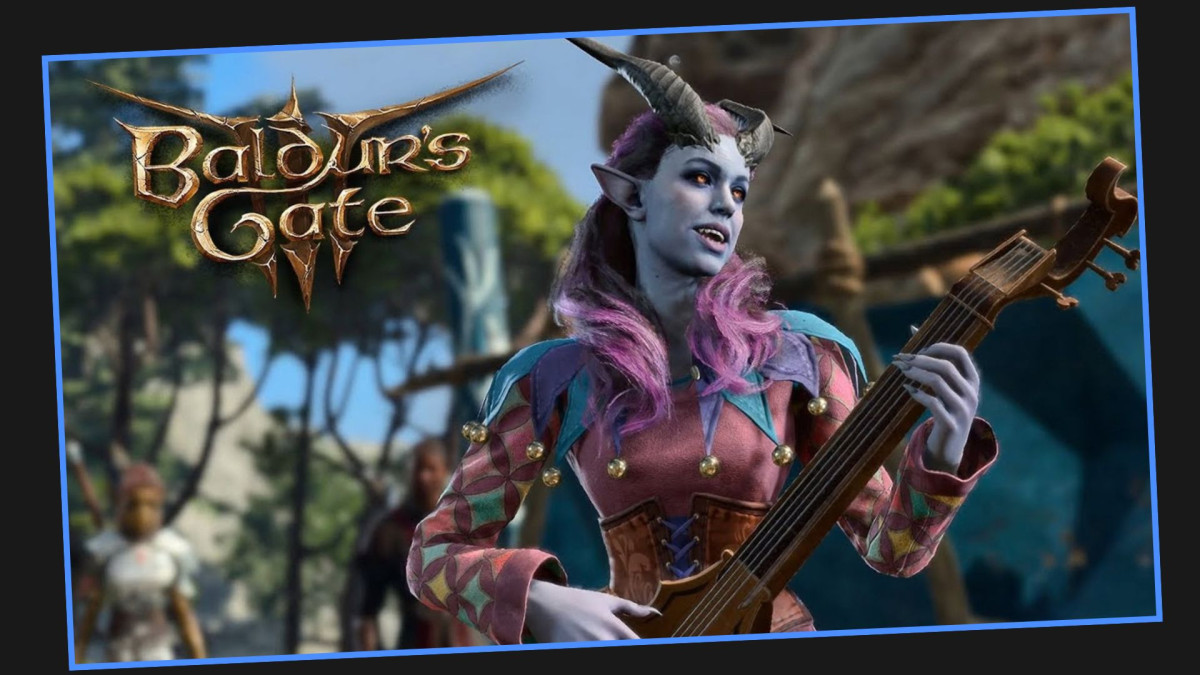
The Long Journey
The second factor is time—or more precisely, the player’s shared existence with the characters within one world. An RPG rarely fits into a single evening; they typically call for dozens of hours for the main campaign and considerably more if you explore the world and do side quests. Over that time, the characters become part of a daily routine.
In-game characters don’t replace real human connection, but they become an emotionally convincing model of presence. This is reinforced through dialogue, shared dangers, offhand remarks, conflicts, and personal requests. The longer this goes on, the harder it is for the brain to accept the ending as the completion of the game itself—a person loses the familiar rhythm and the role they held within that group.
The Witcher 3: Wild Hunt builds a similar effect around Geralt and Ciri’s relationship. Unlike the visible approval meter in Baldur’s Gate 3, the game barely explains to the player that individual, everyday, and emotional decisions add up into a hidden system that shapes the heroine’s final fate.
CD PROJEKT RED’s key trick is that the game isn’t testing Geralt’s combat skill or the number of quests completed, but his ability to be a supportive adult figure for Ciri. The choices don’t appear as a “good” or “bad” option in an interface—they look like ordinary scenes from a relationship: let her vent her anger or stop her; try to distract her from stress and throw snowballs or lecture her; let her handle a difficult conversation herself or go with her; agree to visit her friend’s grave or say there’s no time for it.
The game tracks five of these moments. For a favorable outcome, enough supportive choices need to be made. If there are too many negative decisions, a tragic branch opens up in which Ciri doesn’t return after her confrontation with the White Frost.
Ultimately, the tragic ending makes the player look back in retrospect at moments where, as Geralt, they were overly controlling, didn’t trust Ciri, and so on.
The Impossibility of Repeating the First Playthrough
This one’s simple. Players face the realization that there will never be another first playthrough, and the feeling that the game will never be able to evoke that same range of emotions again—not to the same degree. In a linear shooter, this isn’t as painful, as even if there is a story, it often doesn’t play such an important role, and a level can simply be restarted. But in a game like Red Dead Redemption 2, you don’t get that luxury—in later playthroughs, you’re just an observer, because you already know Arthur Morgan will die. In The Witcher, you already know how to save or not save Ciri, who will die, and how everyone’s fate will play out. In Baldur’s Gate 3, you already know, for instance, what trusting Astarion leads to.
Why Does This Matter for Localization?
Here’s what’s often overlooked: the deeper a player’s emotional bond with a game, the higher their expectations become for every aspect—including localization.
A brilliant game ending in English can fall flat in German, Russian, or Japanese if the localization doesn’t preserve the emotional authenticity of the original. Post-game depression isn’t just about the story—it’s about how real the characters felt to you.
To build that parasocial bond across languages, it’s not enough to translate dialogue. You need to understand cultural context, preserve character voice, and make sure the ending hits with the same emotional weight in every language your players speak.
That’s why games like Atomic Heart—originally built around Soviet-era references and dark humor that every Russian-speaking player would immediately understand—required something more than translation. It required true localization and adaptation to feel equally authentic and earned for players who grew up outside the USSR but wanted to experience that world authentically.
Learn about how we preserved the emotional impact of Atomic Heart across languages: An Alternate USSR, a Foul-Mouthed Goose, and Multilingual Voice-Over: Our Work on Atomic Heart
The lesson? A strong emotional connection requires an authentic voice in any language. That’s how you build parasocial bonds that last—and how you create endings that haunt players globally, not just domestically.
Ways to Get Over Post-Game Depression Faster
Post-game longing usually passes on its own, but you don’t have to drag it out with endless replays and a desperate hunt for “something just like it.”
Here are a few tips to help you shake off this state sooner:
To stop ruminating on the plot, shift your attention to something else—even something more mundane. Go for a walk, cook a meal. Chances are, over the course of the playthrough, the apartment got a little messy… Why not tidy up?
Don’t jump straight into another big RPG. For a few days, it’s better to go with short, session-based games, co-op, a familiar hobby, or something without a story: Hades, Balatro, Minecraft with friends, Peak, or getting into sports.
Talk about your playthrough experience. It doesn’t matter whether it’s with a friend or just someone from an online forum. Watch video breakdowns of the game—something like “Important details you missed…”
Write a review or post about the game. Even if no one reads it, you’ll feel better.
If we accept that post-game depression is the price of a deep experience, then the task shifts to developers to help players ease out of that depth more gently. An abrupt cutoff along the lines of “roll credits, that’s it” isn’t as effective as an ending that gradually winds down the emotional intensity through an epilogue, unhurried scenes after the resolution, or an artbook with creator commentary that gives the psyche time to decompress.
The nature of the ending itself also matters. If the finale delivers not just a victory but an internal sense of a completed character arc, parting with the game is easier to bear. Conversely, open-ended or rushed endings leave the player hanging, intensifying rumination.
Mechanics like daily streaks, limited-time events, and FOMO triggers work great in live-service games with constant content, but for single-playthrough story-driven RPGs, artificially trying to prolong engagement with aggressive hooks can actually intensify post-game anxiety. It replaces the natural closure of a story with metered stimulation that leads nowhere. Post-release content—artbooks, writer commentaries, developer podcasts, and active fan communities—is a far more honest approach.
Maybe that emptiness after the credits roll isn’t really a flaw to be fixed—maybe it’s the price for a story that actually meant something. If a game left you hollow for a few days, it probably means it got further under your skin than most things do. So the next time the credits roll and the silence feels too loud, it might be worth asking yourself what exactly you’re grieving—the characters, the world, or the version of yourself that got to live inside it for a while?