
From arcade high-score tables to seasonal battle passes, keeping players coming back has quietly become a science. This piece traces the evolution of retention mechanics across five decades, unpacks why battle passes, limited-time shops, and live-service seasons are so often called manipulative, and asks where the line between good design and pure pressure actually sits.
No matter how engaging a game may be, that alone is no longer enough to keep players invested over time. In F2P and live-service projects, retention and churn reduction are no longer just design concerns—they’re part of a much broader system that brings together game design, monetization, event planning, behavioral analytics, LiveOps, and UX. Metasystems built around player attention and daily habits now play a central role in how games sustain engagement.
This shift has shaped one of the defining changes in the modern game industry. Retention is no longer something that happens as a byproduct of good design; it has become a challenge developers need to solve intentionally. But what does that actually look like in practice? Today, some of the most familiar tools are still among the most effective: battle passes, limited-time events, special offers, and rotating shops. Each of them is designed to give players a reason to come back. We will also look at why these practices are so often seen as unethical and linked to the manipulation of behavioral vulnerabilities, and whether a progression system can be built in a way that does not feel manipulative.
The battle pass is far from being the only retention mechanic, and certainly not one of the earliest. Long before it appeared, developers were already using re-engagement tools that are still common today.
High-Score Tables (1970s)
They emerged back in the arcade era. And no, not out of some abstract love of competition, but as a way to extend the life of a short play session. Games themselves didn’t last long, so players needed a reason to drop in another coin. High-score tables solved that problem perfectly. A short session turned into a contest for status, where someone like V could knock a player with the tag Z1R343L off the top spot.
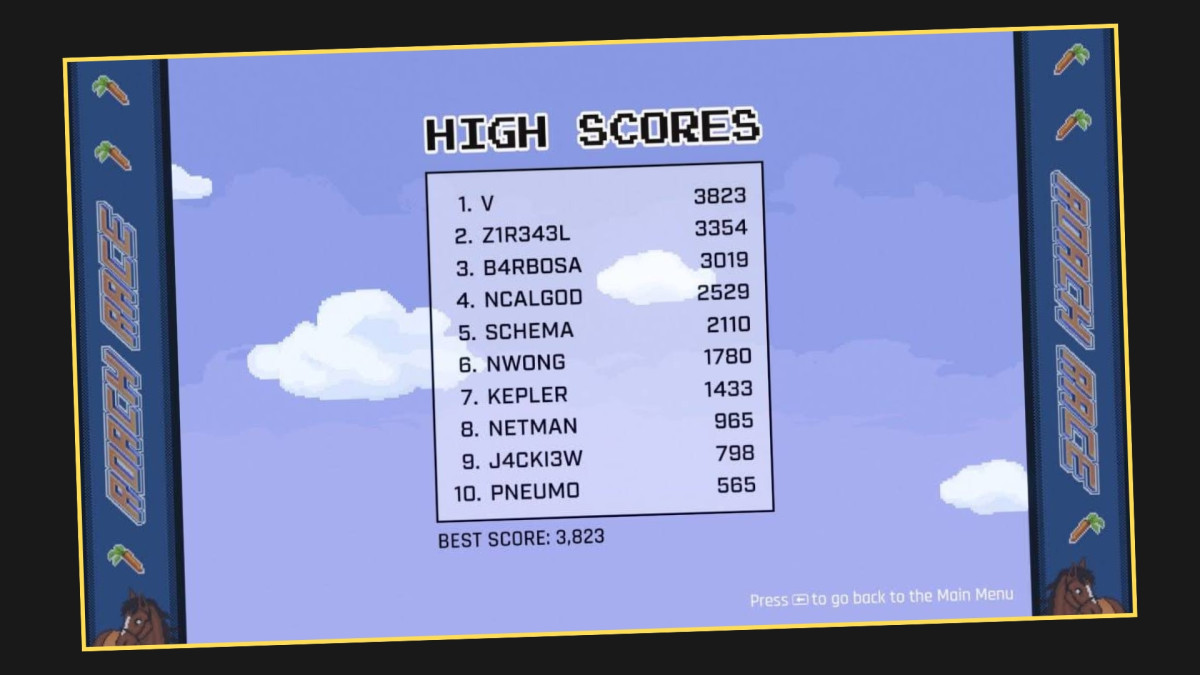
Source: CD Projekt Red, Cyberpunk 2077. The Roach Race minigame.
High-score tables also had a major advantage for developers. They didn’t need a constant stream of new content or extra production resources, because the game could sustain itself. As long as someone else’s record was still there, players had a reason to come back and try to beat it.
The Flash Game and Web Portal Era (1990s–2000s)
The history of browser games goes back to the mid-1990s, when the web began to open up as a space for entertainment. A key milestone came in 1999, when Newgrounds was launched as a platform for Flash-based games and user-generated content. The appeal was that games loaded instantly and required no separate installation.
But how do you retain players in that environment, let alone monetize it? This is where high-score tables took on a new function. They no longer kept players engaged just within a single game, but within the portal itself. Users came back not only to replay a favorite title, but also to accumulate points and level up their on-site profile, as it was on Kongregate, for example.
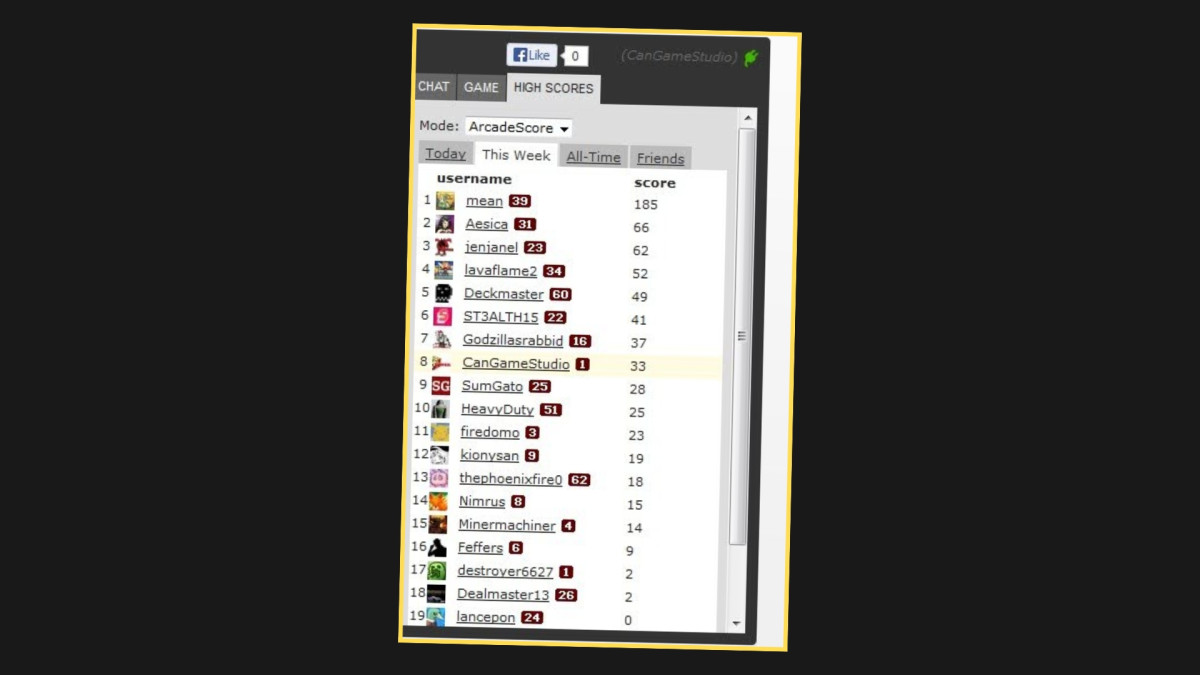
Source: Construct. Kongregate High Scores & Achievements.
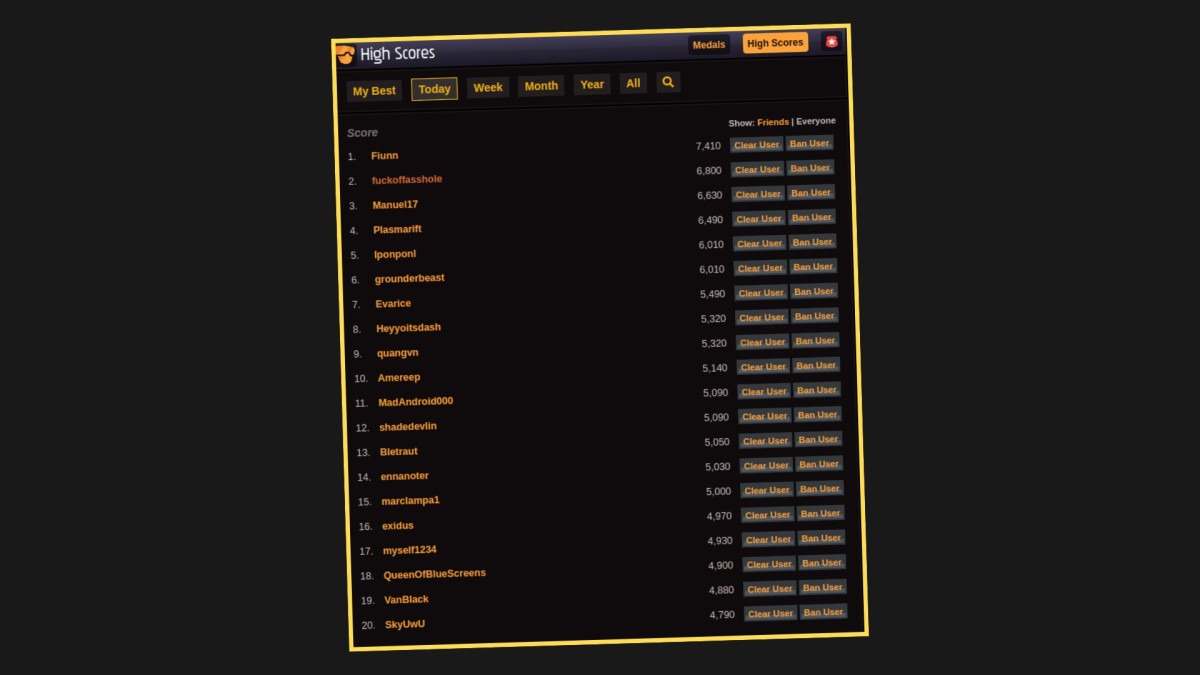
This model worked for everyone involved. For players, it created a sense of ongoing progress. For the platform, it extended the time spent on the site. For developers, it reduced the chance that a user would close the game after one or two sessions and never return.
Monetization, naturally, was built around advertising. Browser game portals made money from banner impressions and later introduced revenue-sharing arrangements. The site would run ads alongside or inside the game, take a cut of the revenue, and pass a percentage on to the developer. Most of the time, developers didn’t get paid for simply publishing a game; to bring a profit, the title had to actually drive traffic and views.
High-score tables were not the only retention tool at work, either. Achievement systems ran alongside them, giving players concrete goals within individual games: clear every level with three stars, defeat a particular boss, and so on. Those achievements fed into the broader platform layer, where earned badges and medals appeared on user profiles or got converted into points.
Together, high scores and achievements offered goals for competing and collecting. But neither imposed a rhythm of return. The next step in that evolution would come with MMOs. They introduced a retention logic based on time restrictions instead of competitive goals.
Daily Quests
Retention starts to rely on a scheduled habit. On May 22, 2007, patch 2.1.0 for the first expansion of World of Warcraft introduced daily quests—repeatable tasks that players could complete once per day.
Their arrival was not accidental. By that point, MMOs were already successful at holding players through long progression systems and endgame content, but many users hit a dead end once they reached the level cap. Daily quests addressed that gap: they gave players a clear list of things to do and a steady flow of gold and other rewards. They weren’t just useful for max-level players, either. Some dailies could be picked up before the cap, helping characters progress faster, bridging the gap between leveling up and endgame play.
The mechanic expanded over time, with new daily quest zones, dungeon quests, and regular PvP and PvE activities added to the game.
Blizzard’s experience illustrates how important it is to keep players engaged without burning them out. In a 2013 Engadget interview, “Patch 5.4, flexible raids, dailies and more with Tom Chilton,” game director Tom Chilton reflected on the problem of daily quest fatigue:
“But that really didn’t mix very well with the quantity of the daily quest content that we had in the game, because it pressured players into feeling like they had to do it all the time. That really caused a lot of burnout.”
In the same interview, he noted that an earlier version of the game had handled this more gracefully thanks to a quest cap:
“Burning Crusade had the advantage of having the 10 daily quest cap. I don’t think we can underestimate how much that helped players not burn out.”
Daily quests can be highly effective, but only as long as they feel optional rather than obligatory. The industry never abandoned the mechanic—it adapted it across genres and platforms. In mobile games, it often appears as login bonuses, streak rewards, or simple daily tasks. Candy Crush Saga, Clash Royale, Subway Surfers, Animal Crossing: Pocket Camp, and many others all use variations of this system.
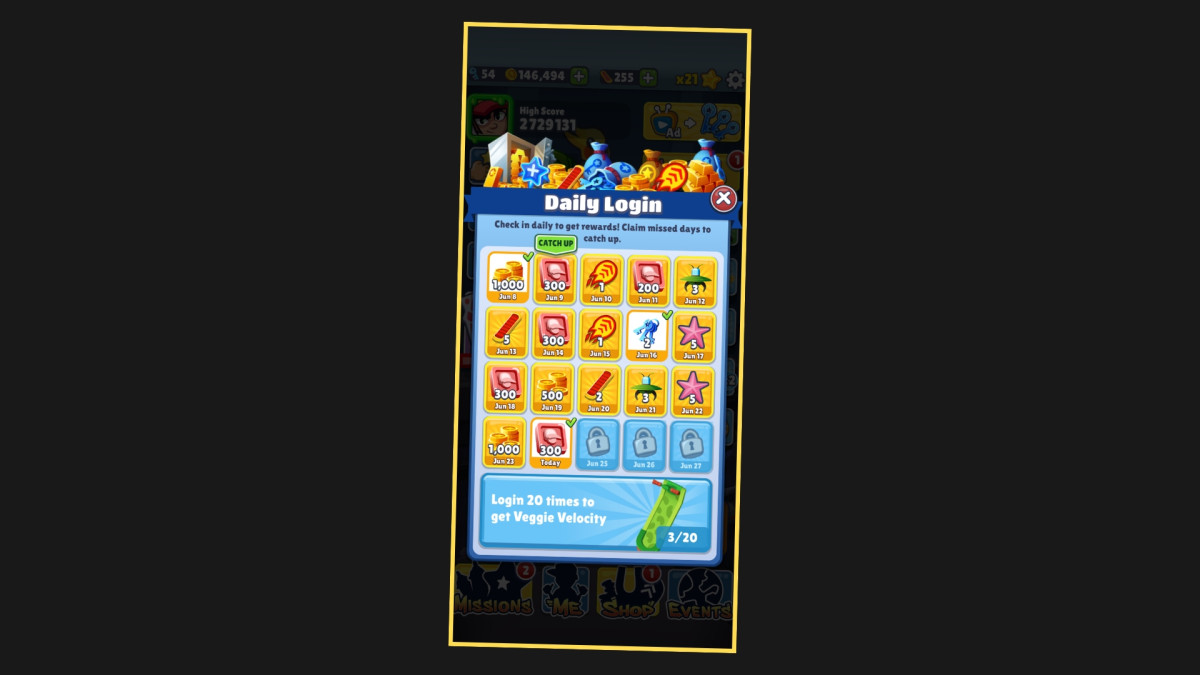
Source: SYBO Games, Subway Surfers. Daily Login Screen.
This sets the stage for the next milestone in service-game retention: not just tasks for today, but a seasonal deadline. That’s how battle passes came to be, combining regular activity, a hard cutoff date, and a visible rewards track into a single system.
The Battle Pass
The first prototype of the seasonal pass is generally considered to be the Dota 2 Interactive Compendium, released in 2013. It was a virtual booklet Valve produced for The International 3 tournament, letting players make match predictions, pick favorite teams, and collect virtual cards. The Interactive Compendium cost USD 9.99, with 25% (USD 2.50) going directly into the tournament prize pool, raising it from a base of USD 1,600,000 to a then-record of USD 2,874,381.
By 2016, Valve had formally rebranded the Compendium as a battle pass, giving it a cleaner level-and-XP structure. But the mechanic really reached mass adoption through Fortnite.
In December 2017, Epic Games introduced the Battle Pass in Season 2 of Fortnite Battle Royale. Unlike Valve, which had tied its pass to an annual tournament, Epic made the Battle Pass the backbone of the game’s ongoing lifecycle.
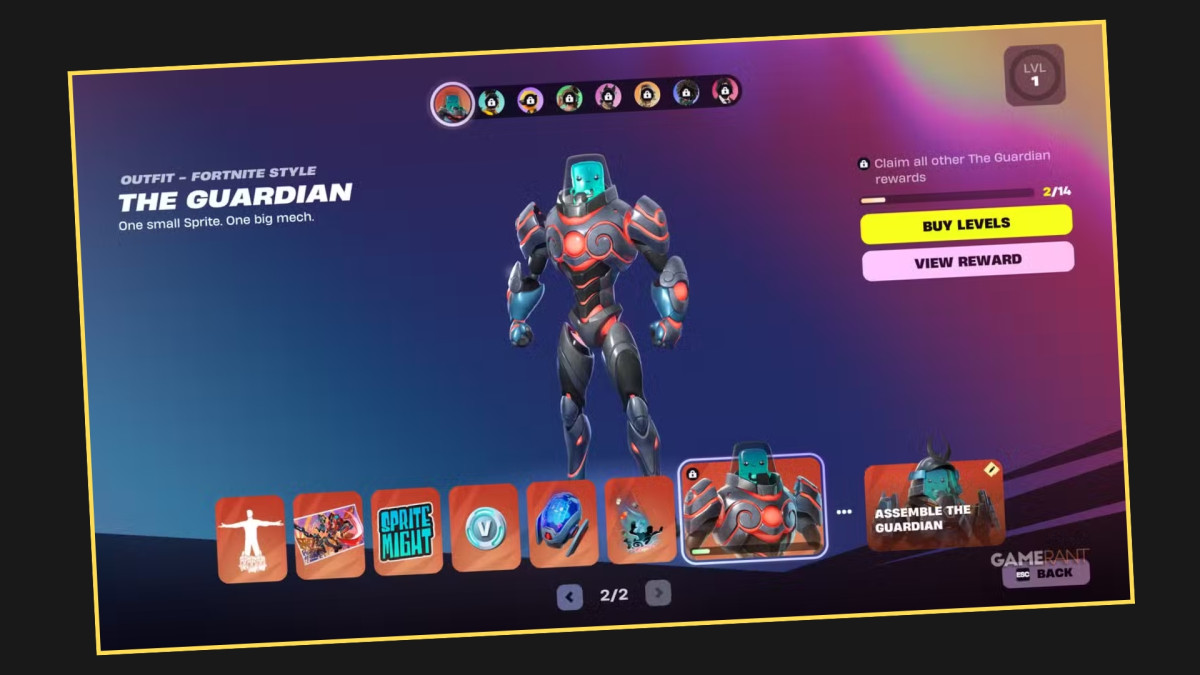
Source: GameRant, a screenshot from Fortnite, Epic Games.
Its success came down to several deliberate design decisions:
1. Transparency in contrast to loot boxes
Late 2017 was defined by loot box controversies, most visibly around the Star Wars: Battlefront II launch. Players were already frustrated with randomized rewards and the feeling of buying a mystery. Fortnite offered a completely different proposition: all rewards across all 70 (later 100) levels were visible upfront. You knew exactly what you were paying for and what you had to do to get it. That predictability became one of the Battle Pass’s strongest selling points in players’ eyes.
2. Self-funding progression
The Battle Pass cost 950 V-Bucks, but completing it returned 1,500. It created a strong incentive to keep playing the game, because, in theory, a player who bought the pass and finished the full track just once could fund every subsequent season purely through time and engagement.
(After a later economy adjustment, the Battle Pass was repriced at 800 V-Bucks and now returns exactly 800, eliminating the surplus.)
3. Integration with daily quests
Daily quests no longer existed as a standalone system. They now fed XP and stars directly into Battle Pass progression, creating a two-layer retention structure:
-
Micro-retention (daily quests). Players could hold no more than three dailies at a time, which pushed users to log in every one to three days for at least twenty minutes to avoid quests expiring and progress being lost.
-
Macro-retention (weekly challenges). A new block of harder challenges unlocked each week, creating a recurring “update day” effect with predictable weekly activity spikes.
This synergy between quests and the pass also solved one of Battle Royale’s core friction points: the frustration of frequent elimination. The objective of a match quietly shifted, and now dying in the first minute was fine—as long as the player had looted the right chest for a quest, they considered the match, and their time, well spent.
4. Hard deadlines and FOMO
Epic made it very clear how FOMO operates in practice. Battle Pass items were treated as exclusive for a long time—once the season ended, they were simply gone. With seasons running roughly ten weeks, the pressure was constant. Players were no longer playing for fun alone—they were playing to justify the money already spent.
It worked. According to analyst estimates, Fortnite generated a record USD 2.4 billion in 2018, with a large share of that coming from high-volume Battle Pass purchases rather than individual cosmetics.
Within a few years, battle passes had been integrated into virtually every major multiplayer title. Apex Legends, Destiny 2, Call of Duty, Overwatch, and Valorant all adopted some version of the free-and-premium track model.
The mechanic also carries genuine contradictions. In players’ eyes, the battle pass looks like a fairer monetization model (compared to loot boxes, for example). But transparency alone does not remove pressure but merely changes its form. Where loot boxes exploited the thrill of chance, the battle pass relies on the fear of running out of time. It caused a lot of players and journalists alike to compare battle passes to a second job (you can read about it here and here), where the player logs in to play not because it’s fun or interesting, but because they need to get their money’s worth. The complaints follow a familiar pattern: FOMO, quest fatigue, a sense of obligation, and, for some, burnout.
Over time, developers began looking for ways to soften the model’s harder edges. One approach was to revisit the exclusivity policy: Epic officially confirmed that Fortnite’s Battle Pass items could return to the shop eighteen or more months after a season ends. Reactions were split. For some players, it felt like a step toward a healthier monetization model; for others, it undermined the exclusivity that had driven the appeal of the Battle Pass in the first place.
So the Battle Pass turned out to be the most visible part of a much larger structure. Behind it sits an entire event-driven logic of live-service design, where new modes, collaborations, updates, and seasons function as recurring anchor points for the audience. Understanding how that cycle is built is the next piece of the puzzle.
Regular Content Updates
Destiny 2 and Apex Legends, touched on in the previous section, serve as strong examples here. In 2017, Bungie formally shifted Destiny 2 to a seasonal support model, distributing updates across four seasons per year, each with its own theme and activities, including returning events like The Dawning. For players, this wasn’t just a content drop update—it was the arrival of a return calendar. Apex Legends approaches the same logic through limited-time modes. Season 16 introduced Team Deathmatch, and Respawn later built on this with Mixtape, a rotating system that brought back popular formats and gave returning players a reason to check in.
With Roblox, the structure is even more explicit, because the platform itself frames LiveOps in terms of update rhythm. Developer documentation positions seasonal content and live events as time-limited formats, and pre-event communication is presented as a tool for priming the audience to return. What stands out here is that retention isn’t built around a single mechanic, but around a recurring calendar: holidays, themed updates, temporary activities, and larger changes to the experience itself.
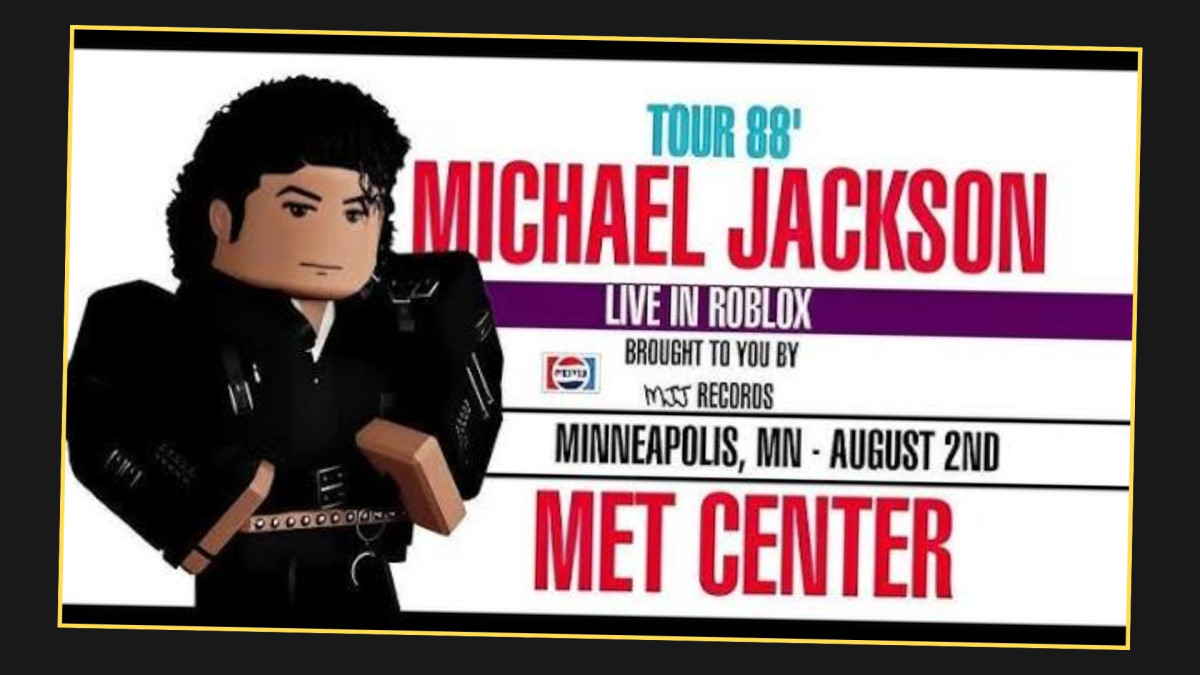
Source: YouTube, “Michael Jackson Live in Roblox Minneapolis,” user-generated content.
If you look at these cases together, it becomes more apparent how regular content works in games. Destiny 2 retains players through a seasonal year structure, Apex through the return of rare modes, and Roblox through calendar- and event-driven cycles that can be layered into almost any experience. In all three cases, players are not returning to the game in the abstract—they are returning to a specific temporary state of the game that will soon disappear or be replaced.
But the same cases reveal the other side of this model. The more a valuable experience is tied to a limited window, the more the game comes to depend on the player’s own discipline: log in during the event, finish before the season ends, don’t miss the rare mode, don’t fall behind the current cycle. This is especially visible in the Destiny 2 seasonal model and in Apex’s disappearing modes, where the motivation to return is not only genuine interest but also the simple fact that access is temporary.
That’s why regular content updates cannot automatically be labeled manipulative. The problem doesn’t arise when a game is updated—it arises when the game’s rhythm begins to produce a persistent sense of being late. At that point, an event or limited-time mode stops being a way to refresh the experience and becomes a tool for pressuring players with their own time and attention.
If seasonal content retains players through time-limited access to gameplay experiences, the limited-time shop applies the same logic at the level of consumption. Here, the object of scarcity is not an event but a product: a skin, a bundle, or a discount, and its perceived value is amplified not only by its design but by the feeling that the decision must be made right now. In that sense, the shop extends the same logic as live events, but shifts it from the plane of participation to the plane of purchase.
The Limited-Time Shop
FOMO came up briefly in the battle pass section, and it sits at the very core of the limited-time shop.
The psychological hook here operates on several levels. First, the fear of missing out. Players aren’t really afraid of not having an item—they’re more afraid of the window closing before they’ve made a decision. Second, there is a collecting logic at play, where a digital object starts to feel like a rare find rather than just a cosmetic. Third, scarcity can function as a status symbol, especially when other players know that a particular skin hasn’t been in the shop for a long time.
That is precisely why the limited-time shop cannot be reduced to a pure pressure mechanic. For some players, these systems genuinely deliver a sense of uniqueness and add a collecting dimension that can be an enjoyable part of the experience on its own terms. A limited item isn’t only a product—it can also feel like a marker of taste or a memento of a particular season.
Problems arise when the scarcity becomes opaque. If a player cannot tell whether an offer will actually disappear, whether it will return later, how exclusive the item really is, or whether the countdown timer is a genuine signal or just a UI nudge, the shop stops functioning as a storefront and becomes an impulse-decision machine. Research studies on video game monetization (you can read more here, here, and here) point directly to practices like fake urgency and rotating shops as mechanisms that increase the likelihood of a quick purchase through time pressure rather than through the actual value of the item.
The Paradigm skin from Fortnite is a telling example. The item had long been perceived as limited and tied to an early chapter of the game’s history, until it briefly reappeared in the shop in 2024 due to an error from Epic. The case is instructive precisely because it shows that the scarcity of a digital item is not determined by any intrinsic property of the item itself, but by a platform’s decision about when and on what terms it becomes available again.
Battle passes, regular content updates, and limited-time shops can all feel like a useful structure that gives players a reason to come back. But the same mechanics can shift their function entirely, from clear goals and voluntary participation to time pressure, artificial scarcity, and friction around the decision to opt out.
Manipulation or Not?
Drawing the line between retention and manipulation requires more than sorting mechanics into “good” and “bad” categories. None of the methods discussed in this article, including monetization elements, are inherently manipulative. What matters is how they are embedded in the game and how they shape player behavior.
Lewis, Björk, and Zagal offer a useful framework in their study: manipulation in games is a motivational pattern that deliberately produces a negative experience for the player, works against their best interests, and occurs with a high likelihood without their meaningful consent. The key is the combination of factors—not just strong motivation, but a violation of expectations, pressure on the player’s resources, and the exploitation of vulnerabilities around time, money, or social standing.
The research paper “Dark Patterns in Video Game Monetization” reinforces this, arguing that what matters is not the set of mechanics itself, but how those mechanics act on player choice, how transparent their conditions are, and whether they work against the player’s autonomy.
The central question, then, is whether the game preserves a genuine choice for the player. If it does not obscure the cost in time and money, does not make stepping away excessively costly, and does not structure player behavior around constant pressure, the engagement remains within acceptable design territory. In this sense, games that retain players primarily through freedom and the intrinsic value of the experience are instructive—Baldur’s Gate 3 is frequently cited as an example of design built around player agency rather than an obligatory rhythm of return.
That is where the line sits. When a game sustains interest while leaving space for deliberate choice, retention remains a normal part of game design. When it increasingly makes opting out harder and calm decision-making more difficult, it crosses into manipulation.
FAQ
The Dota 2 Interactive Compendium (2013), which Valve formally rebranded as a battle pass in 2016, is generally considered the first prototype. The model reached mass adoption when Epic Games added it to Fortnite in December 2017.
Because the rewards are visible upfront. Players know exactly what they are paying for and what they need to do to earn it, unlike the randomized rewards from loot boxes. But transparency doesn't remove pressure—it shifts it from the thrill of chance to the fear of running out of time (FOMO).
A mechanic crosses into manipulation when it deliberately produces a negative experience, works against the player's interests, and relies on pressure without their meaningful consent. A practical test is whether the game preserves a genuine choice: clear costs in time and money, a low cost of stepping away, and no constant pressure to keep returning.
No. For many players, they add a real sense of uniqueness and a collecting dimension that is enjoyable on its own terms. Problems arise when scarcity becomes opaque—when a player cannot tell whether an offer will return, how exclusive an item really is, or whether a countdown timer is a genuine signal or just a UI nudge.
Baldur's Gate 3 is frequently cited as an example of design built around player agency and the intrinsic value of the experience rather than an obligatory rhythm of return.


