In 2025, we at Allcorrect launched Run.loc—a powerful AI tool for localization that delivered excellent results, and we only regret not doing it sooner. In the article, we share the year’s results, plans from the co-founder, and reflections on trends for 2026!
Content:
- What was 2025 like for the company? Which directions developed most actively?
- How has the game outsourcing market changed overall in 2025?
- How has working with clients changed? What changes have you observed in orders, requirements, wishes, and budgets?
- What became decisive for successful outsourcing in the outgoing year? Which niches, on the contrary, contracted?
- What conclusions from operations in 2025 have you made for yourself?
- What strengthening or emergence of trends in outsourcing do you expect in 2026?
- What tasks and plans do you set for the company for next year?
- Conclusion
What was 2025 like for the company? Which directions developed most actively?
In 2025, we continued to master artificial intelligence and finally managed to turn our developments into a product.
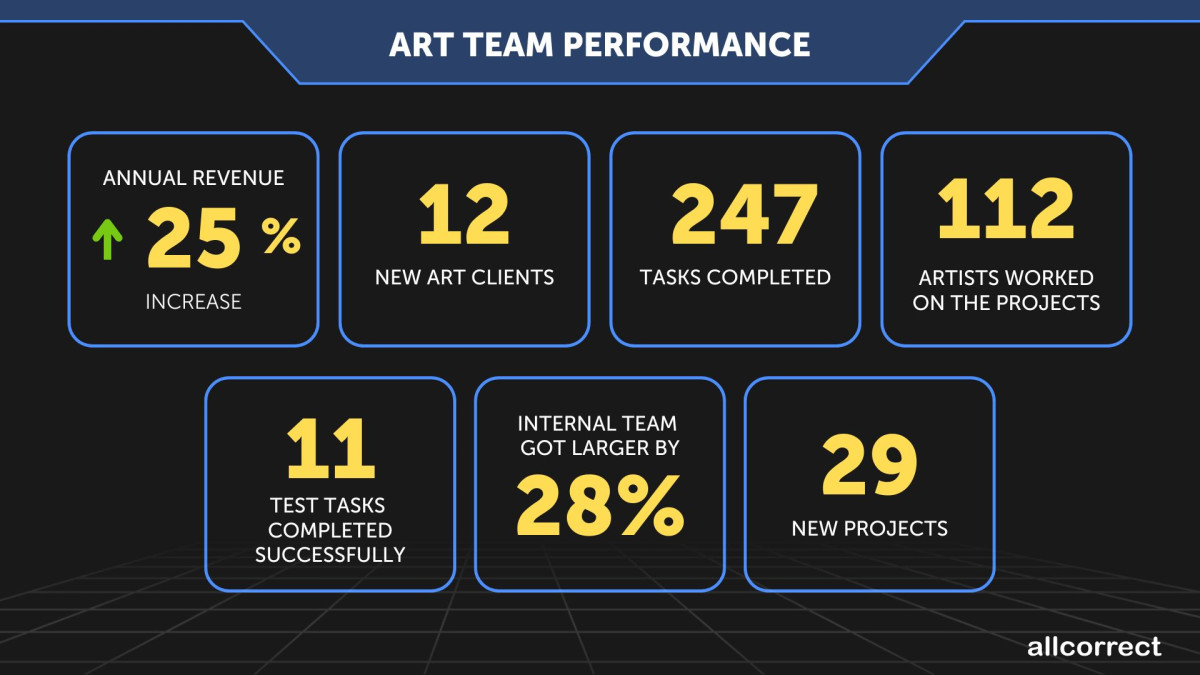
As for the numbers, localization revenue decreased slightly, and art revenue increased by 25%. Over the year, we gained 77 new clients and gave 7 talks at 16 conferences. Total revenue for the year was USD 7.5 million, which is slightly less than last year.
Unfortunately, art growth was lower than expected—we’re still searching for our niche.
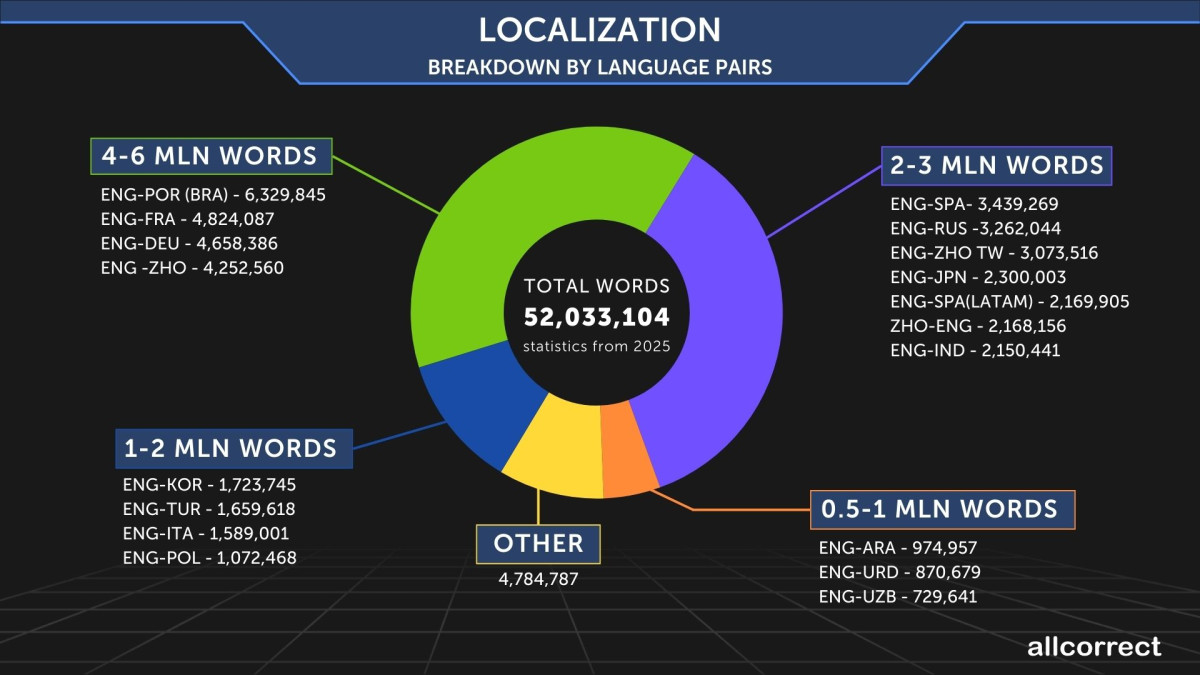
In localization, we’re currently testing our new product — run.loc — which we managed to fully launch in December. We tried to pack 18 years of game localization experience into one service. The result is AI-based localization with six automatic contextual checks: compliance of translations with the legislative norms of the respective country, compliance of game content with age rating requirements in target countries, and others. At the input, our linguists do the initial setup for the specific project. At the output, partial translation verification. Essentially, run.loc is an overlay that brings AI engine translations up to a professional level.
In general, with AI we do the same as with human localization—we take process management upon ourselves and free up clients’ time for game development.
Initially, we thought run.loc would be interesting to indie game developers, but our latest project was from a mobile game developer, for which we localized a project of 1 million words in one month across four languages. We think mobile game publishers will like the quality and speed of localization with run.loc — and the price should be a pleasant surprise.
How has the game outsourcing market changed overall in 2025?
As far as we can see, gaming companies continue to cut staff and cautiously launch new projects.
Judging by our portfolio, GAAS shooters are doing well, which is why it includes more of such projects.
Unfortunately, some public game outsourcers have stopped publishing game outsourcing market analytics, and there’s no one to get reliable figures from. Nevertheless, as far as we can see, part of the work that external contractors used to do is now performed by artificial intelligence or AI-based products. We think there will be more of that.
How has working with clients changed? What changes have you observed in orders, requirements, wishes, and budgets?
Overall, client requirements for deadlines, quality, and price remain more or less stable. There are a few new requirements: many clients directly ask not to use artificial intelligence in the work and demand enhanced security measures related to information processing. For such purposes, we separate processes for human localization work and AI usage.
The same applies to art, but here we see not only client requirements but also player requirements.
At the same time, judging by our analysis, in art there is still quite a big spread both in client wishes and in cost estimates for project execution among outsourcers, and even the same work is referred to differently by different contractors. We think there are hidden opportunities for us here.
What became decisive for successful outsourcing in the outgoing year? Which niches, on the contrary, contracted?
As before, successful outsourcing requires listening to client requirements, being flexible, and quickly implementing changes.
Honestly, we haven’t globally assessed the contraction or expansion of any specific niches. Probably, outsourcing of testing and development is also experiencing AI pressure, but we can’t say anything about that.
What conclusions from operations in 2025 have you made for yourself?
At one point, we thought we were late with AI implementation, but in the end, our approach allowed us to use artificial intelligence more thoughtfully—not trying to make our own LLM engines, but creating overlays on proven engines, using our experience and competencies.
The first results of run.loc are very encouraging, and if we had launched our service earlier, we would have earned more money. On the other hand, now we’re confident in our product, and comparison with competing solutions that our clients use works in our favor.
What strengthening or emergence of trends in outsourcing do you expect in 2026?
Separation of AI work processes and manual work, both in localization and art, not just at the declaration level, but at the process and client requirements level.
We hope that the planned release of several long-awaited projects in 2026 will spur investor interest in the gaming industry and new outsourcing projects will appear.
What tasks and plans do you set for the company for next year?
Find a niche for our art direction and secure it.
Increase the run.loc order portfolio through mobile game publishers and indie developers. Test the subscription model for our services.
In the event of a successful run.loc launch, we’ll try to expand our AI usage approach to game testing and voice-over. We may also try to expand Run.loc usage through non-gaming clients.
Conclusion
2025 for Allcorrect was marked by the launch of run.loc — an AI tool with 18 years of localization experience and 6 automatic checks that successfully localized 1 million words in a month across 4 languages. We attracted 77 new clients and gave 7 talks at 16 conferences with a revenue of 7.5 million dollars, although the outsourcing market is contracting under AI pressure and art is seeking its niche. Ahead we see a trend of clear separation between AI and manual work.
Thank you to the team, clients, and partners for 2025 and all previous years—you made these results possible!