


Barry Keating
From Childhood Consoles to Narrative Design: The Barry Keating Story
In this episode of The Allcorrect Gamedev Show, we dive into the world of living game narratives with Barry Keating—a writer who remembers every note of his first childhood gaming experience and turned his love for games into a dream profession. From reminiscing about the days of Commodore 64 to tackling the complex task of writing interactive stories, Barry shares his insights on building characters, adapting narratives to fit games, and working with teams to create true gaming masterpieces.
Contents:
- The Deceptive Lure of Game Boxes: When Screenshots Lie
- How a Free Console Rental Turned Into a Night of Gaming Magic
- First Steps in Games: From Journalism to Narrative Design
- Collaborating and Adapting: The Game Writing Experience
- Designing Games for the Elderly: A Unique Challenge
- The Challenge and Joy of Storytelling in Games
- Cultural Differences and Localization Challenges
- What Tools Keep You Organized During Game Writing?
- Industry Challenges: Layoffs and Uncertainty
- What’s Your Top Advice for New Game Writers?
- Personal Preferences
- Dream Project: Modeling Global Systems
- AI in Game Development: A Threat or a Tool?
- What Does the Future Hold for the Gaming Industry?
The Deceptive Lure of Game Boxes: When Screenshots Lie
I remember this idea of false advertising was something I learned the hard way. You would get these boxes—like, for example, Teenage Mutant Ninja Turtles for the Amstrad. It came with this cool box, and on the back there were screenshots that looked amazing. You’d think, “Oh my God, this game looks incredible!” Then you’d load the game—tapes took like 45 or 50 minutes to load—and what you got was completely different from what was shown on the box. Then you’d look at the fine print and see, “Screenshots may be from a different version.” And sure enough, it was from the Nintendo version.
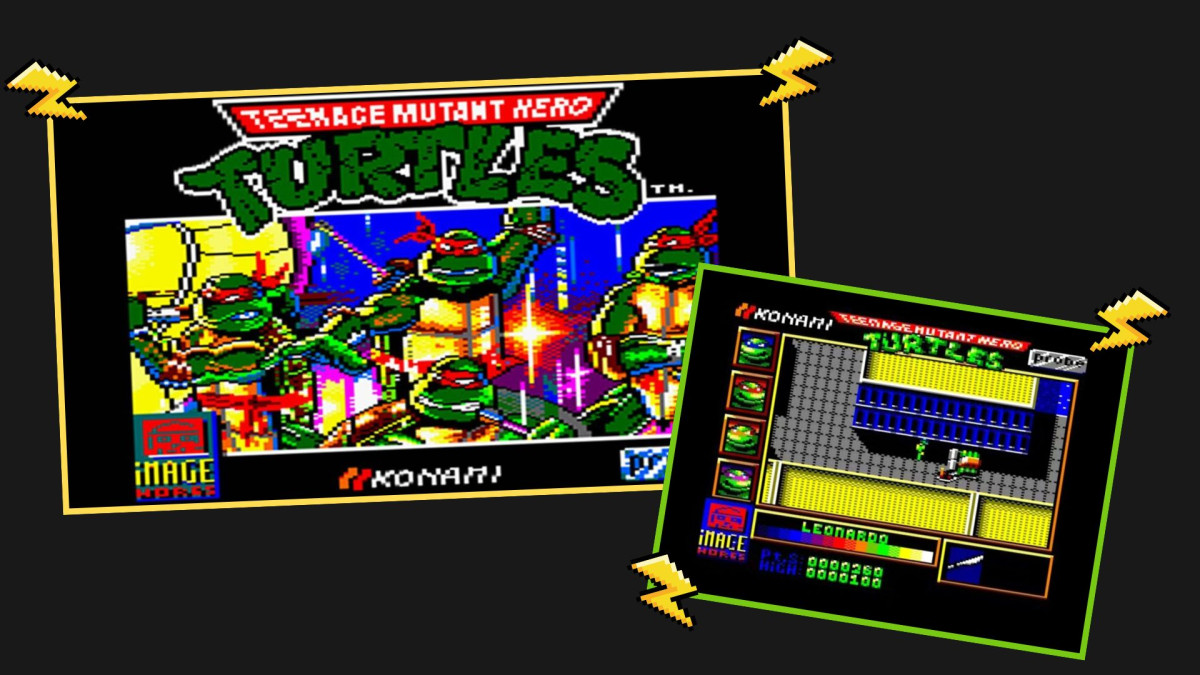
This happened quite a lot. I was obsessed with games like Midnight Resistance that looked great in the arcade, and they’d put those arcade screenshots on the box, which was so misleading. You’d buy the game, load it, and it would look terrible.
Back then, it was easy to go to your friend’s house, copy the tape deck, and take games home. That’s how I discovered a lot of games: RoboCop, Total Recall, Ocean Software’s great titles, The Hit Squad tapes like Target: Renegade. I have so many fond memories of that, those games and those kinds of genres, and just discovering games that way.
How a Free Console Rental Turned Into a Night of Gaming Magic
When the PlayStation came out, I didn’t buy one. I used to rent one from the video store for the weekend—Friday, Saturday, Sunday—with a bunch of games. I remember working in a supermarket at the time, and the manager was like, “Oh, you’re gonna get one?” I was like,“No, I don’t know, too expensive.” And he was like, “Hey, take it home for the weekend.” So he just gave me the console and Resident Evil 2. I went home, plugged it in, and I hadn’t had to work the next day. I started playing at about eight o’clock at night and stayed up all night playing Resident Evil 2. I finished it at like seven in the morning. That’s a core gaming memory for me.
First Steps in Games: From Journalism to Narrative Design
I came about it in a very long-winded way. I started as a journalist in Ireland, working for a local newspaper in my hometown of Dundalk. I was about 18 or 19, just finished school. The paper didn’t have a film critic, so I asked, “Hey, I’d like to review movies. Will you give me a shot?” They said, “Write us a sample review.” I did, they liked it, and that’s how I got my foot in the door, reviewing movies.
Then I went to university to study screenwriting in Bournemouth. While I was there, I worked in a video game store, trading DVDs, movies… and games. A guy came in all the time, trading piles of games. We started talking. He told me he was an editor of a PlayStation magazine and there was a job opening. I applied and got the job—staff writer for a magazine called P2, writing reviews for PlayStation 2. I pretty much stopped going to university then.
After that, I moved to a film magazine as a features editor and news editor. Then I came back to video games as deputy editor of PlayStation World. From there, I jumped to work in the creative services team at Sony PlayStation—copywriting, building websites, writing product descriptions. That’s when I started to find out who to talk to in game development, and I started pushing my way into a studio.
That studio was Studio Liverpool. I met Graham Ankers, who took a chance on me, gave me my first opportunity to work on Wipeout as the in-house narrative designer. For that, I’m forever thankful—it was my real chance to get my foot in the door of the games industry.
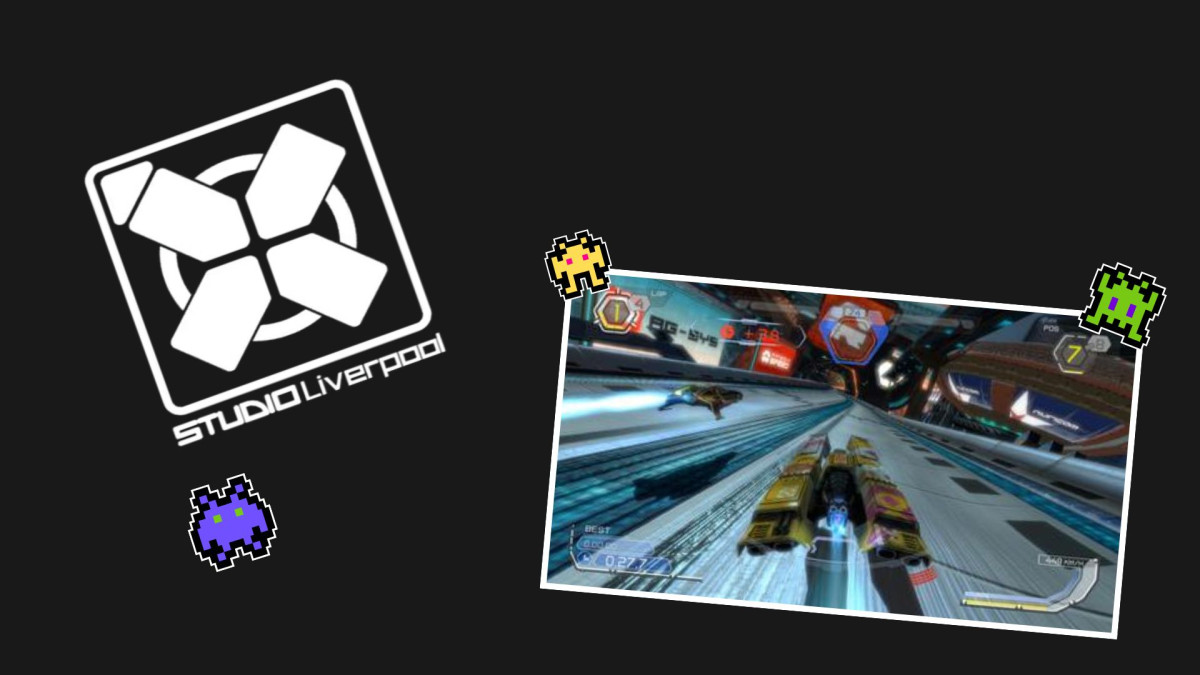
Unfortunately, I was living in London and had just relocated to Liverpool when the studio closed after eight months, so that dream ended. After that, I fell back into games journalism, but it was tough to find game writing jobs without experience. I kept doing tests and eventually landed a job at Gameloft in Madrid. Worked a while there, then came back to Ireland to focus on writing feature films.
Collaborating and Adapting: The Game Writing Experience
In terms of writing for games, it’s really collaborative. It’s not like writing a screenplay where you sit alone with your page and get on with it. In games, you’re working with a whole team—designers, artists, programmers. The story adapts all the time based on gameplay needs. I’ve learned to be flexible and always expect changes. It’s a constant negotiation between narrative and design, which is both challenging and exciting.
Creating characters is about making them real, not just good or bad. They have fears, flaws, motivations. You want players to connect with characters emotionally. The villains should have depth too—they’re not just evil for the sake of being evil. It’s about making the story layered and rich.
Designing Games for the Elderly: A Unique Challenge
I also worked on a really unusual project after leaving Gameloft in Madrid. The studio manager who left went into medical gaming in France. They developed a game specifically designed for elderly players whose eyesight was beginning to fail. The idea was to train and help them along with gentle exercises and cognitive challenges. I was writing narrative content for this audience in a fantastical world—like a children’s book brought to life—which was quite an interesting challenge. It was never meant for the general public; it was a medical app. But it was really fun and rewarding to approach storytelling for this audience.
The Challenge and Joy of Storytelling in Games
When I write for games, it’s never a solo job. It’s this constant back and forth with a lot of departments. You have your designers directing the player experience, your artists’ visuals, programmers implementing mechanics. Writing tends to be very adaptable, sometimes radically changing as gameplay develops.
The core challenge is balancing narrative depth with gameplay-driven limitations. Characters can’t be static anymore; they’re living, breathing elements within a system. I always focus on making characters real—giving them flaws, fears, motivations, things players can relate to emotionally.
Villains are important too—they should have weight and reasons behind their actions, not just be evil for evil’s sake. Good storytelling in games is all about layering and creating meaningful player engagement.
Cultural Differences and Localization Challenges
I’ve worked in a lot of different countries and cultures, and the thing is—when you’re writing for games that will be localized globally, you have to really think about how your words will translate. What’s funny in one culture might not be funny in another. Sometimes jokes and references fall flat or don’t make sense.
Localization is more than just translation. It’s about adapting content to fit the language and culture of the players. For me, it’s important to work closely with localization teams to make sure we get the tone and humor right. Otherwise, the story loses its impact.
What Tools Keep You Organized During Game Writing?
I rely a lot on tools like Confluence and Jira to organize my work—keeping pages of story notes, task lists, deadlines. Organization really helps me stay creative and on track.
When I hit a creative block, I step away from the screen—sometimes I read comics or books, watch films, or listen to podcasts to find inspiration. It’s important to recharge creatively, especially when the pressure to deliver is high.
Industry Challenges: Layoffs and Uncertainty
Right now, the industry is going through serious changes. We’ve seen big layoffs in many companies over the past years, and it’s worrying. I don’t know what the future holds, but I hope the industry stays alive and healthy. We need more curation and less chaos. Games should be valued for quality, not quantity. We often see good games getting lost in the flood of content because no one helps players find them.
What’s Your Top Advice for New Game Writers?
If you want to be a writer, start writing. Also, read and watch lots of stories—TV shows, movies, games, both old and new. One of the best educations I had was discovering published screenplays, which gave me insight into structure. The internet today makes this even easier.
Participate in game jams, learn tools like Twine, experiment with different formats, and keep learning broadly. The industry has tough times now with many layoffs, so writers should be cautious and ready for career changes.
Personal Preferences
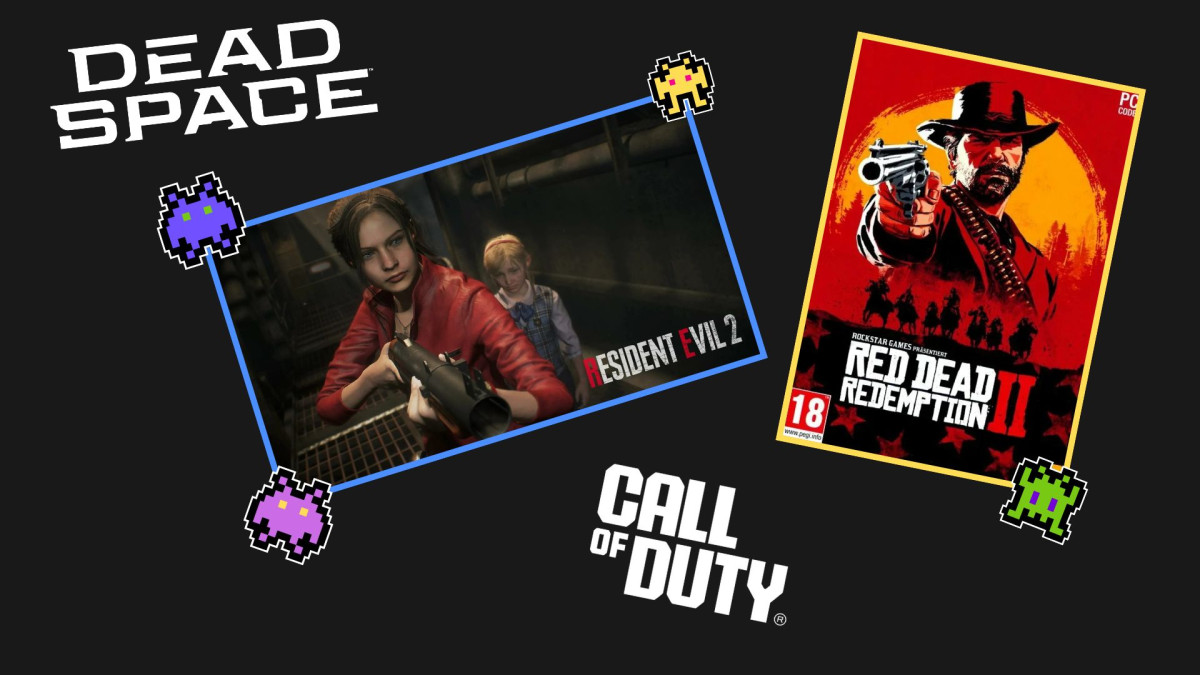
If we’re talking about personal preferences, I’ve always loved the Resident Evil series—one of my all-time favorite games. Dead Space is another huge favorite. I remember covering it as a journalist and being blown away. I’d love to work on games like Call of Duty or Red Dead Redemption, both iconic for me.
I enjoy horror books too—American Psycho, Stephen King’s works like Graveyard Shift, Clive Barker’s Hellraiser and others. Recently, I finished Ghost of Tsushima and recently got a Quest 3 to play Batman: Arkham Shadow in VR—the immersion is incredible.
Dream Project: Modeling Global Systems
If I could create my ideal game, it would model big global systems—politics, religion, power. What would happen if we completely banned fossil fuels? Or if religion didn’t exist? These kinds of projects are always controversial, and big publishers tend to avoid them because they want predictability. The game industry is at a crossroads—either a disruptive collapse or a new golden age of creativity and diversity. But it would be amazing—creating a game that simply models alternate realities without pushing an agenda, just showing possible consequences.
AI in Game Development: A Threat or a Tool?
AI is already affecting certain aspects of the industry, especially repetitive tasks like generating content or populating spreadsheets. But I think AI will be more of a copilot for artists, not a replacement. It can give you 20 ideas for concept art, but it’s the artist who will refine one of those ideas into something powerful. The real potential of AI is as your personal assistant—fixing tech issues, organizing files, syncing build tools, deploying updates. If AI can make my computer run smoothly, that’s a win. Then we can focus on what humans are good at: nuance, intuition, and soul.
What Does the Future Hold for the Gaming Industry?
It’s hard to predict what the game industry will look like in five or ten years. We see layoffs and changes. I hope AAA games remain sustainable, but maybe smaller projects will grow. I honestly don’t know.
I’m worried about seeing friends lose their jobs. Current crises are a chance to make the industry better, not just a harbinger of collapse. I hope the industry stays strong and my friends get back to work in games because I don’t have another career path. I want to write as long as possible. I don’t really believe in retirement; I want to still be here writing stories at old age.
Right now, I’m proud to be part of Project 007. Although there’s no release date yet, I hope everyone likes what we’re doing. The whole team is really proud, and I hope players love it as much as we enjoyed making it.


